
FLORESCENCE: March-May 2026
CURATOR'S NOTE
As a faithful devotee to our beautiful and burdened Earth, I welcome her rhythmic swings of retreat and unfurling. To be attentive to the flow of the seasons truly gives us all the knowledge we need; when to be still, when to begin, when to expand, when to turn ourselves fully on and when to retreat into stillness again. As the light returns and the temperatures climb, dormancy abates and out of the rich damp soil multiple shades of green pierce the wet black surface. A beginning … again. She does this with patience, yet with a resilient force and energy. This is not a soft pastel moment, but one of fortitude and flow. This is the spring I love, not mild, not shy, but bold and heroic. This is the spring we all need. To rise up and be bold and grow towards the light.
May we all be as the spring; undeniable in our numbers and abilities to grow, heal and begin again even before the light fully returns.
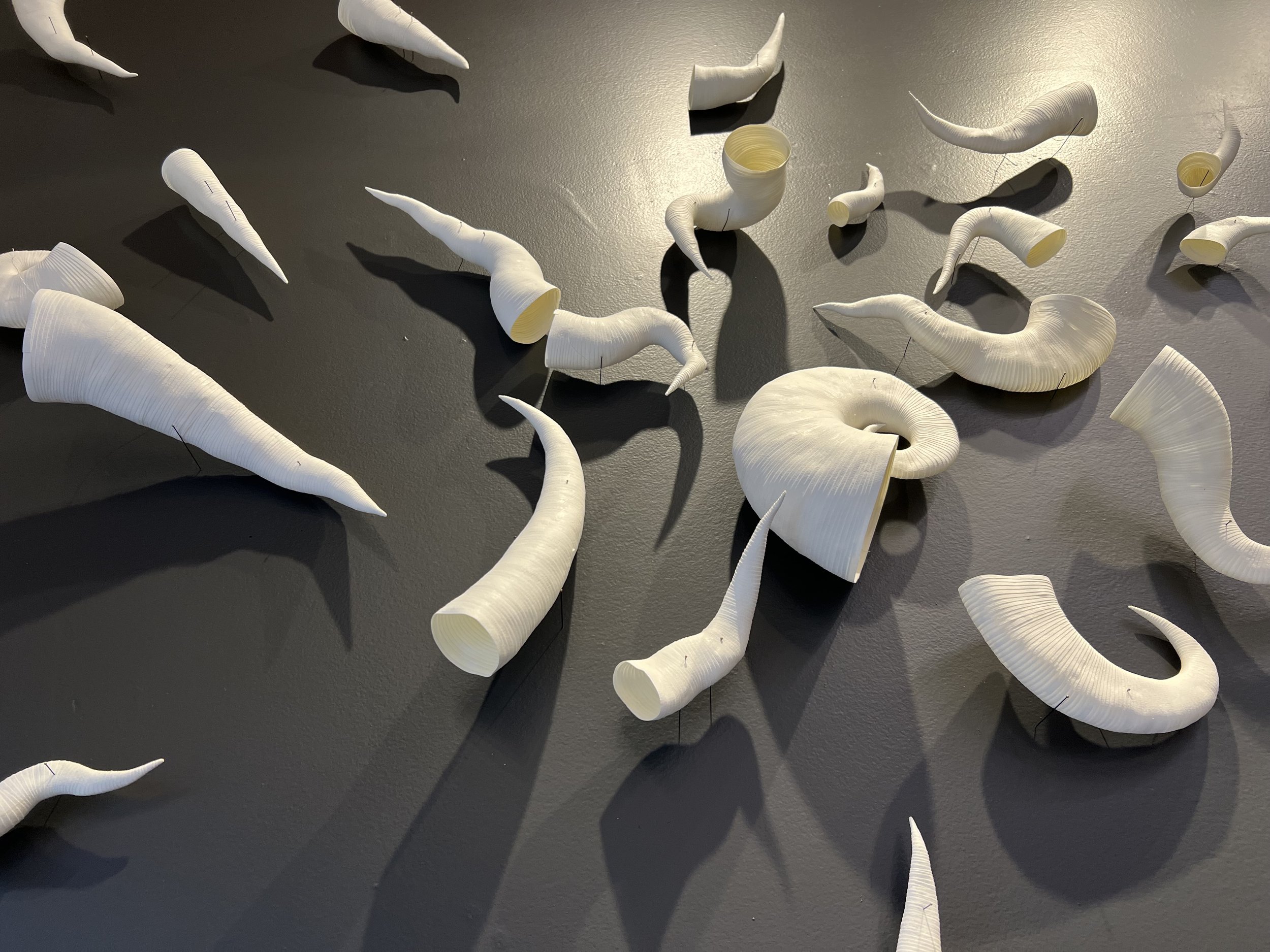
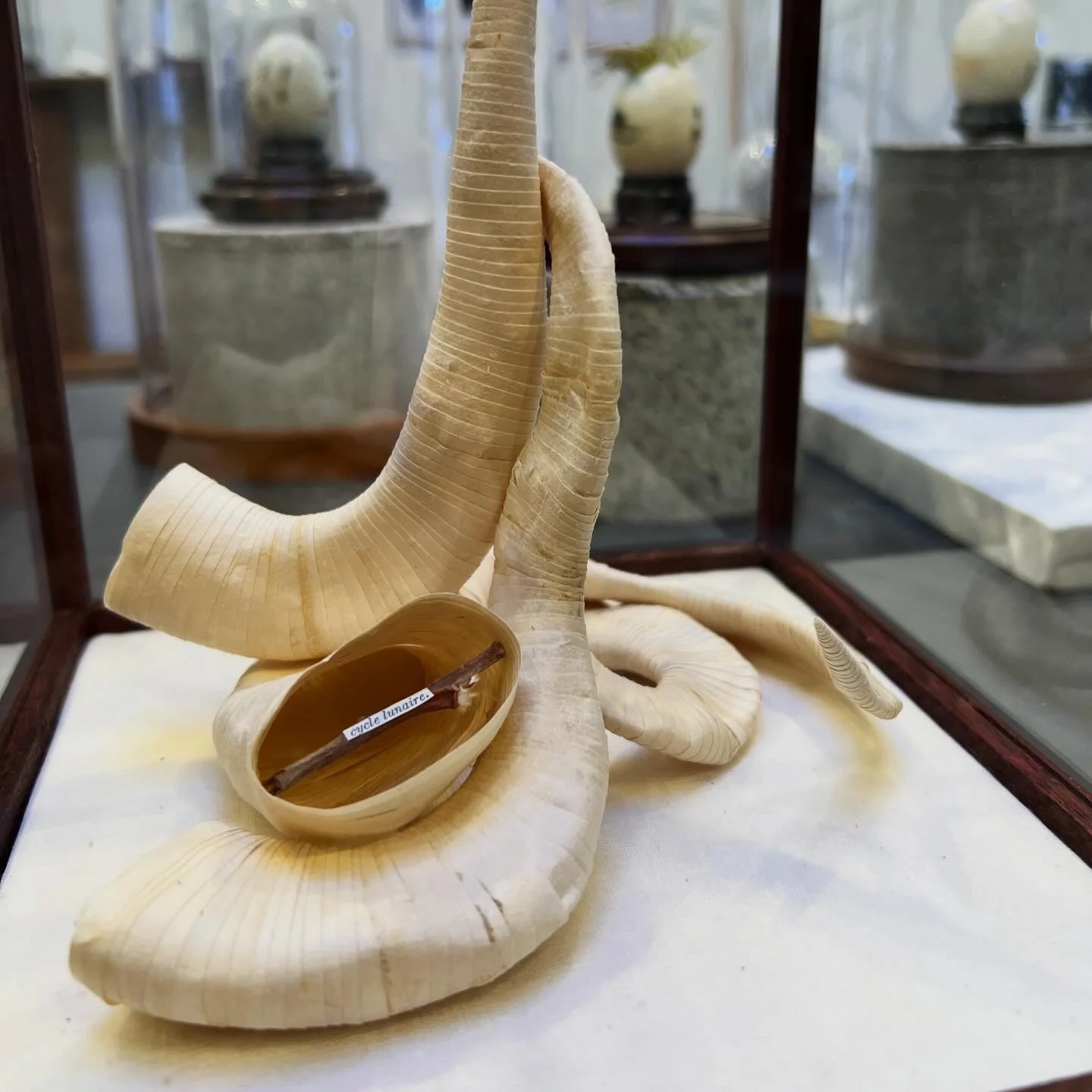
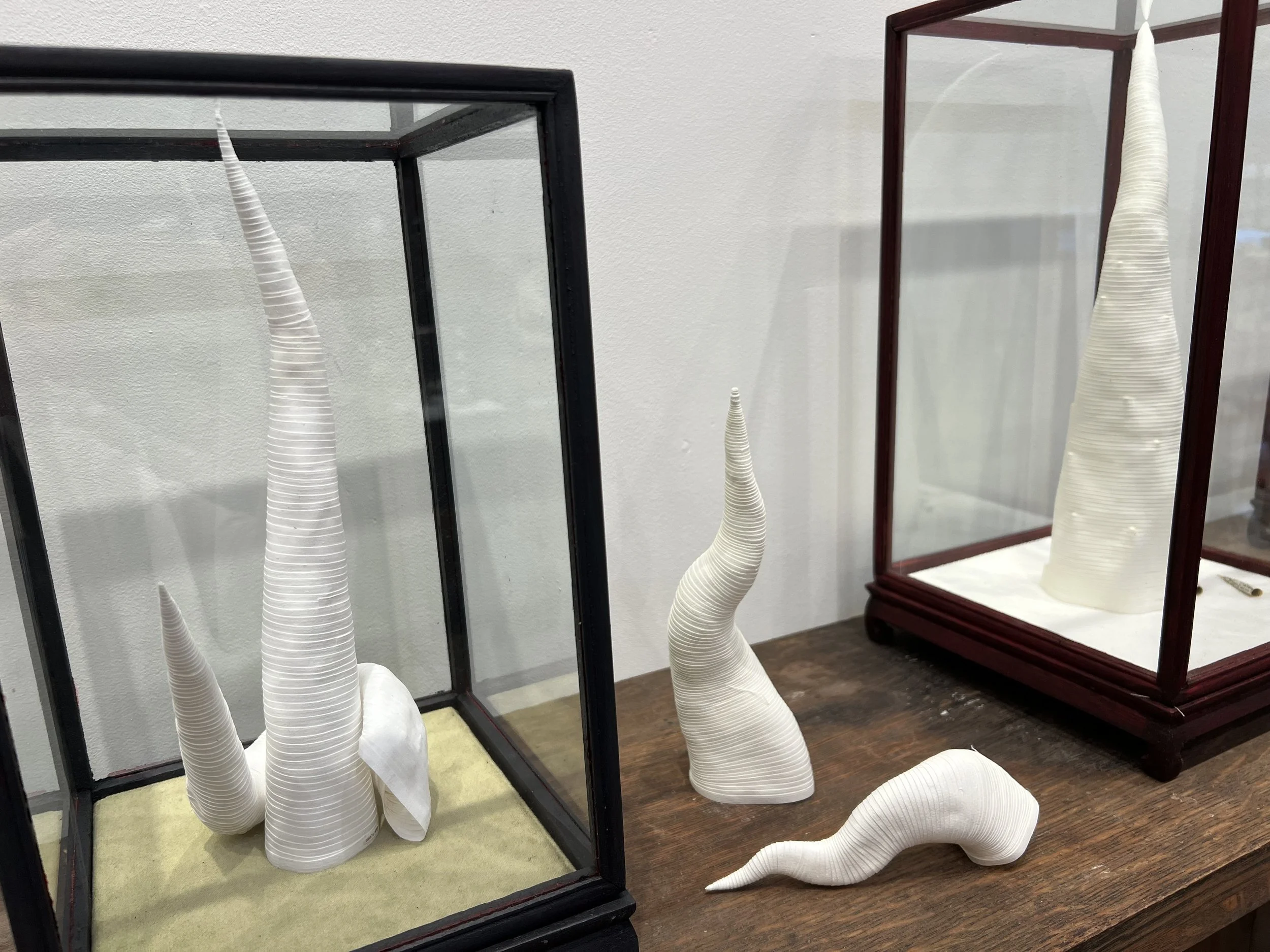
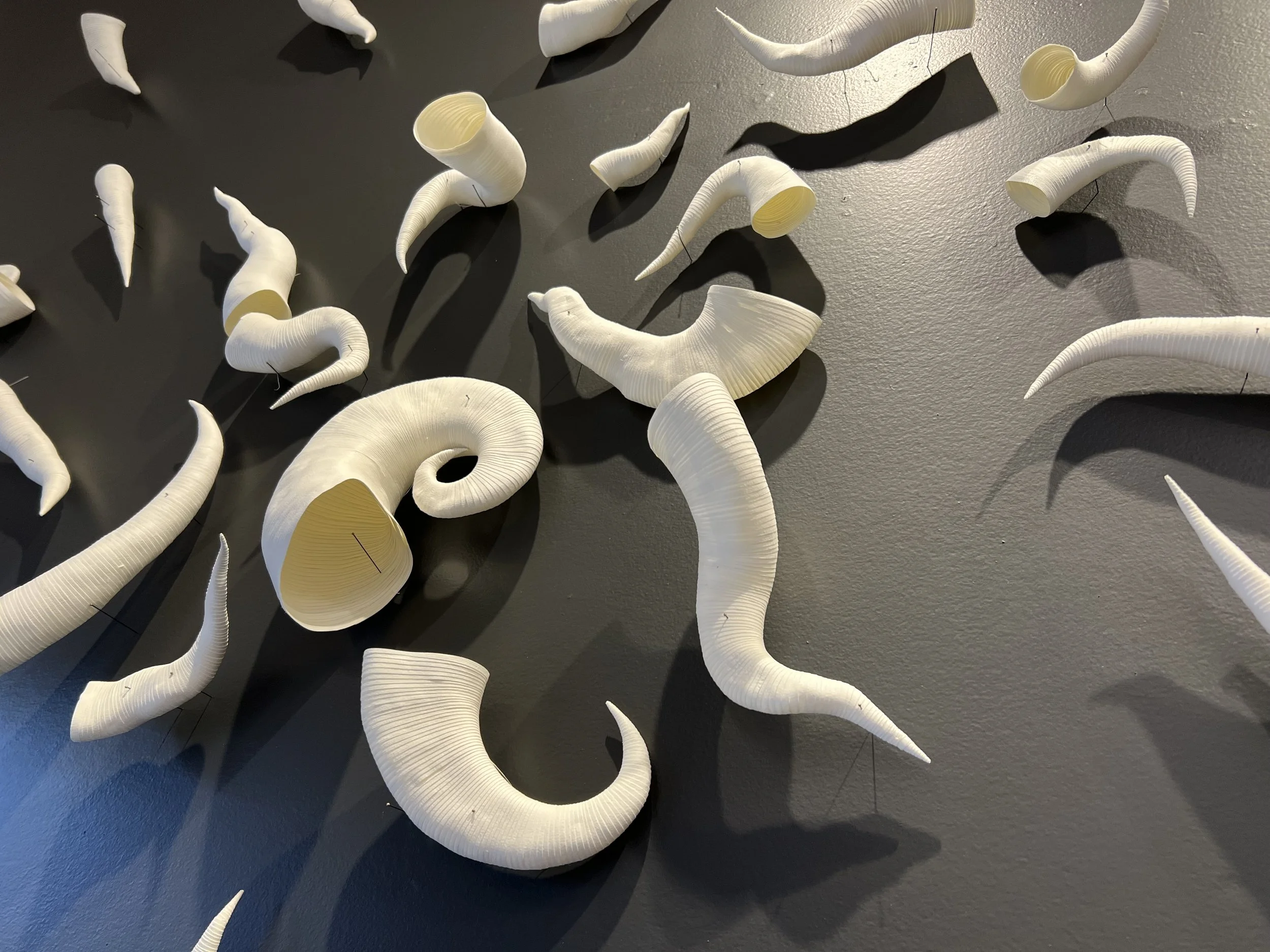
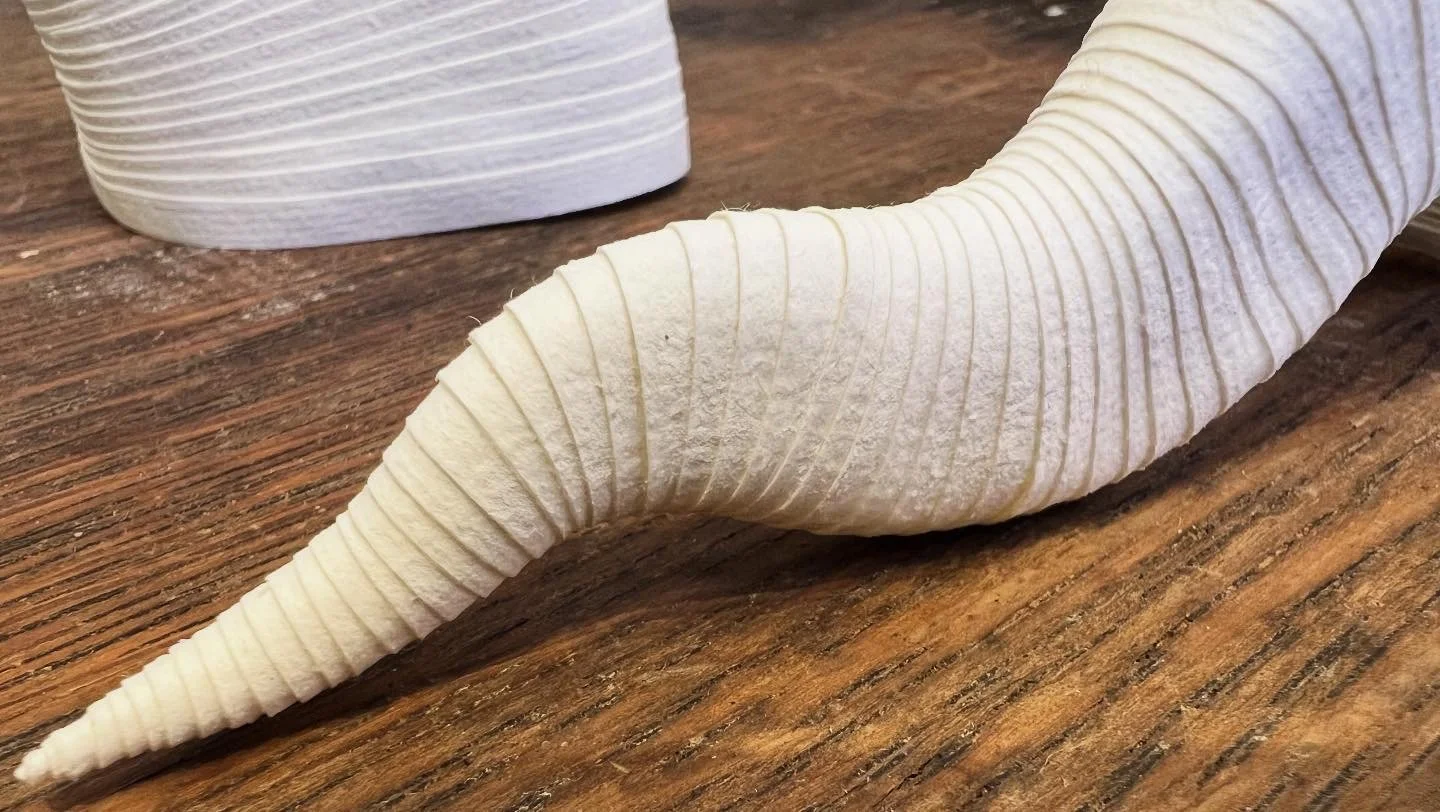
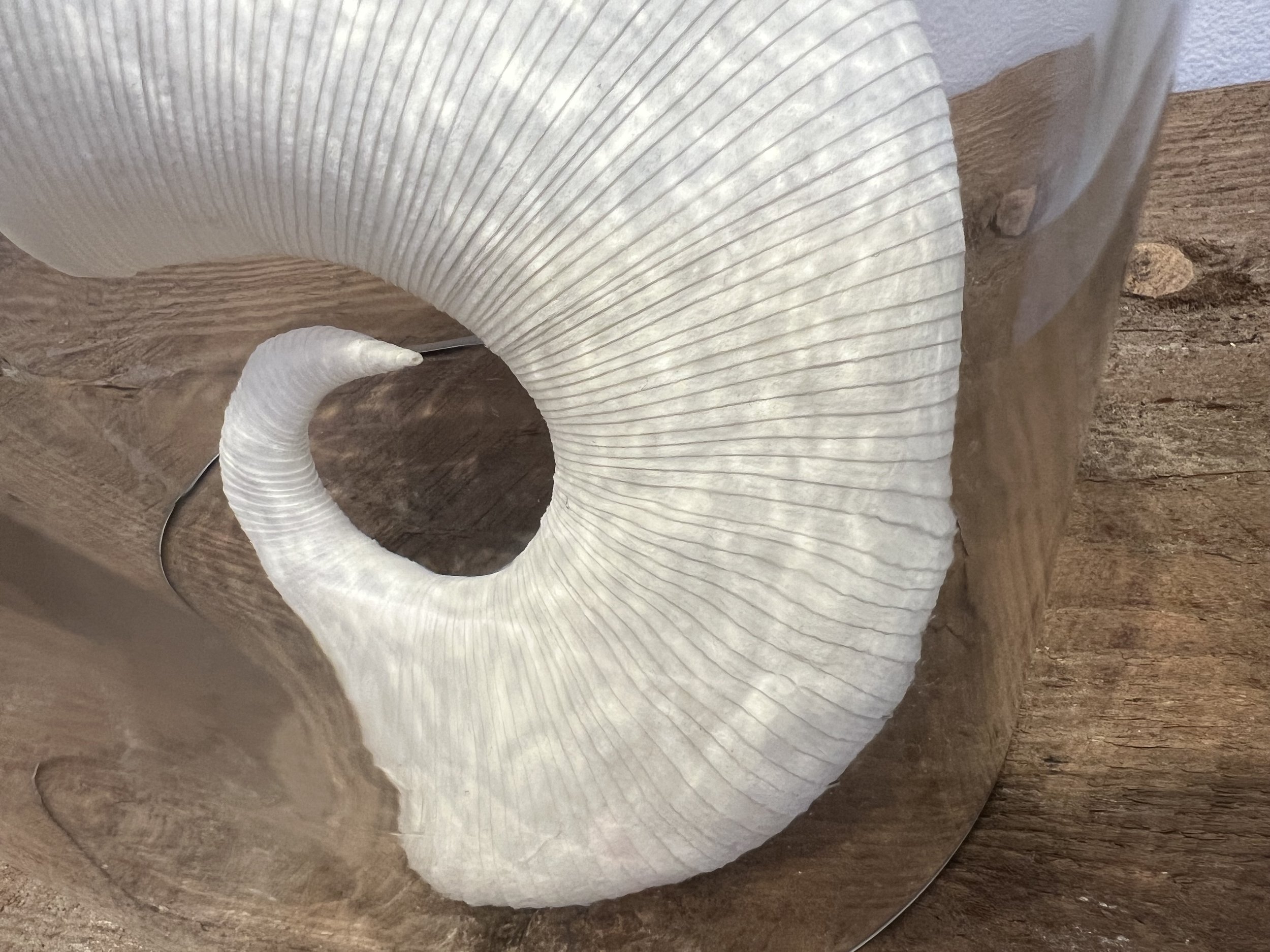
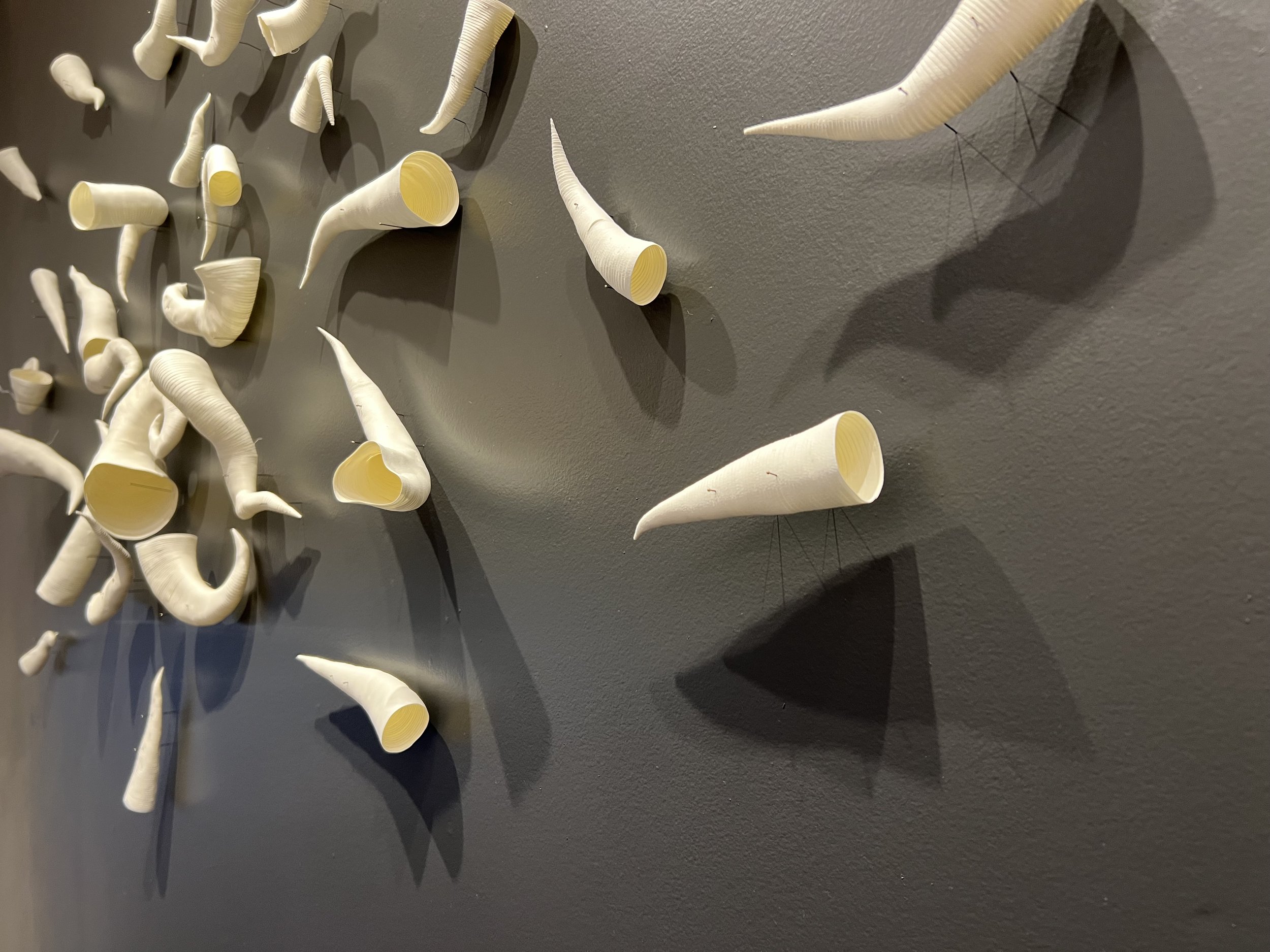
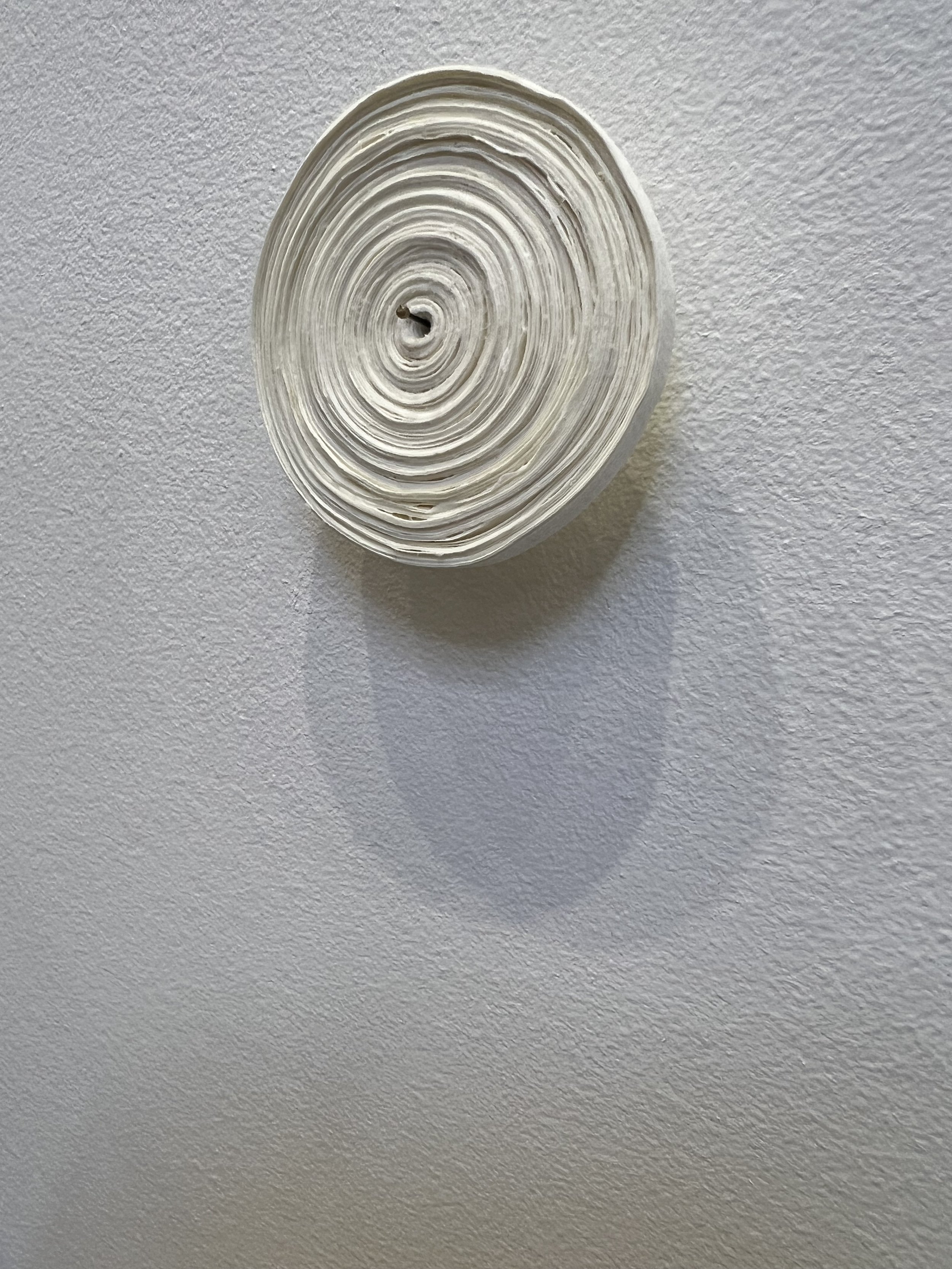
Jesi Asagi
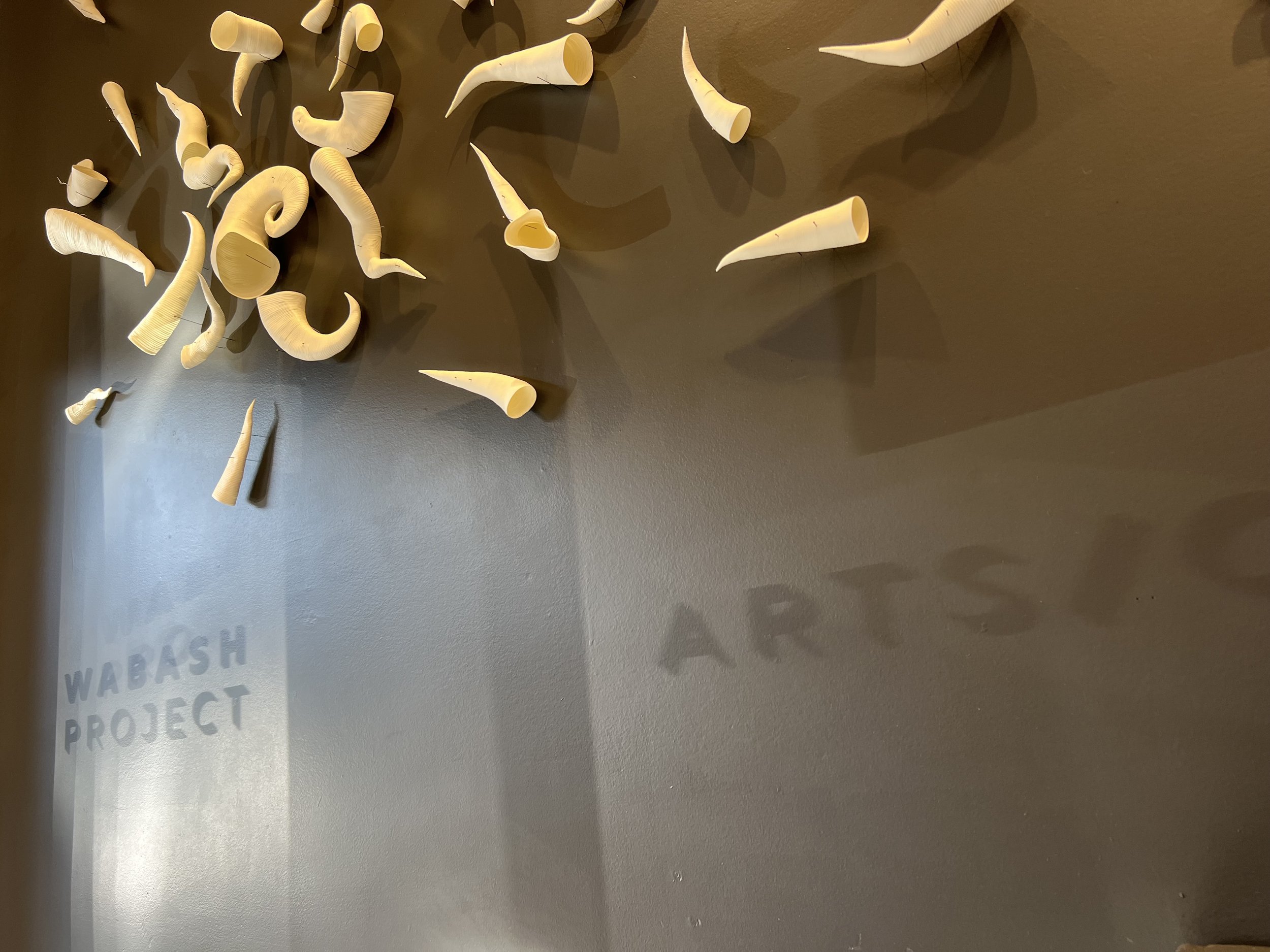
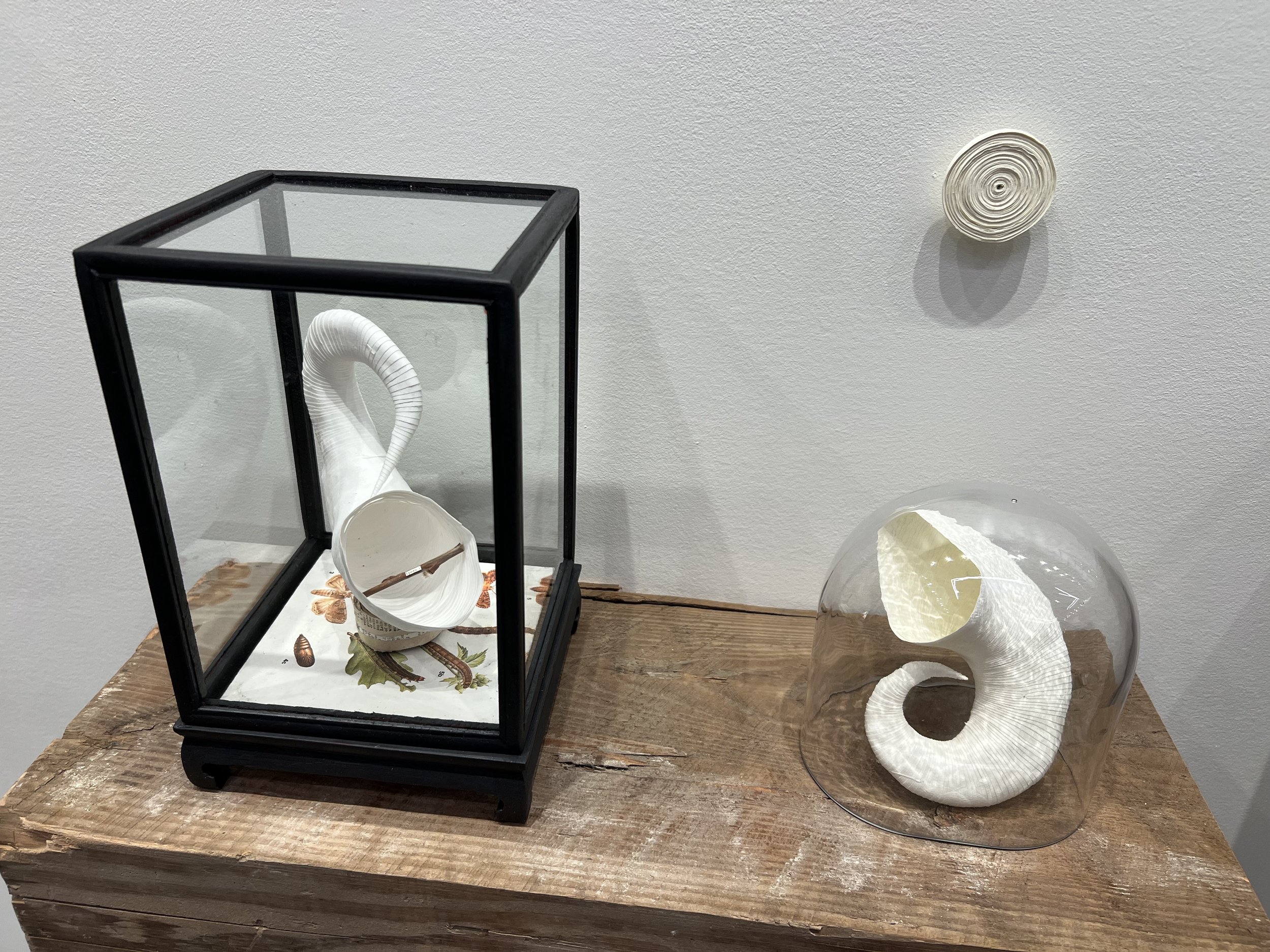
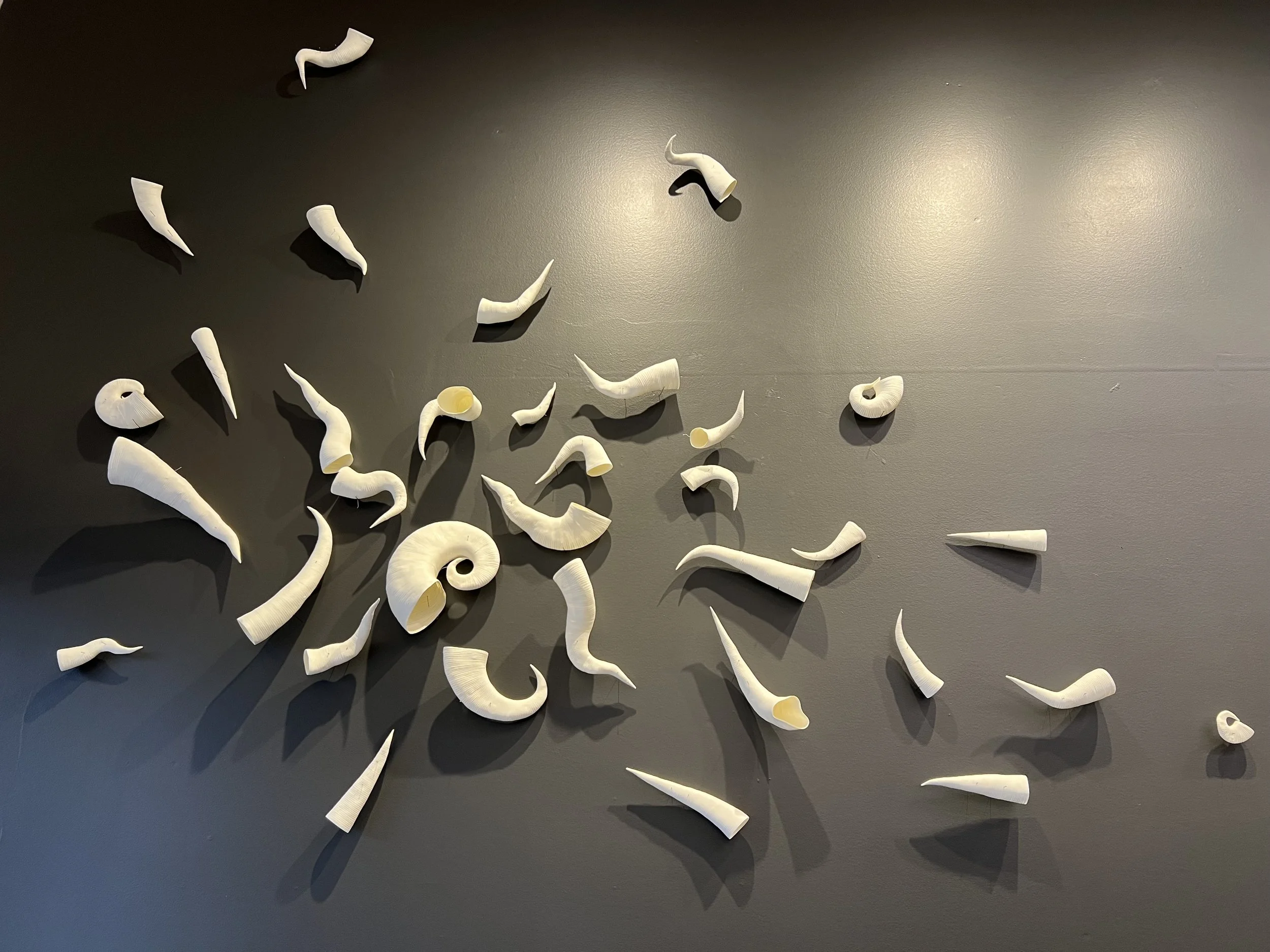
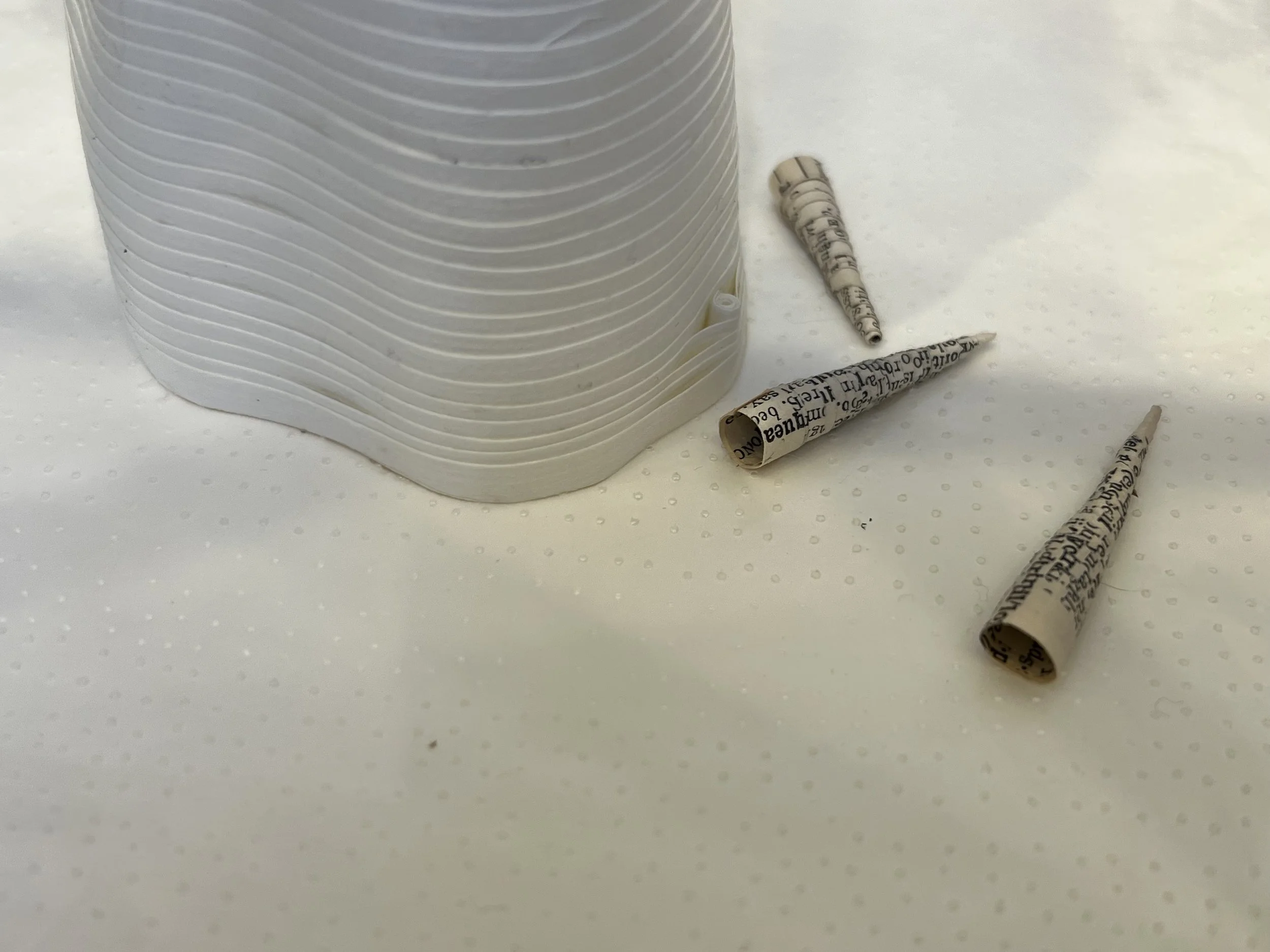
“I work with paper for its fragility and versatility. There is something about leaving the paper almost entirely blank and hollow that I find interesting, like its story is yet to unfold. It is not a story of neglect or built by loss, but a being defining themselves, on their own terms, open and awake for what awaits them.
The repetition of wrapping, coiling the paper to create these shapes is a meditative practice. I am always surprised how the slightest adjustment, a mere millimeter, changes the form and narrative. I have referred to these pieces as horns, cones, shells, shapes and bodies, but they are beings to me.”
Louisa Yarmuth
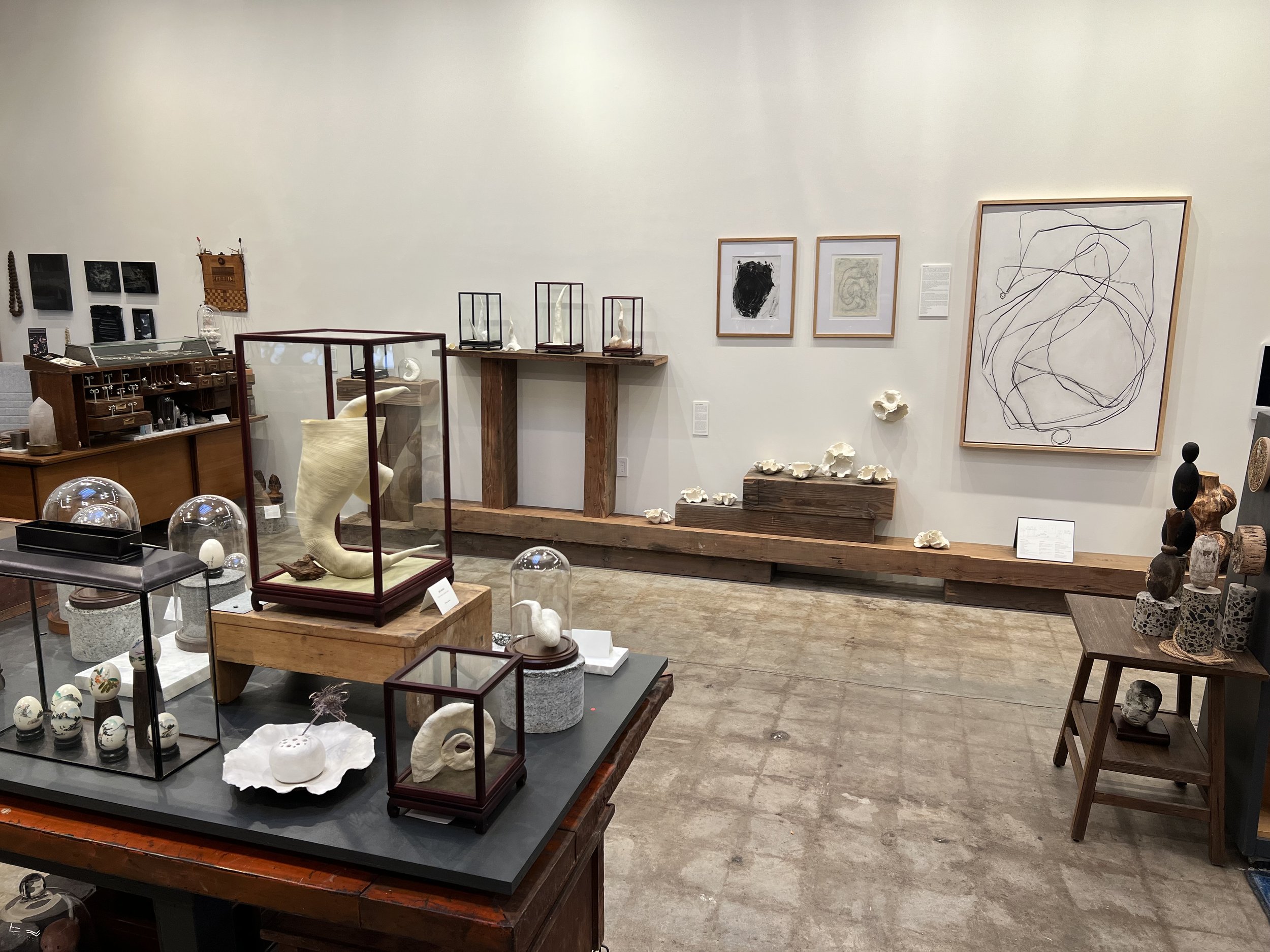
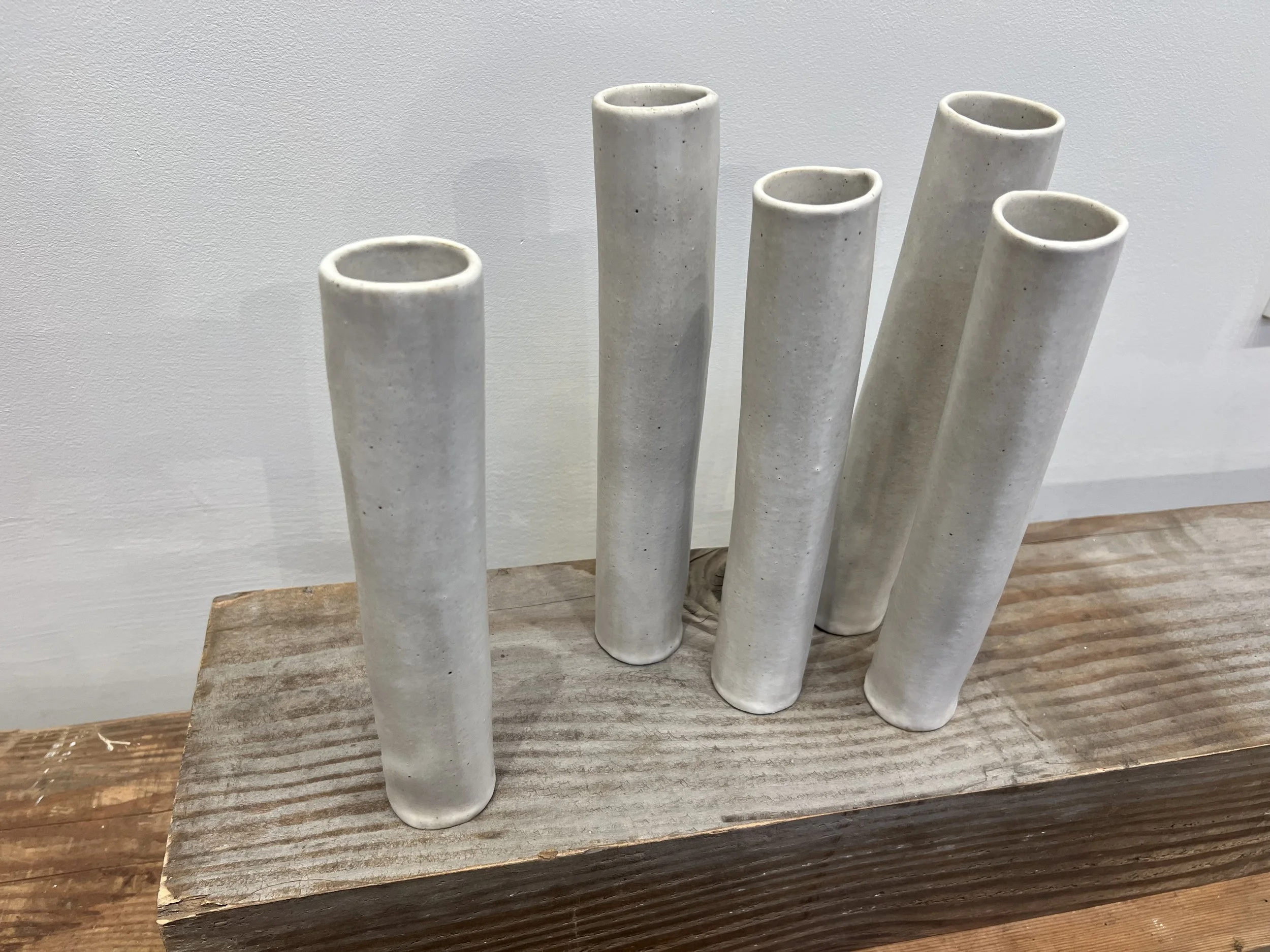
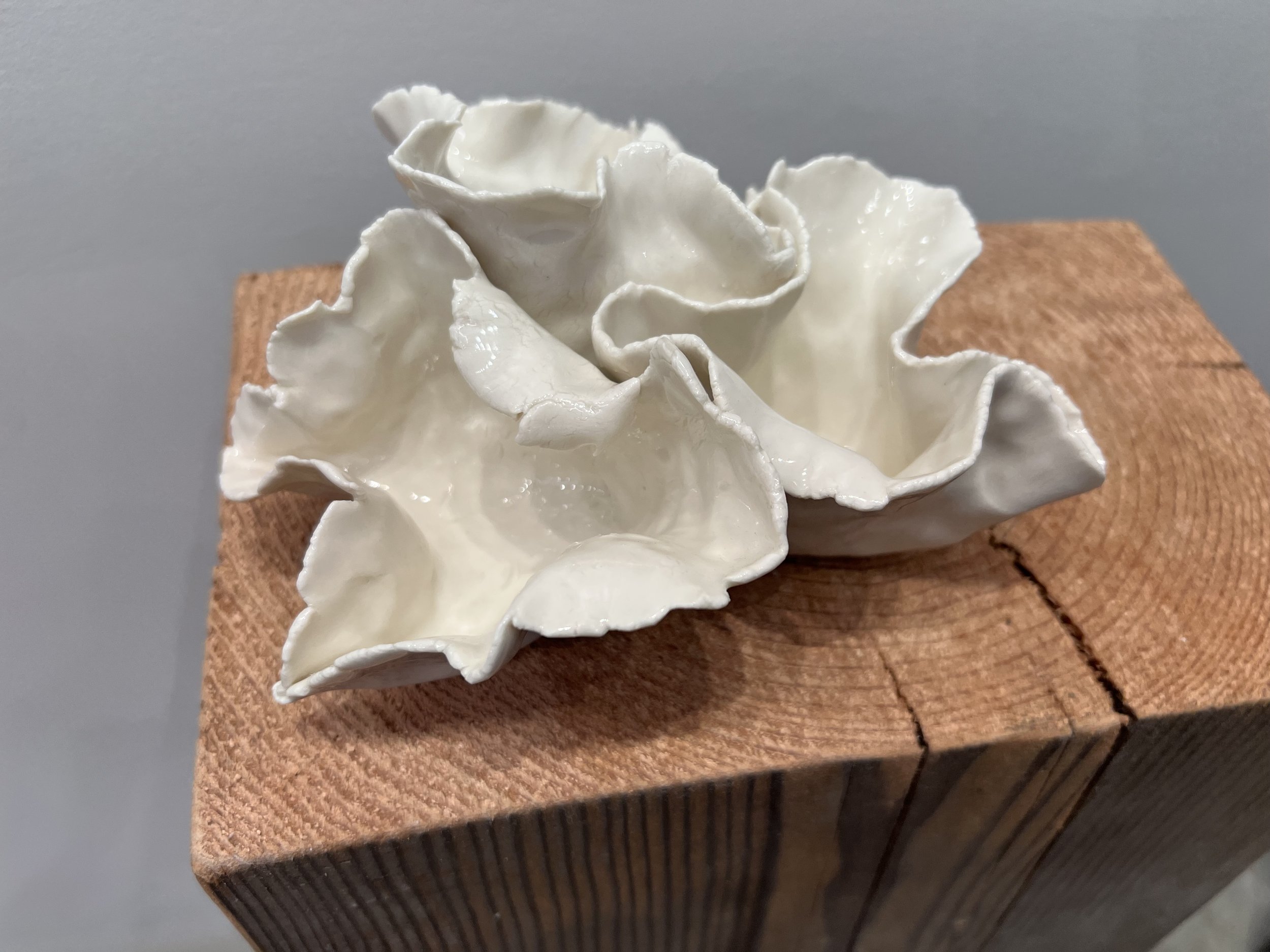
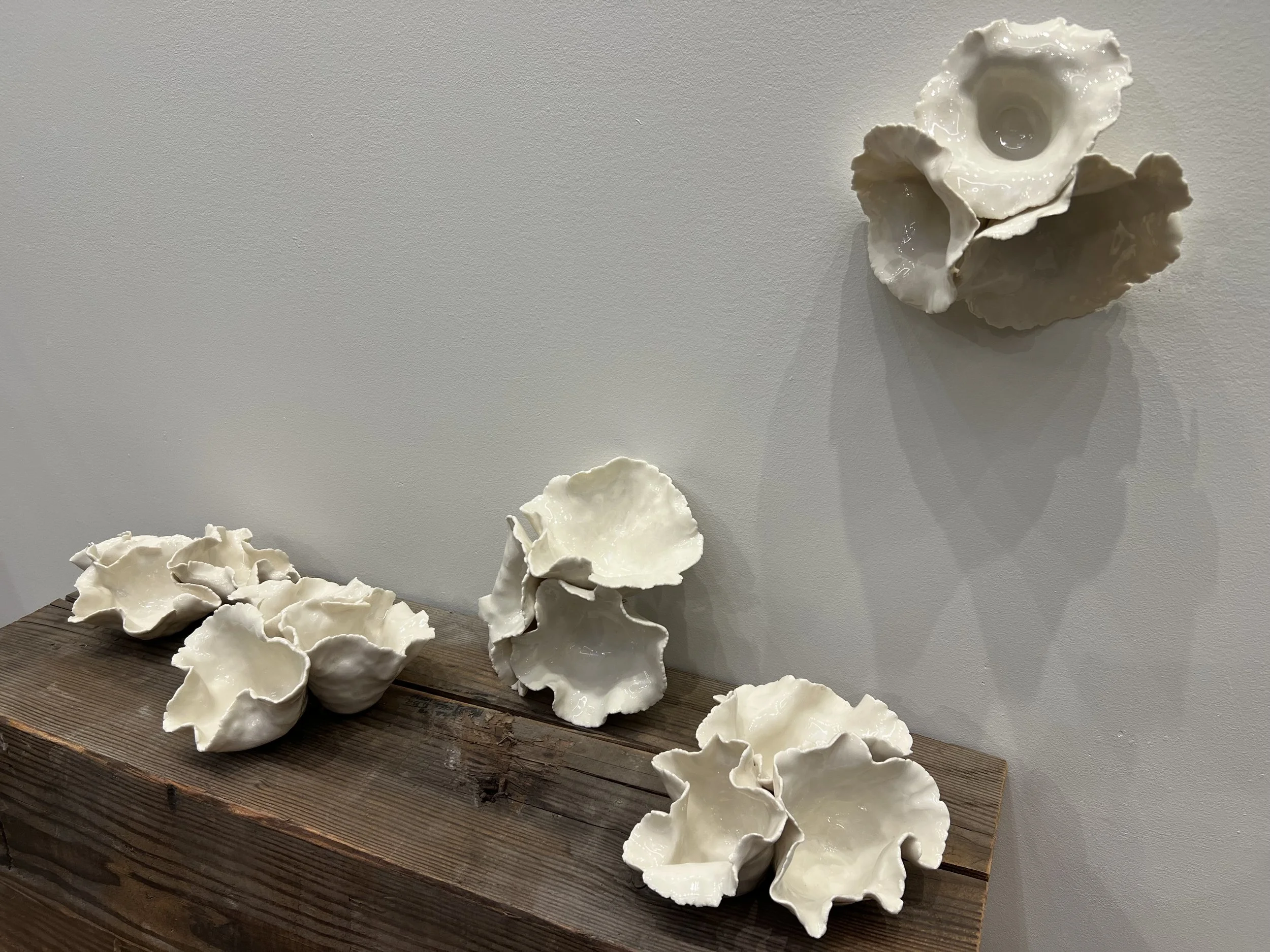
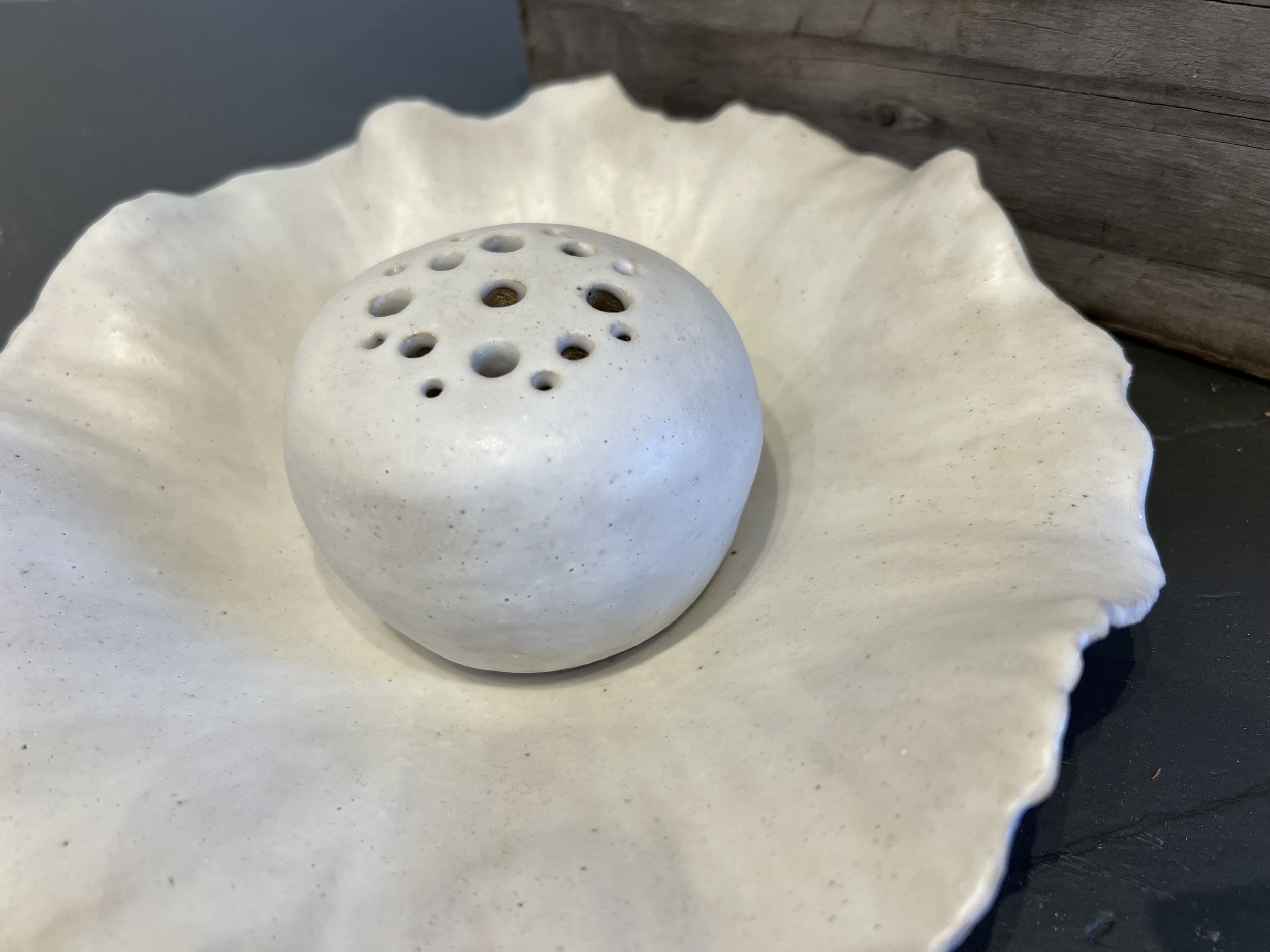
Louisa Yarmuth’s ceramics contain the rippling quality of petal and nest. Multiple pieces sit on wooden beams as well as hang on the wall like the flowers on a vine creeping up the garden wall. Her tubular vases are like the taut stems of tulip or daffodil.
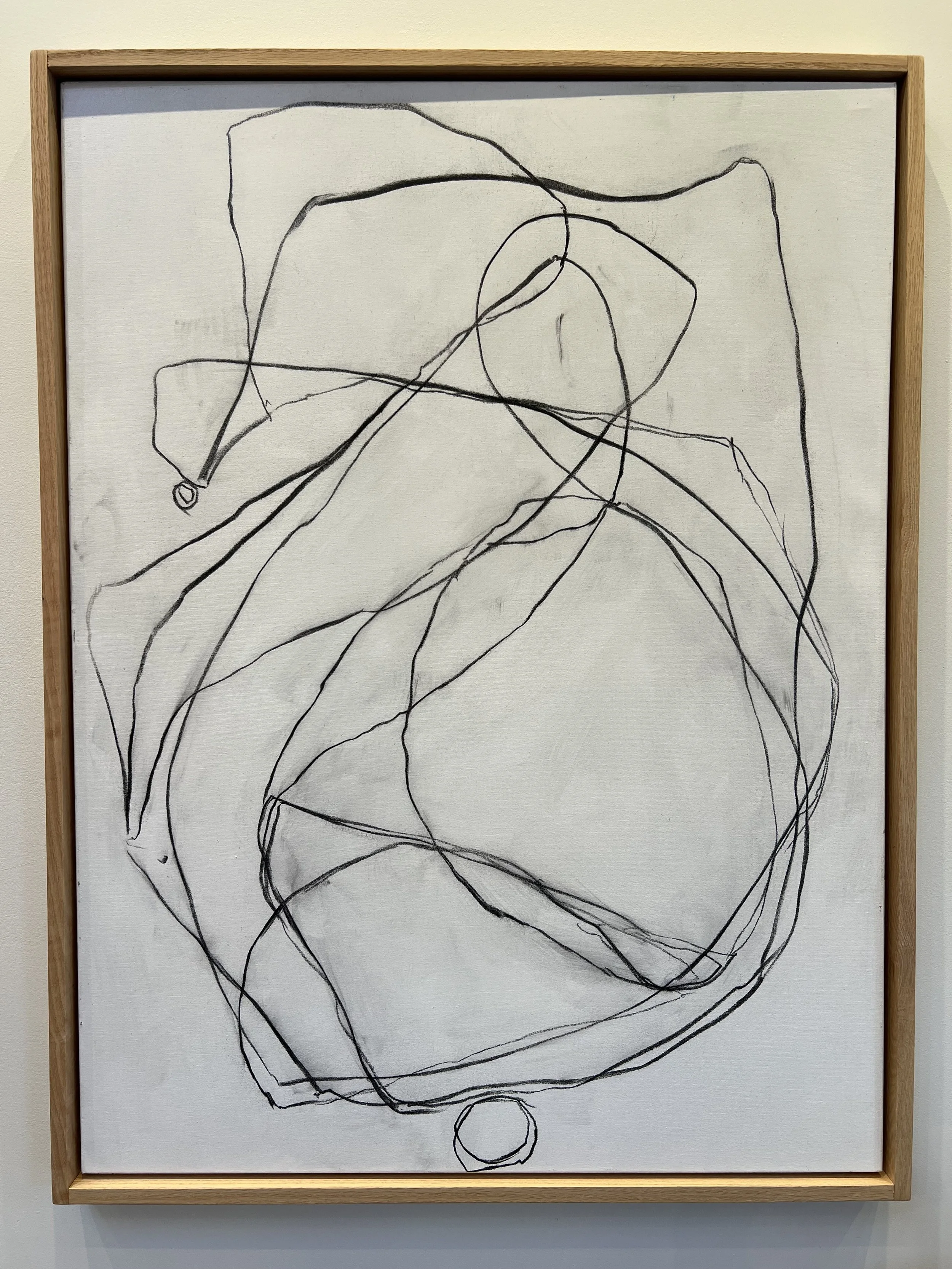
PARTICIPATION (The delight of She Who Plays) Charcoal on Canvas 36 x 48 in
AVA SWIFT
Ava Swift’s drawings are evocative of spring’s energy, growth and motion. Like that first buzz or hum of flight or that violent wind or rain storm of the season, these pieces are pulsing with action and force.
PARTICIPATION is imbued with the willingness to risk, to say yes to life, to participate. It was made in a single spontaneous gestural moment, not pre-planned nor analyzed in the making. The anticipation was present, the uncertainty of what might happen (or not happen) palpable. Like jumping into freezing cold waters- it was a willingness to leap into the unknown, into the making, and risk seeing what would emerge.
And what emerged has spoken so much to me.
The delight of She Who Plays.
The dance that She is.
The dialogue that She has become.
The reminder, to see what will emerge if we can hold space for the playing. Is this not life itself at its most celebratory- blooming into season, bursting into expression?
GUARDIAN OF THE THRESHOLD (to Hectate) is from a lecture given by Dr. Safron Rossi on Hecate and Hermes as guardian figures in Greek mythology. This piece is an offering to Hecate, who is a Greek Goddess of magic, crossroads, and the dark of the moon. Astrologer Demetra George notes one pre-Greek genealogy that leads us to Hecate’s birth at the beginning of time as a daughter of Nyx, Ancient Night. She presides over ritual, death, and the secrets of regeneration. It is Hecate who meets Persephone, welcoming and embracing her after she was abducted by Hades and later released from the underworld.
One of Hecate’s powers lies in her capacity to bear seeing what must be seen. As Clarissa Pinkola Estes says in her book, Women Who Run with the Wolves: “To look and to not look away” is a skill we all need more of in these times. On an inner level, Rossi describes Hecate as “a guardian figure of the depths of the unconscious” one who can protect and support the work of reclaiming and welcoming what needs returned to the light of the sun, our conscious awareness, within ourselves.
AWAKENING EARTH
To the mystery of a seed opening.
Even in her winter
Even in her slumber
The earth is alive
A matrix of belonging
Breathing us in, out.
From our belonging we breathe.
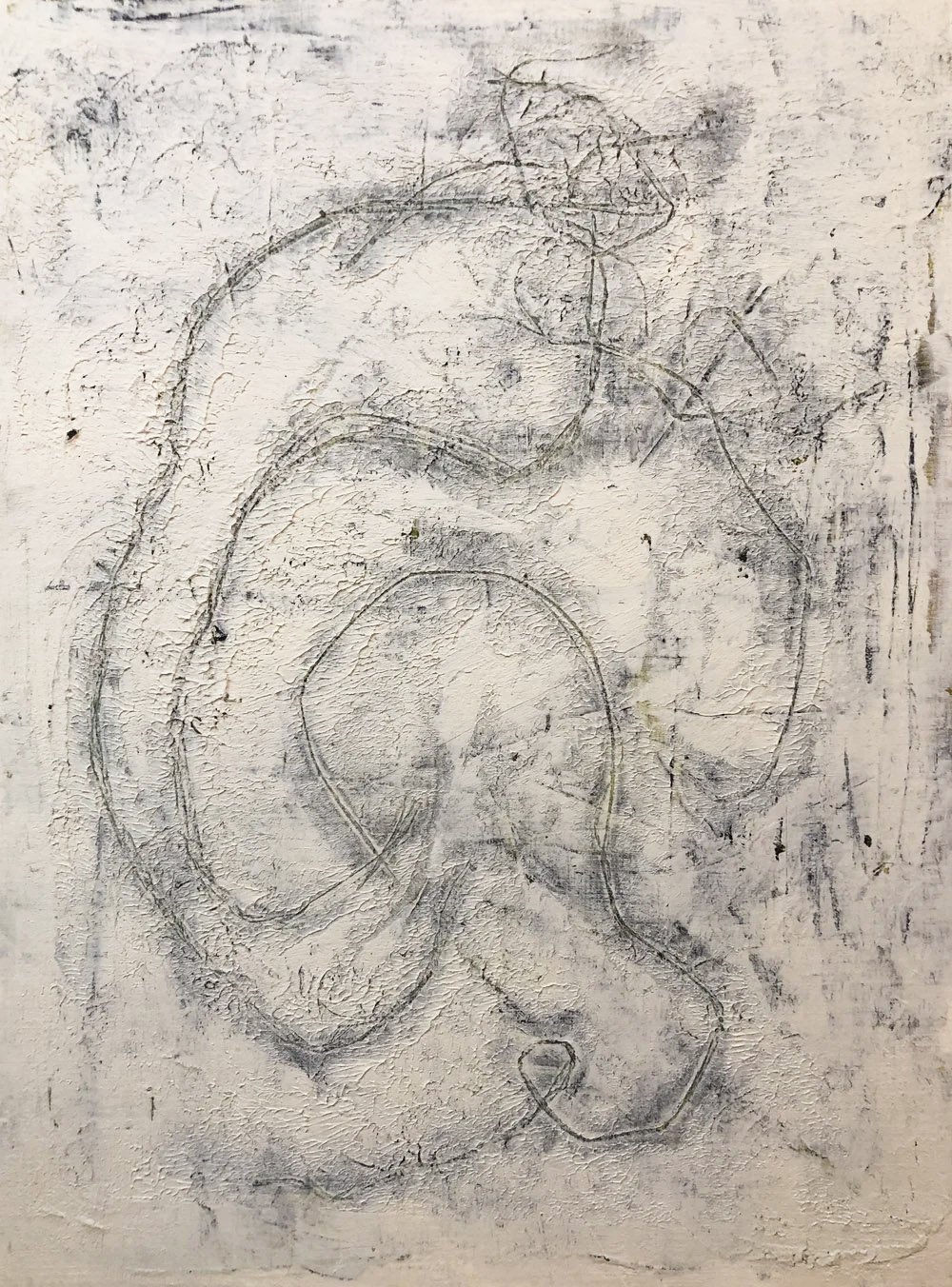
AWAKENING EARTH Oil and Coldwax on canvas 9 x 12
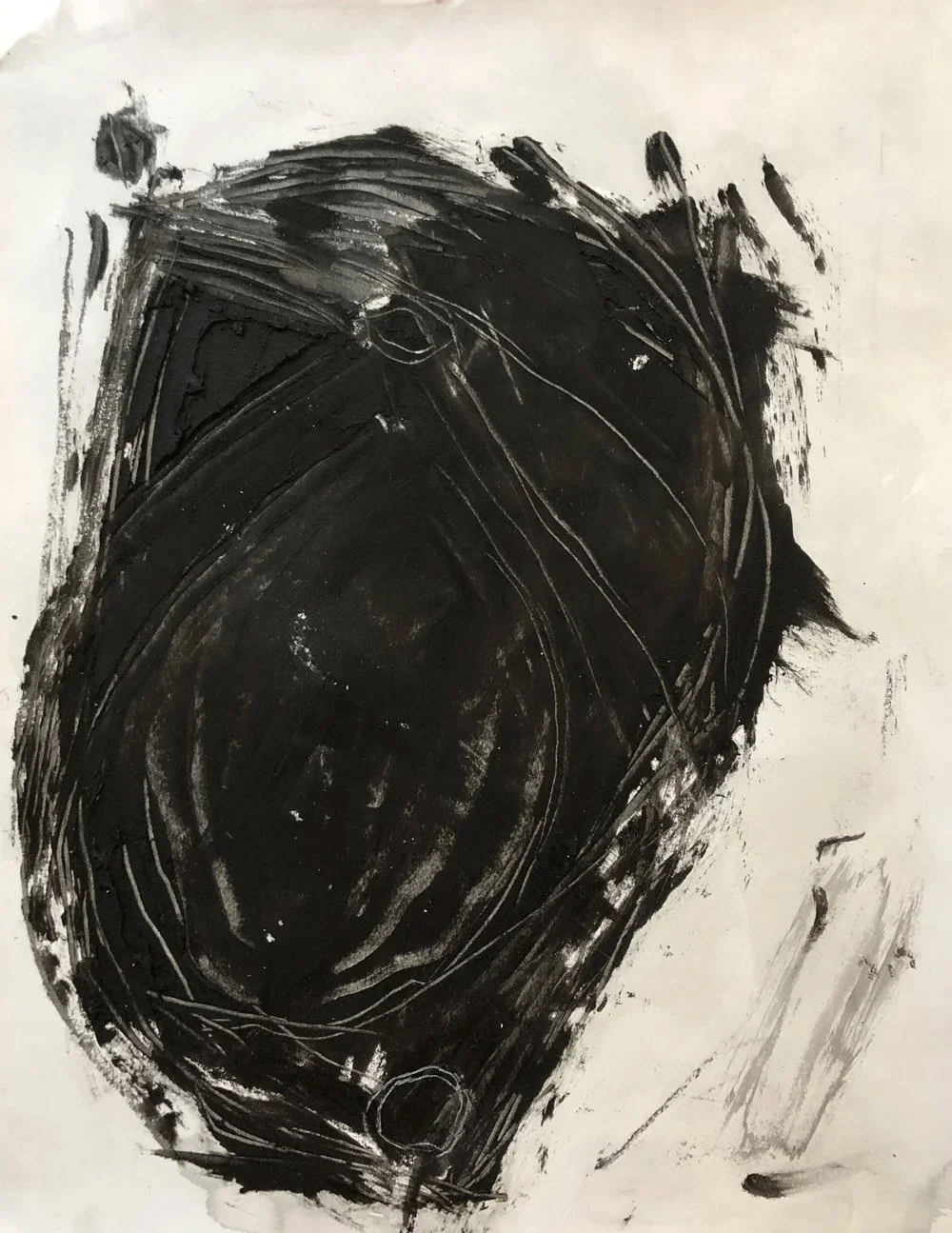
GUARDIAN OF THE THRESHOLD (To Hecate) Charcoal, acrylic, and mixed media on paper 11x14
IKEBANA ARRANGEMENTS from Ikebana International Chapter 19
The artwork in the show was intentionally devoid of color; focusing on the forms, fluidity, force and fecundity of spring. Color came directly from the source; from nature herself in weekly ikebana arrangements by five women from ; coordinator Joan Stamm, Kathleen Kuba and Machiko Faught, Pam Nolan and Mary Kay Branch.
Though four schools of ikebana (the Japanese art of flowering arrangement) were represented during our Florescence show, there are many more, but all school of ikebana have common themes::
Asymmetry: A hallmark of Ikebana, creating dynamic and visually interesting arrangements
Emptiness (Ma): The use of empty space to emphasize the beauty of the materials
Natural Materials: Branches, flowers, leaves, moss and stones are often used
Seasonality: Reflecting the current season is central to most Ikebana styles
These elements can also be found in our gallery year round. We strive to reflect the season and celebrate natural forms and materials, using asymmetry and emptiness to focus and sharpen our attention on work being shown.
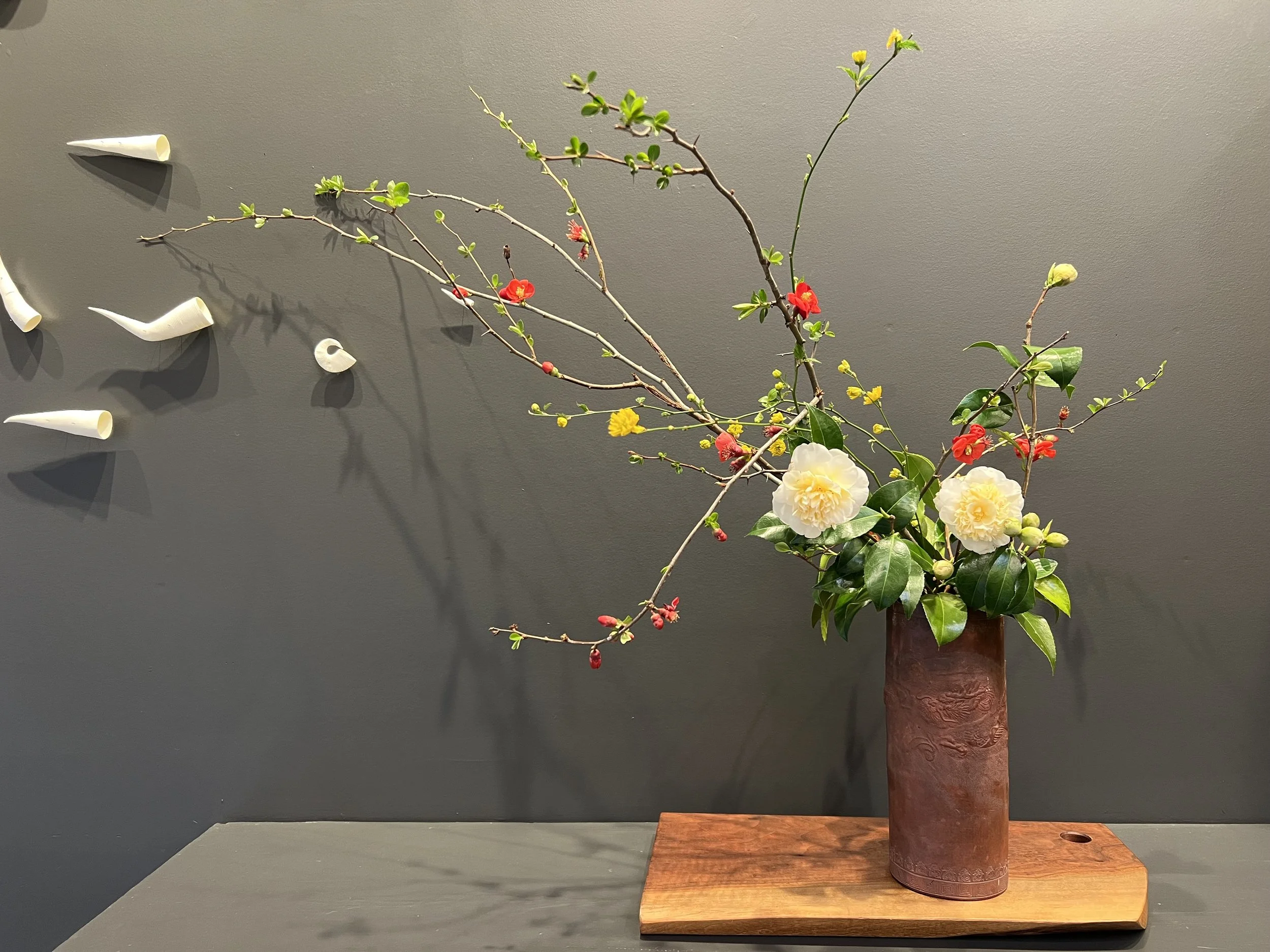
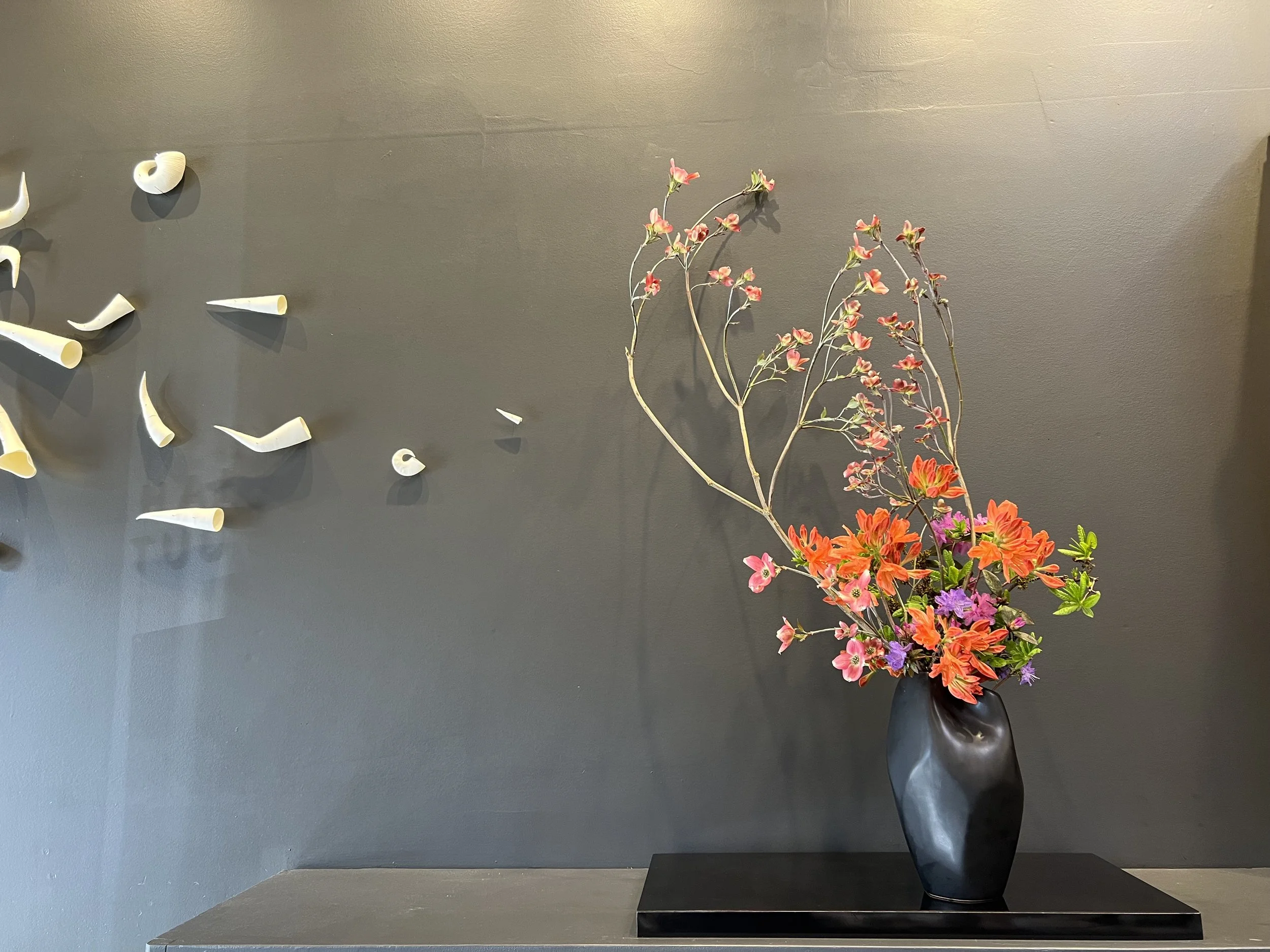
KATHLEEN KUBA (Sogetsu School of Ikebana)
"The Sogetsu School of Ikebana was started in 1927 by the founder Sofu Teshigahara who questioned the traditions of ikebana and preferred to respect the freedom of individual expressions. “Anytime, anywhere, by anyone,” — and with any materials — is the creed of the Sogetsu School. Today, under the 4th Iemoto Akane Teshigahara, the Sogetsu Ikebana is popular around the world as a school of Ikebana that draws out the freedom of expression in each individual, always new, always beautiful, and never constrained by preconceptions.” from ikebanahq.org
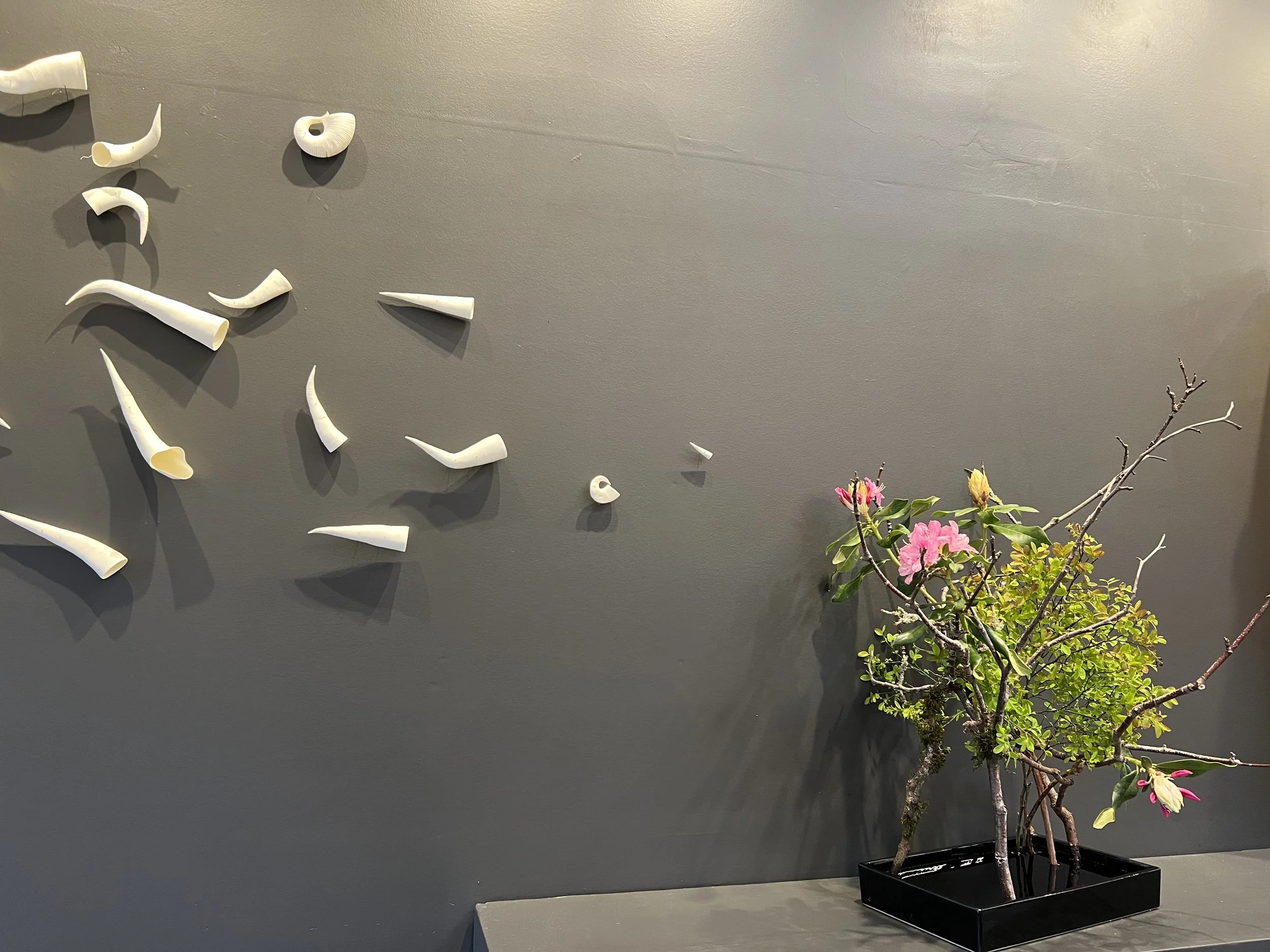
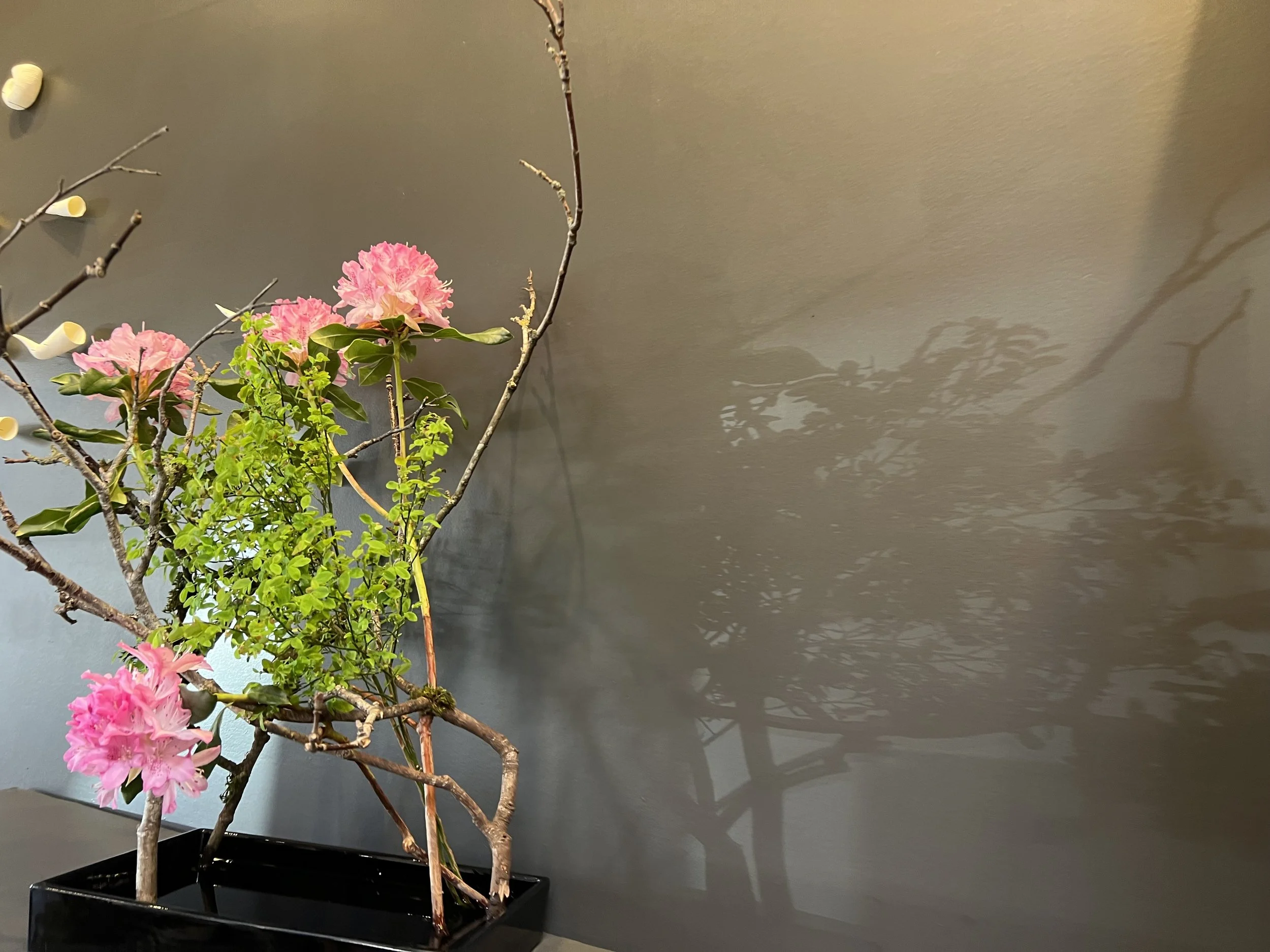
MACHIKO FAUGHT (Sogetsu School of Ikebana)
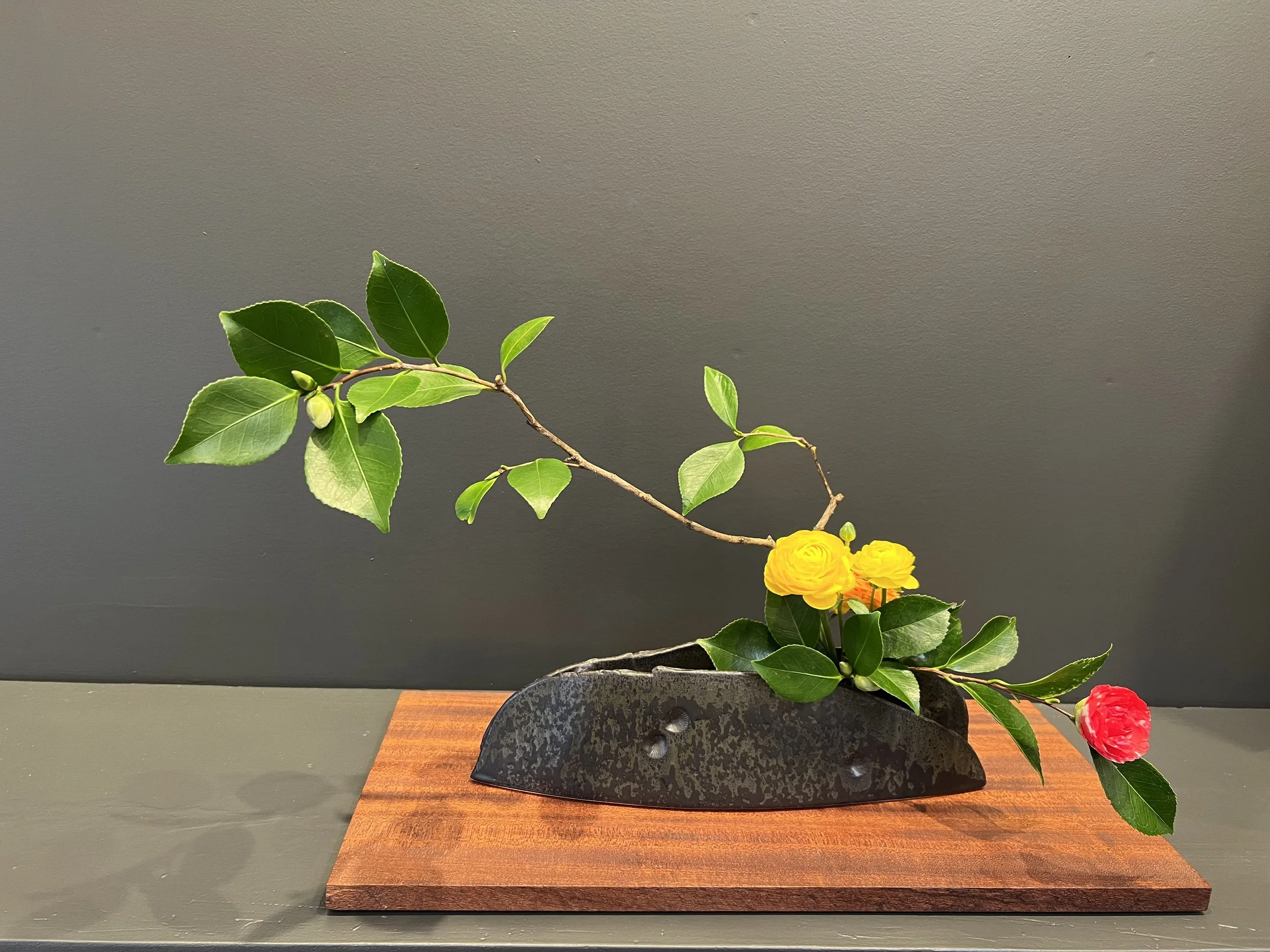
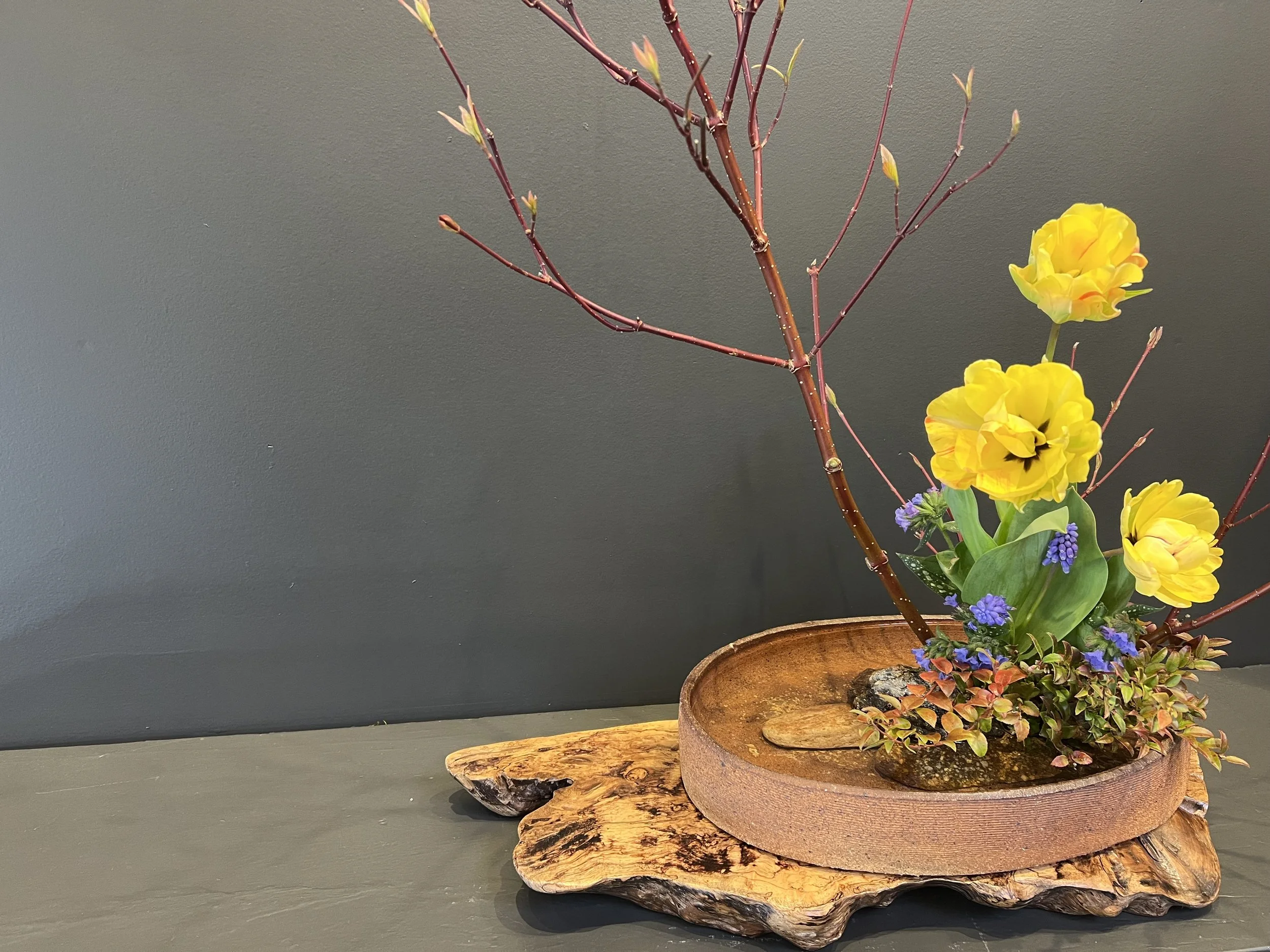
JOAN STAMM (Saga School of Ikebana)
"The Saga Goryu can be traced back to its founder, the Japanese Emperor Saga (reigned from 809 to 823) Saga Goryu is based on five main styles: Seika, Heika, Moribana, Shogonka and new, Shinshoka. The Seika, which is the classical type, based on Heaven, Earth and Man, was created for decoration of the tokonoma (the japanese alcove) and is used to honour guests or for ceremonies at home. Heika and Moribana are arranged more freely. They are based on the beautiful, natural landscapes of the Saga neighborhood surrounding Daikakuji and are suitable for any occasion, be it as Chabana, to accompany the Tea Ceremony, or as Bunjinbana, a flower arrangement which poetically expresses an atmosphere. The Shogonka is the dignified and solemn style which has developed form the original religious flower offering for the altar of the Buddha, and is used for auspicious and ceremonial occasions. It is based on the tenets of the esoteric Rokudai philosophy of Shingon Buddhism. The newest style, Shinshoka, attempts to interpret the essential basics of the Saga Goryu but uses a few carefully selected materials as possible."
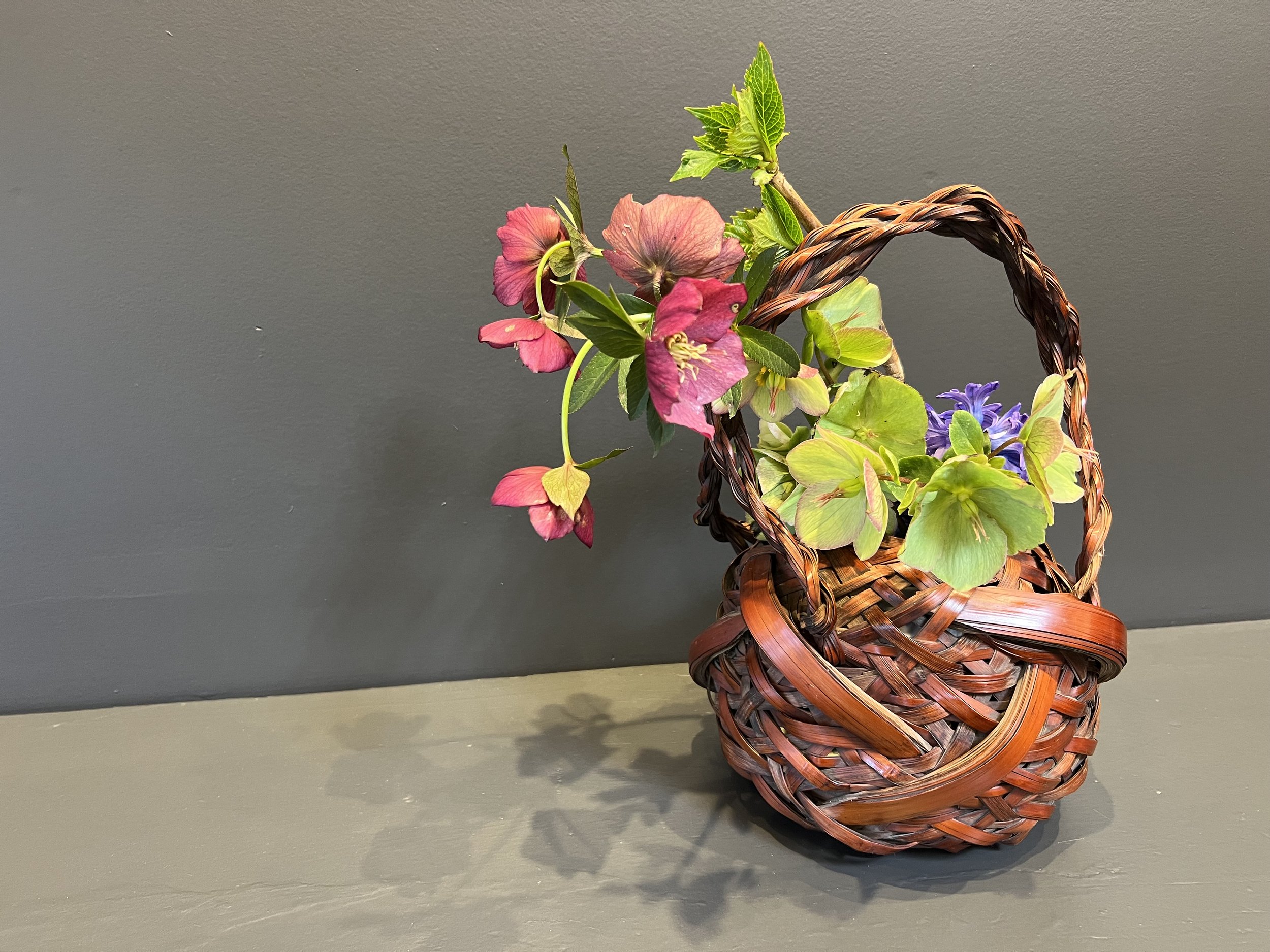
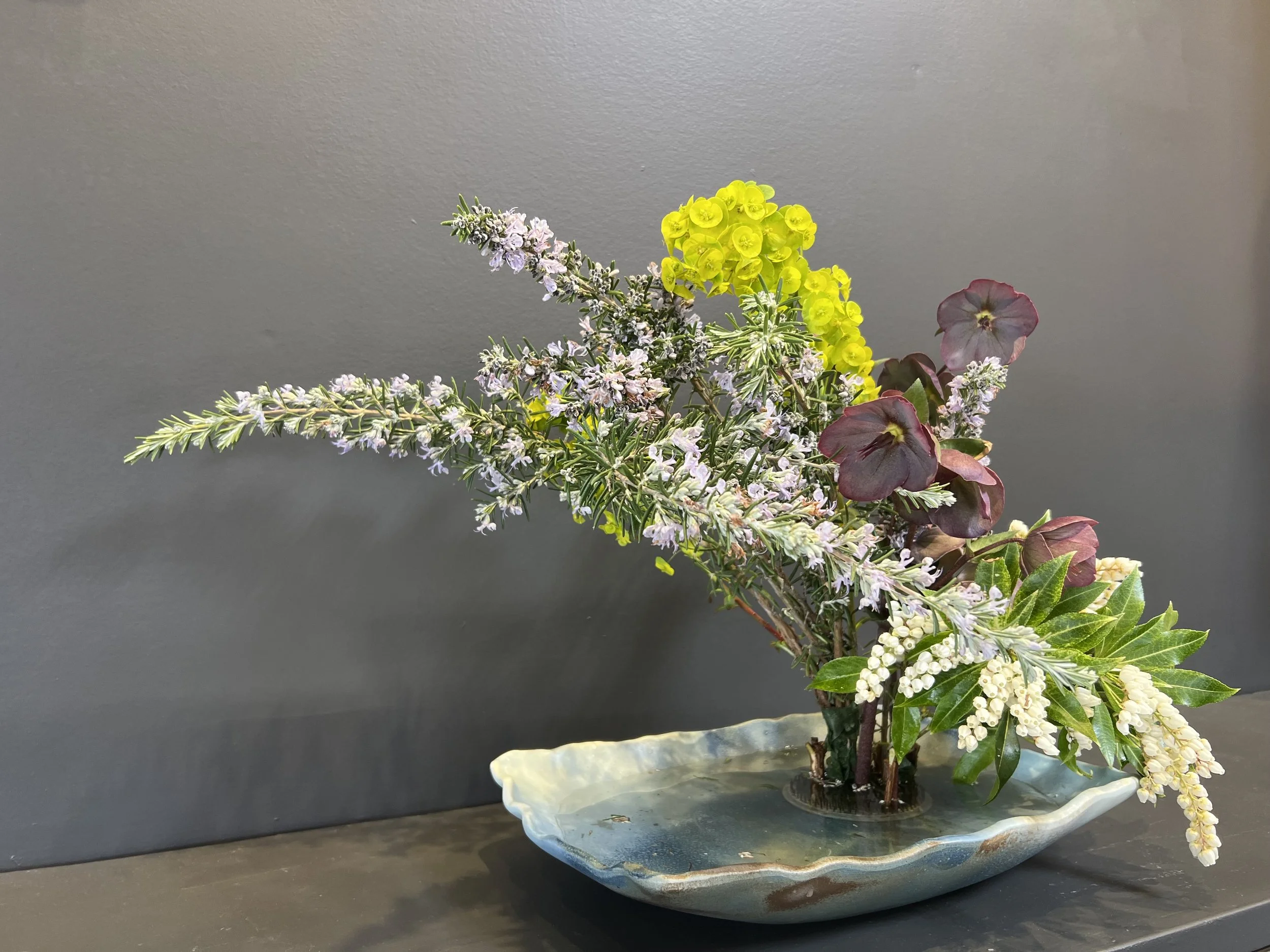
MARY KAY BRANCH (Ryusei-ha School of Ikebana)
"The Ryuseiha was founded in 1886, early in Japan’s modern era, in a Tokyo whose cultural life was reinventing itself. The school’s founder and first Head Master, Kaun Yoshimura, was 27 at the time. His successor, Kakyu Yoshimura, added the sōka and heika styles to rikka and seika and further consolidated Ryuseiha’s foundations as a modern school of ikebana. As the nation embraced the experimental and the avant-garde as part of its postwar renewal, the third Head Master, Kasen Yoshimura, proposed the “aspects of plants” approach, in which the arranger responds to and captures the plants’ own vitality and brings out the expression of each branch and leaf of the available materials as viewed from different angles. Among the main techniques for doing so are changing the viewpoint, modifying the material, combining materials in a new way, and establishing a situation. Today, this principle is the key to the school’s work." from Ikebanahq.org
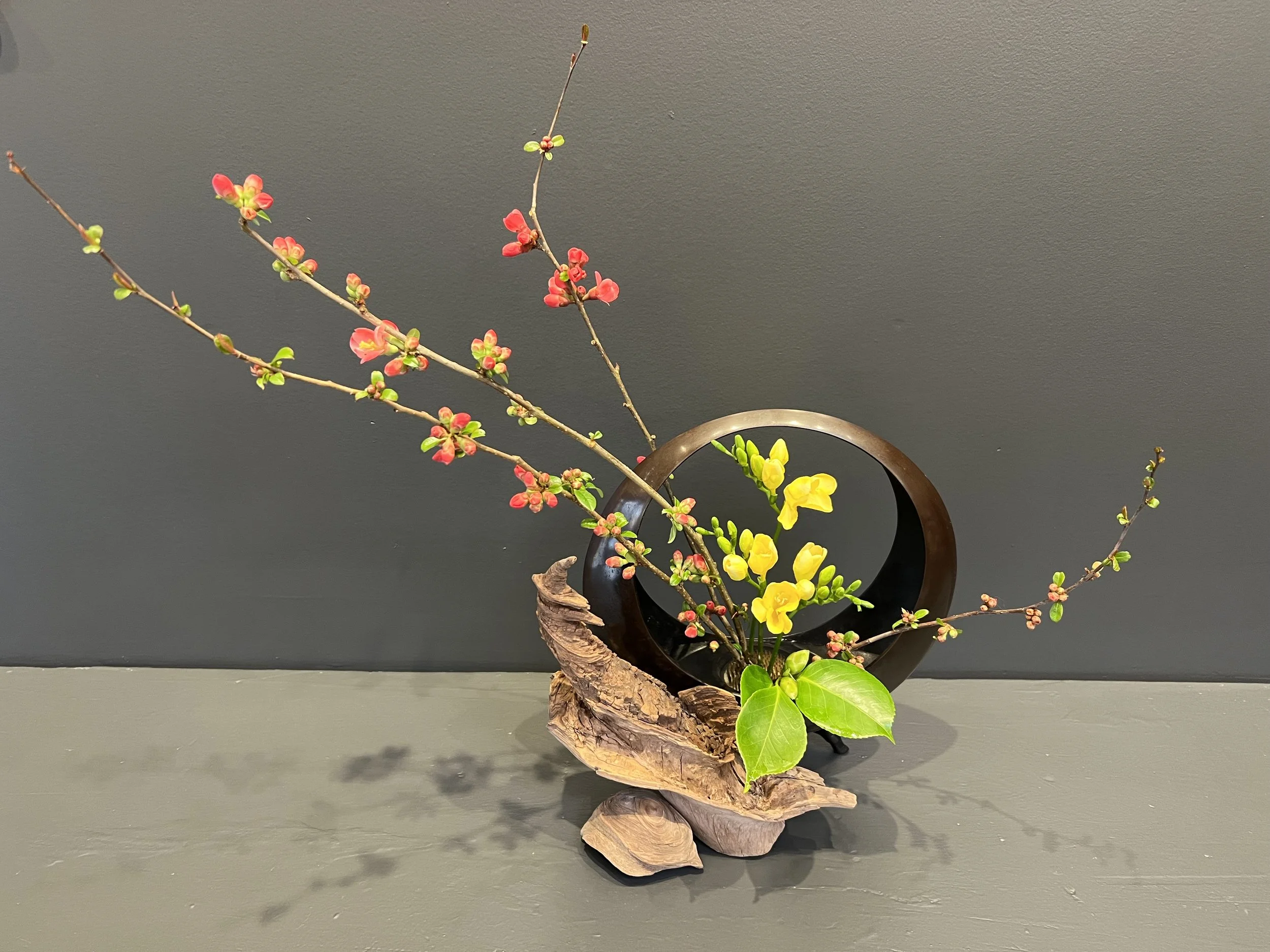
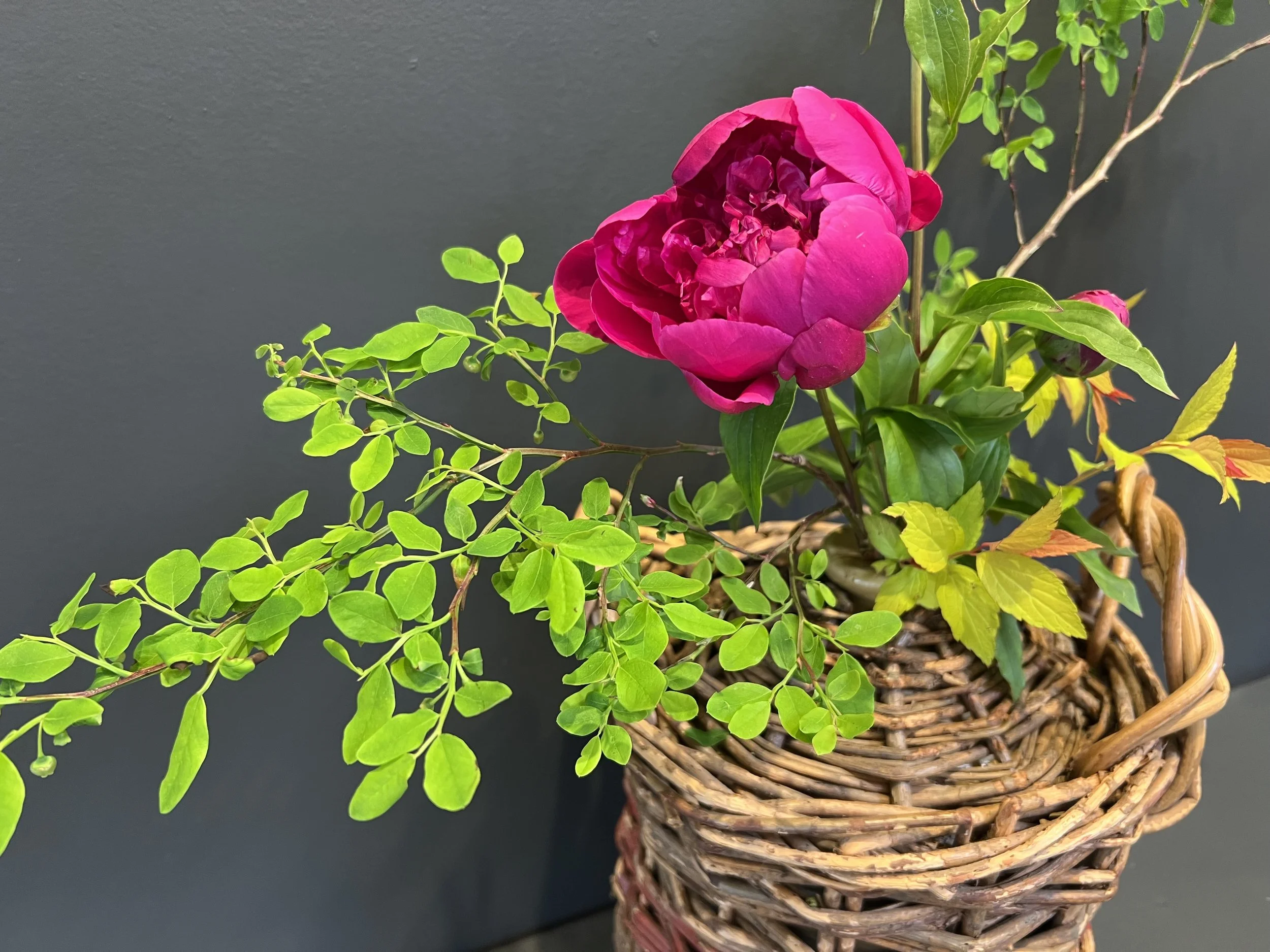
PAMELA NOLAN (Sen Sho Ikenobo School of Ikebana)
"Ikenobō is the oldest and largest school of ikebana, the Japanese practice of giving plants and flowers invigorated new life. The Buddhist practice of Ikenobo has existed since the building of the Rokkaku-do temple. The actual organized school institution was founded in the 15th century by the Buddhist monk Senno. The school is based at the Rokkaku-do temple in Kyoto. The name is derived from the word combination of a pond (ike) where Prince Shotoku had originally bathed while looking for the Rokkaku-do temple building site and the small hut built near the pond for subsequent priests to live in (bo)." from wikipedia