ARBOREAL: October-December 2025
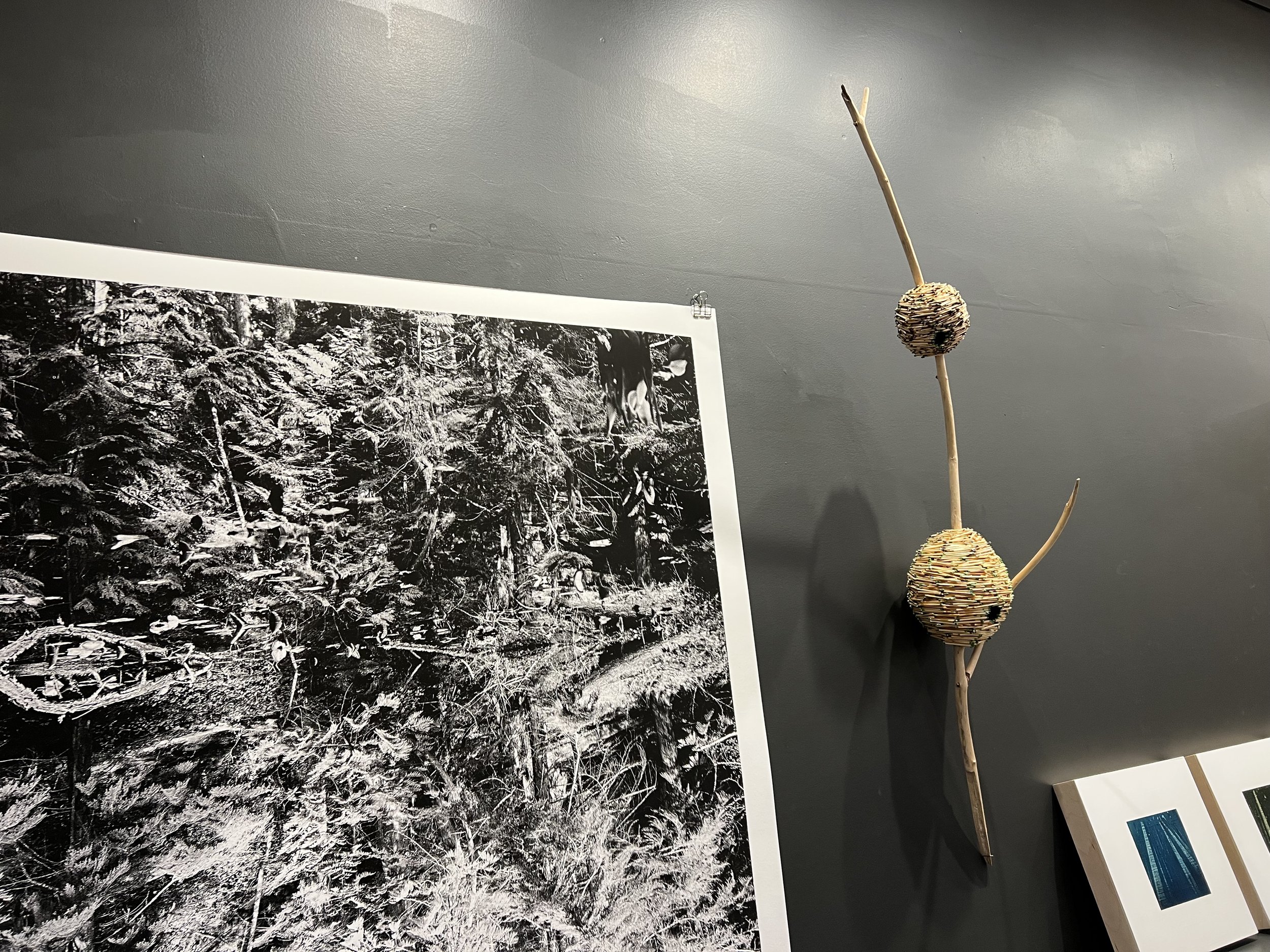
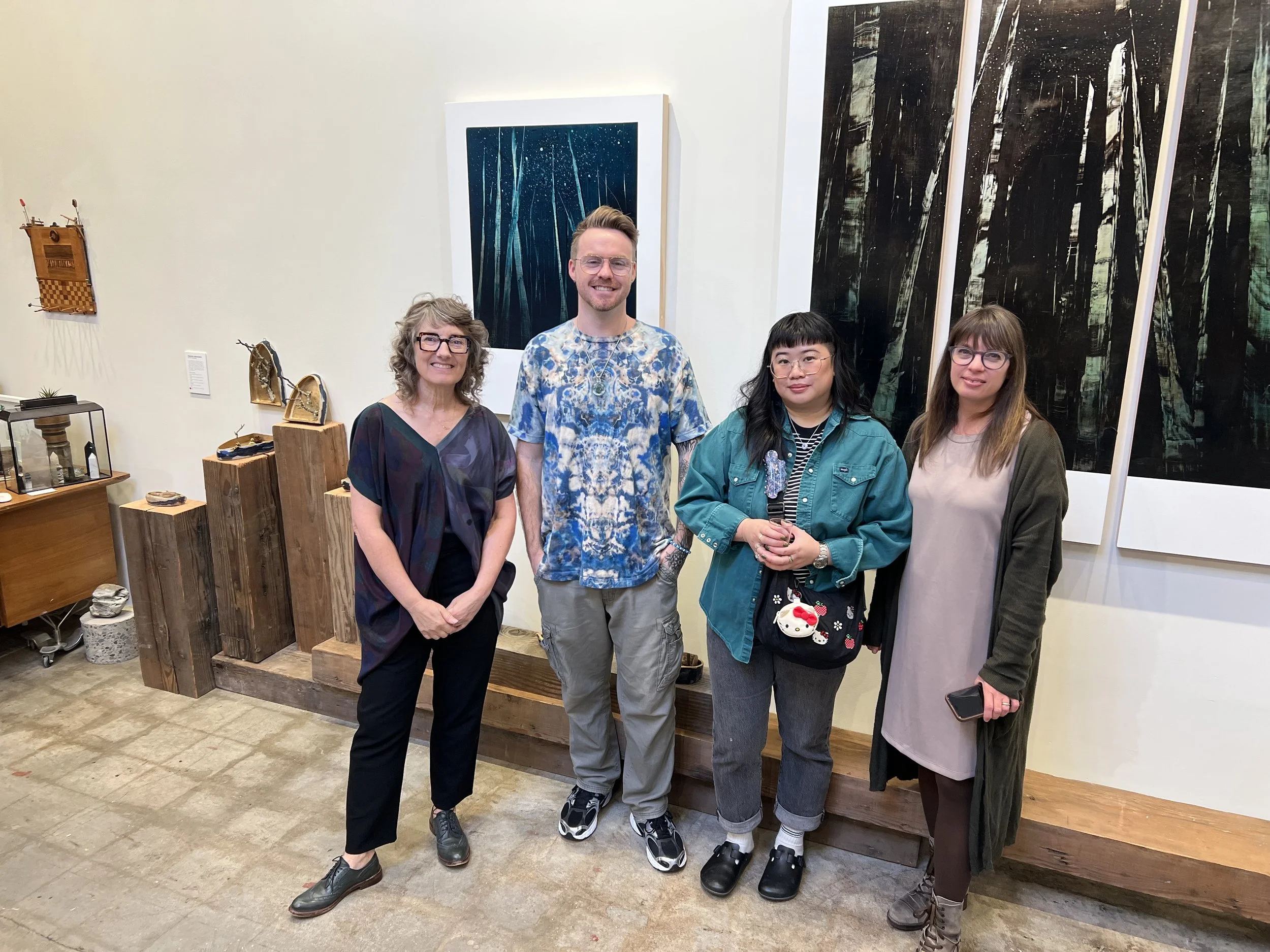
Kayla Lim photography, Karen Hackenberg matchstick sculpture; Lesley Frenz paintings; other artists in the show include sculptures by Jennifer Fernandez and art videos by Brenden Emery
CURATOR NOTE
In rural Indiana, at the age of 6, we moved into a trailer in the woods on my aunt’s farm. This small deciduous woodland was left to thrive by surrounding farmers in order to cull firewood and hunt for sustenance of squirrel, deer and raccoon. It was a necessary piece of the life of rural farmland. Corporate conglomerate farms have consumed the small farms and therefore the woodlands have been raised for more fields and more efficient farming. But this has decreased the waylay stations for migrating birds and beasts. But back then I played for hours below the high canopy of old growth deciduous trees and in the rotting nurse logs and standing dead trees. They were witches castles, teleportation stations and time machines. They were my friends. I remember the coolness they gave in the heat of summer and the protection from freezing winds in the winter. I remember skating in long strides on skinny creeks and the crunch of large Sycamore leaves as big as dinner plates. I remember the smell; lush, rich, full of life and breath. I carry the woodlands in my lungs and in my heart. Their out breath is my in breath. I feel close to trees and all glowing green things, not simply because they are beautiful and I feel better when surrounded by growing things, but because I don’t consider it outside of my body; it is my body; it is my breath.
“...and into the forest I go to lose my mind and find my soul...” John Muir
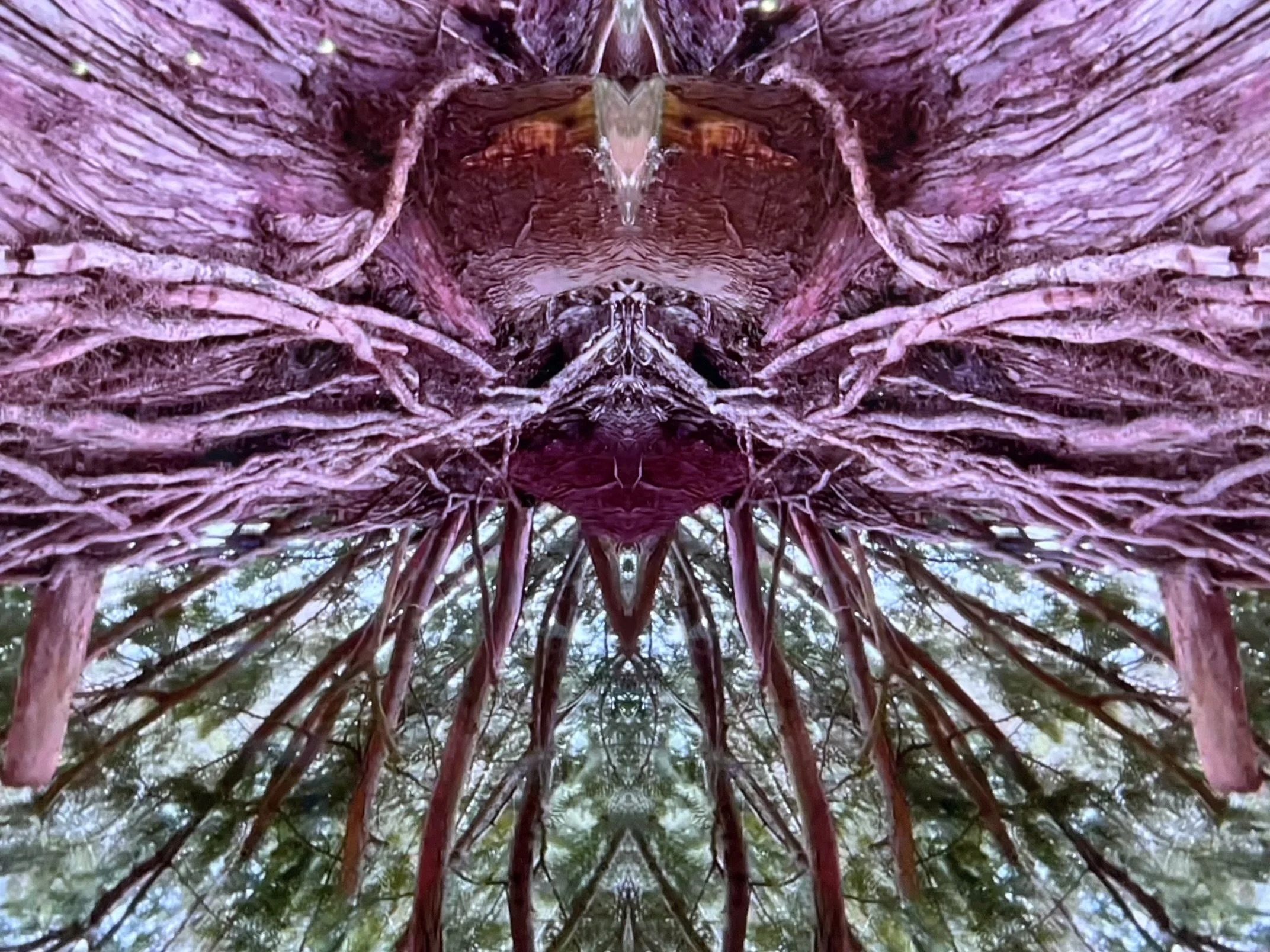
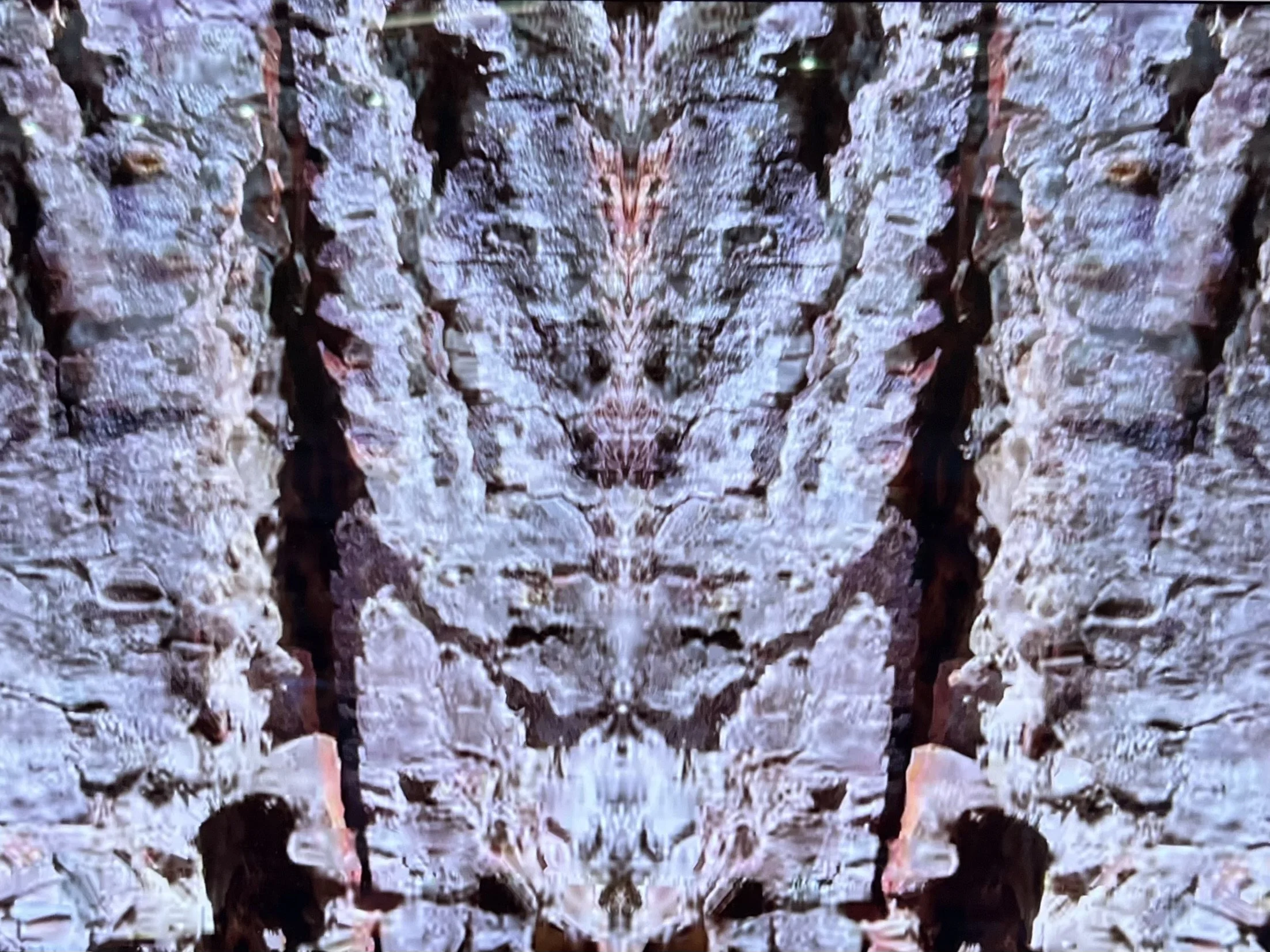
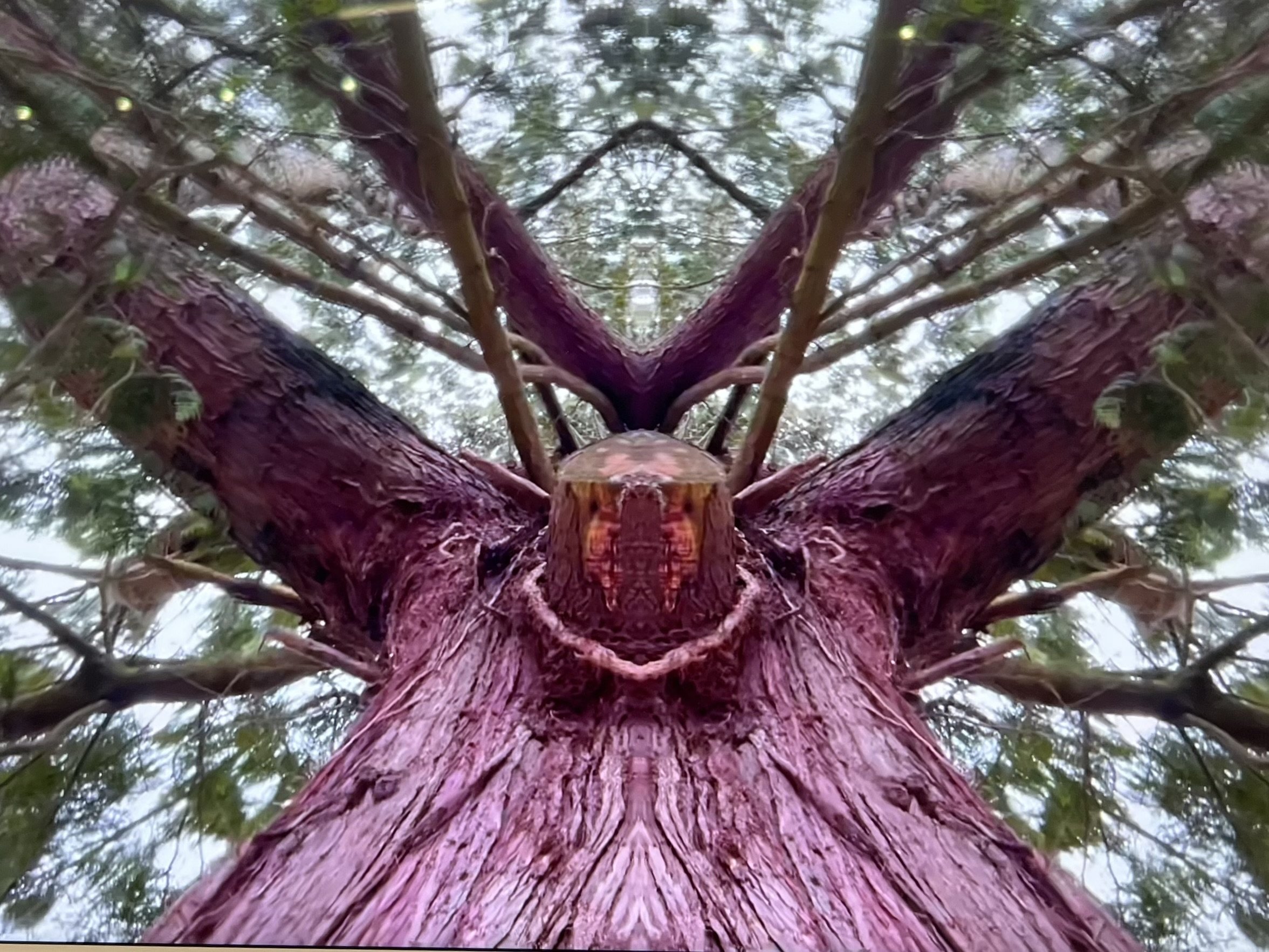
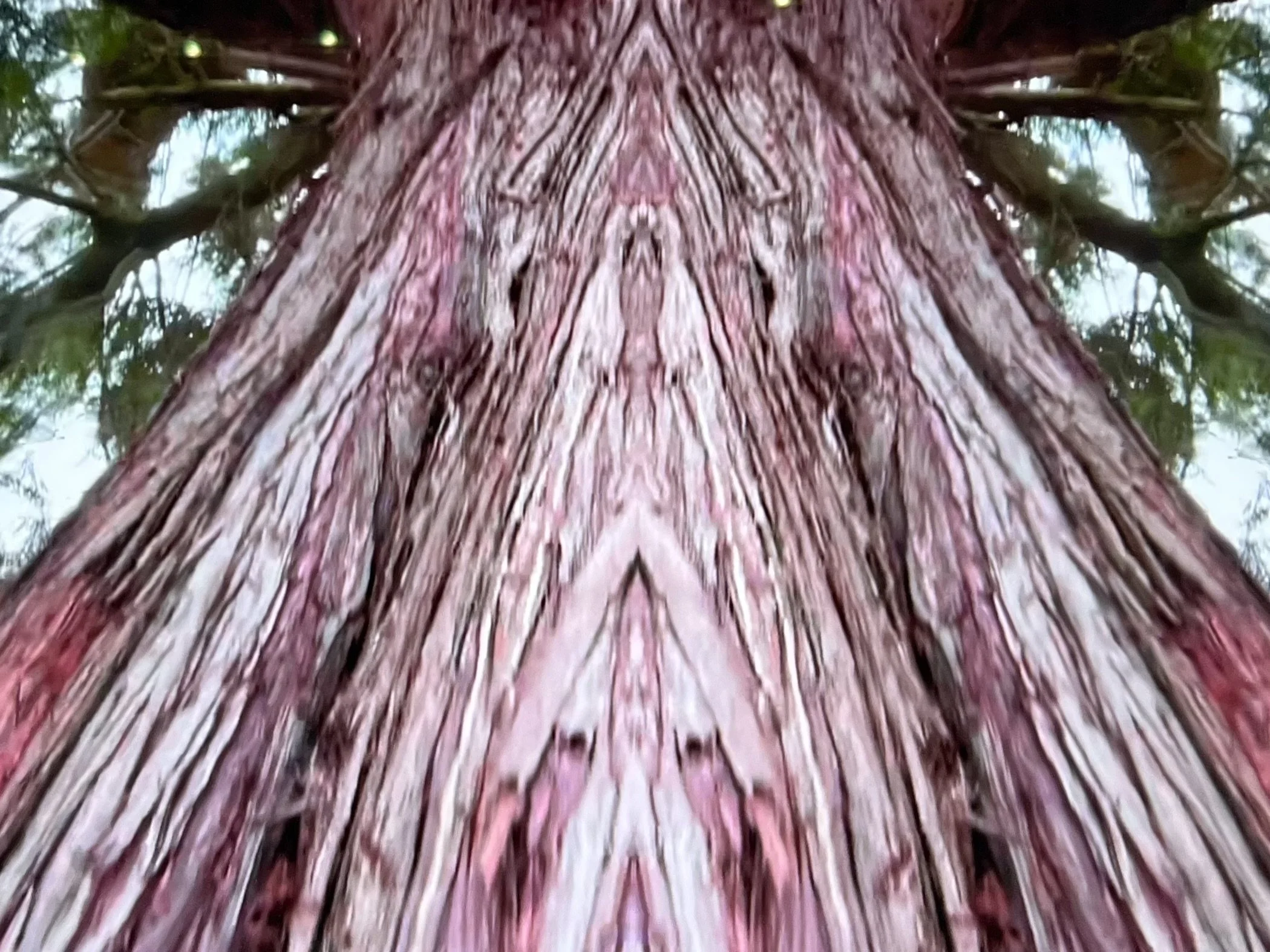
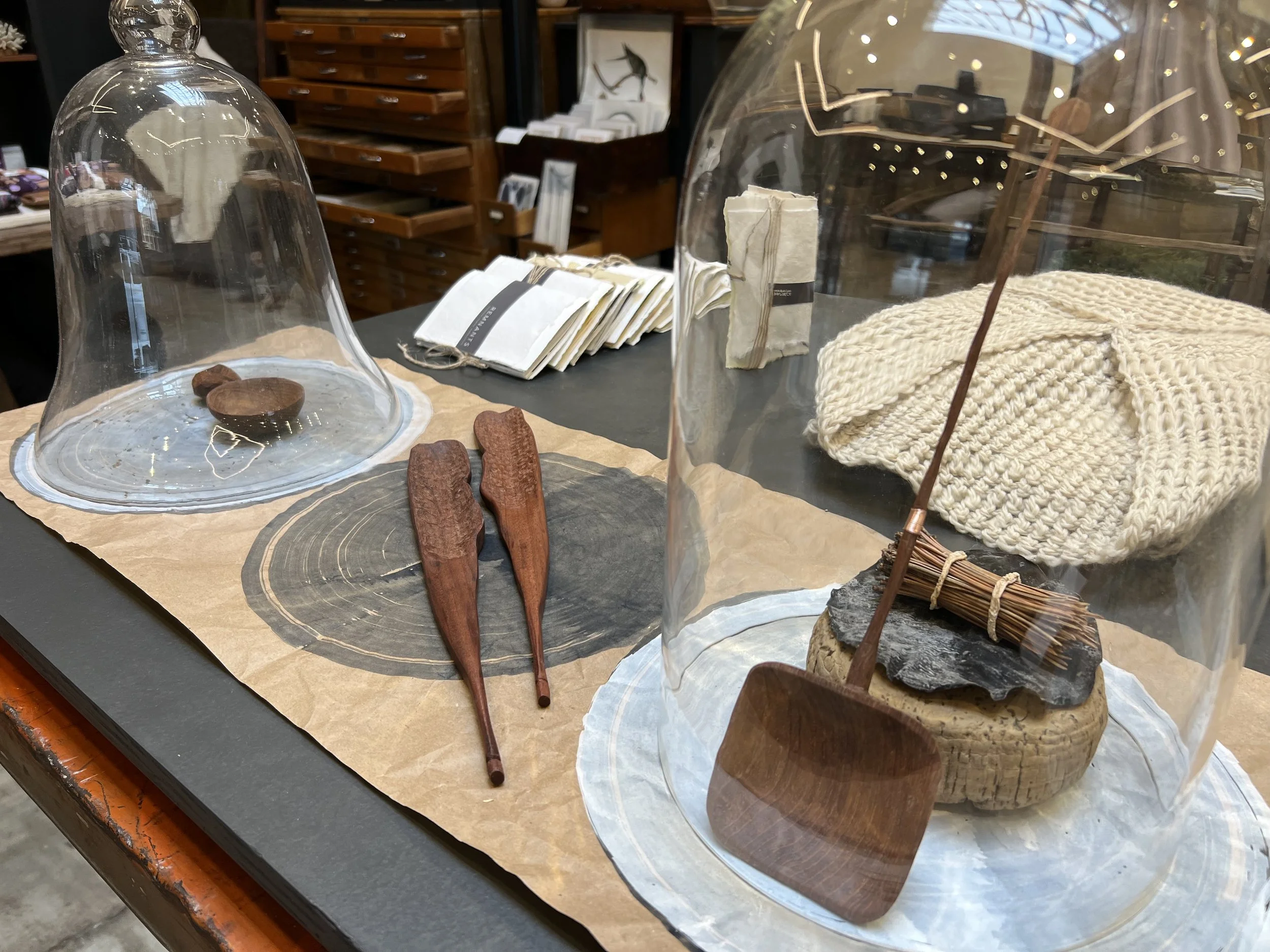
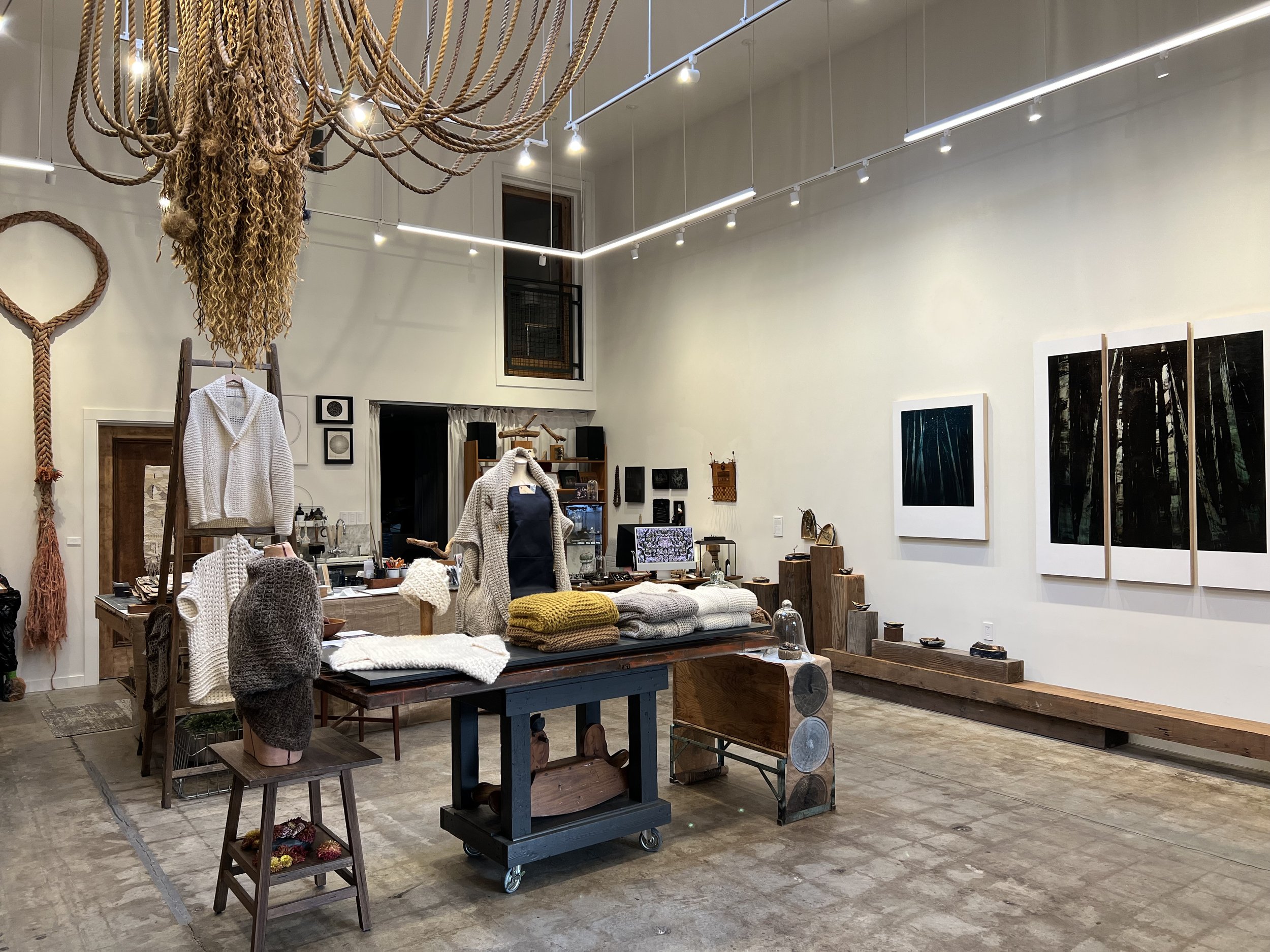
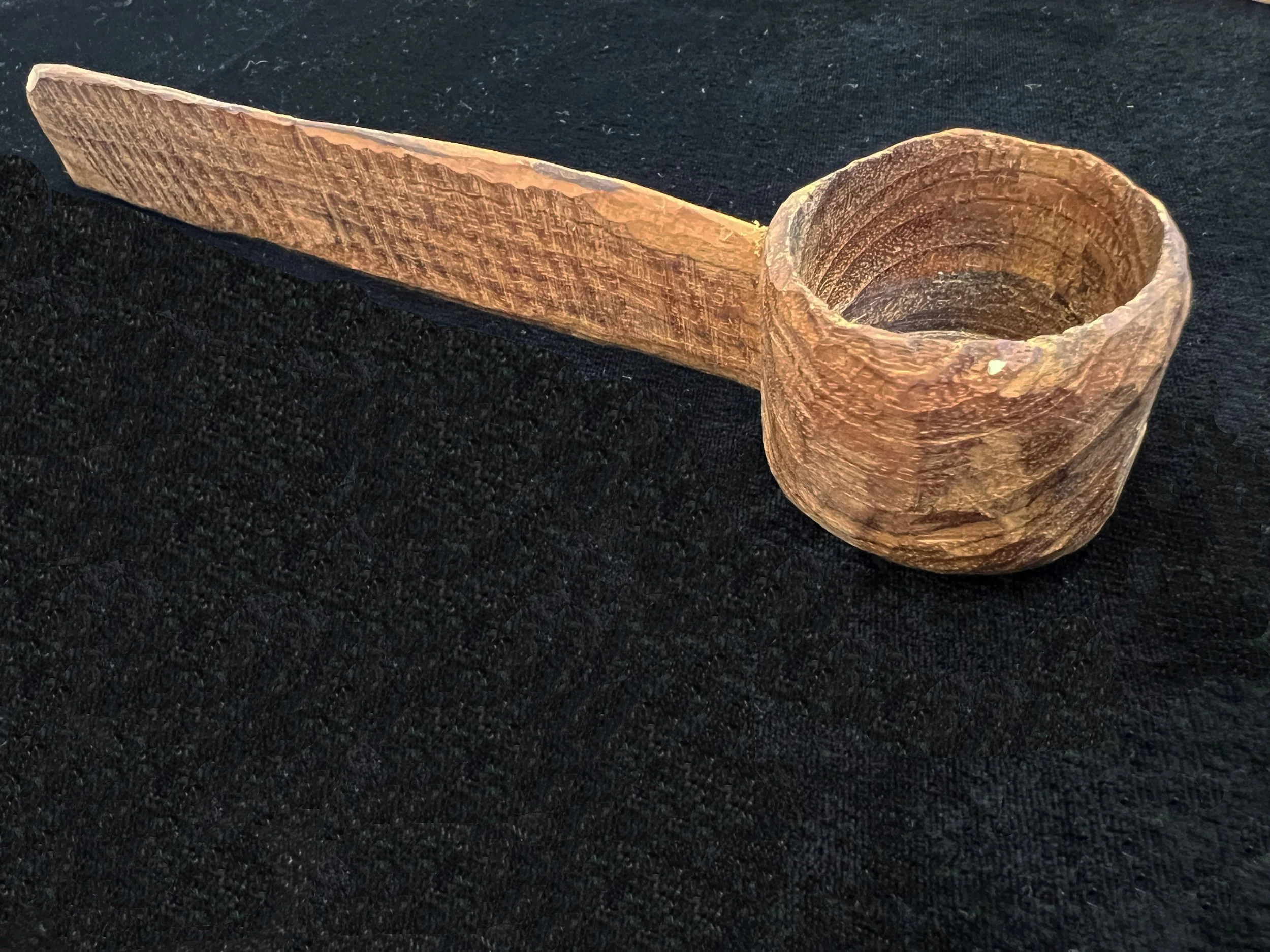
This show is in honor of all things arboreal; an exhibit in honor of tree and forest, root and crown, twig and leaf, breath and sacred place. This exhibit exudes a sense of reverence. In the moody dampness and nostalgia of Kayla Lim’s photographs Swamp Portal and Persimmons: in the ritual of carving branches into sculptural utensils by Rob Shepherd; in the creation of ceramic boat/pod altars cupping tender branches by Jennifer Fernandez; in dark night of the soul and forest paintings by Lesly Frenz; in trippy and exuberant Rorschach videos of bark and branch, moss and mushrooms by Brenden Emery; in the witty and poignant matchstick sculpture illustrating our failing environment and our place in that process by Karen Hackenberg- every artist brought their authentic arboreal experience. It is both a wake and a call to action this exhibit asks for us to bring ourselves back into relationship with the other half of our breath and the home of millions of creatures in over and under story. Let our hubris not be the destruction of the humus of life that sustains us all.
Christine Chaney (owner, curator, artist)
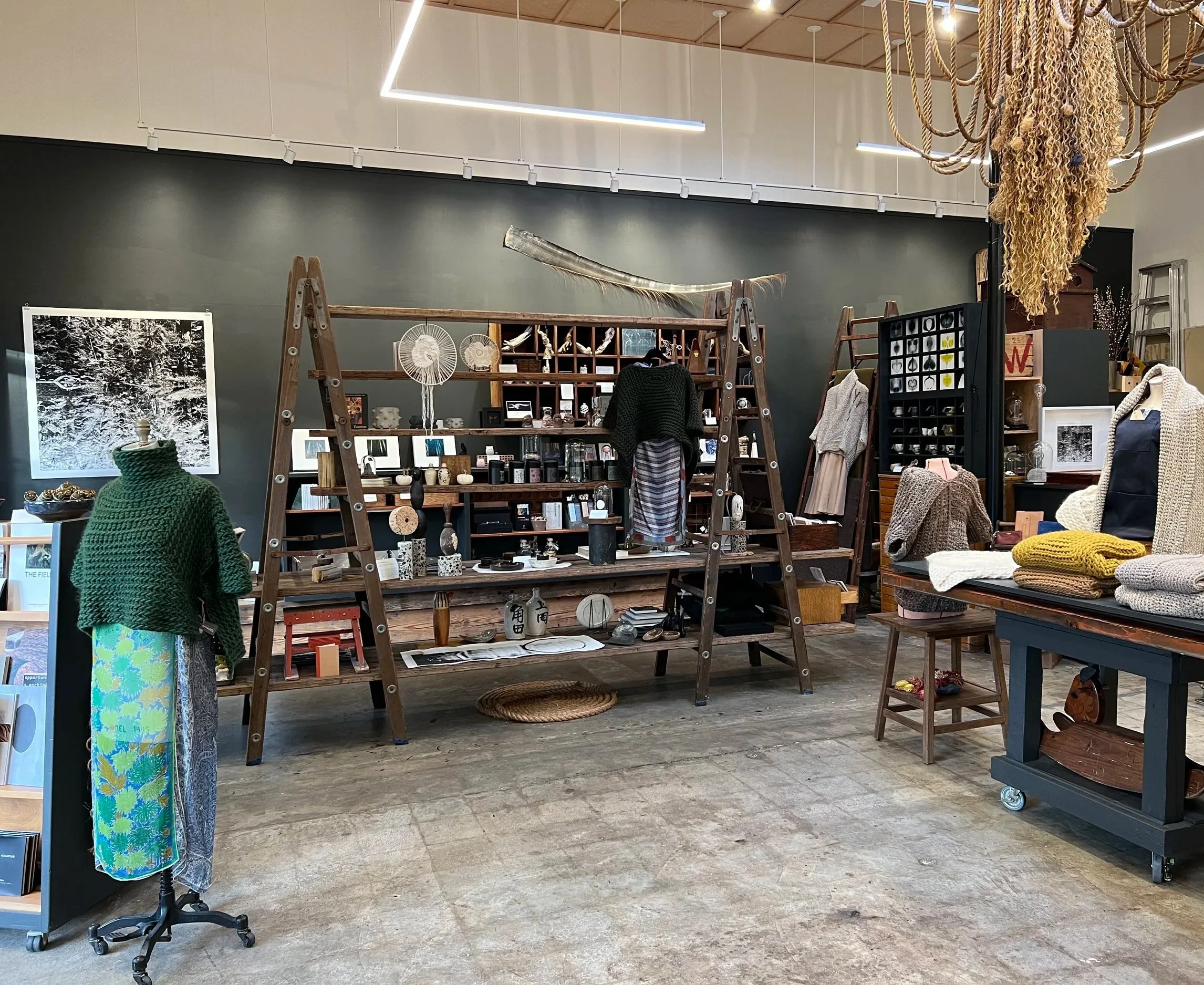
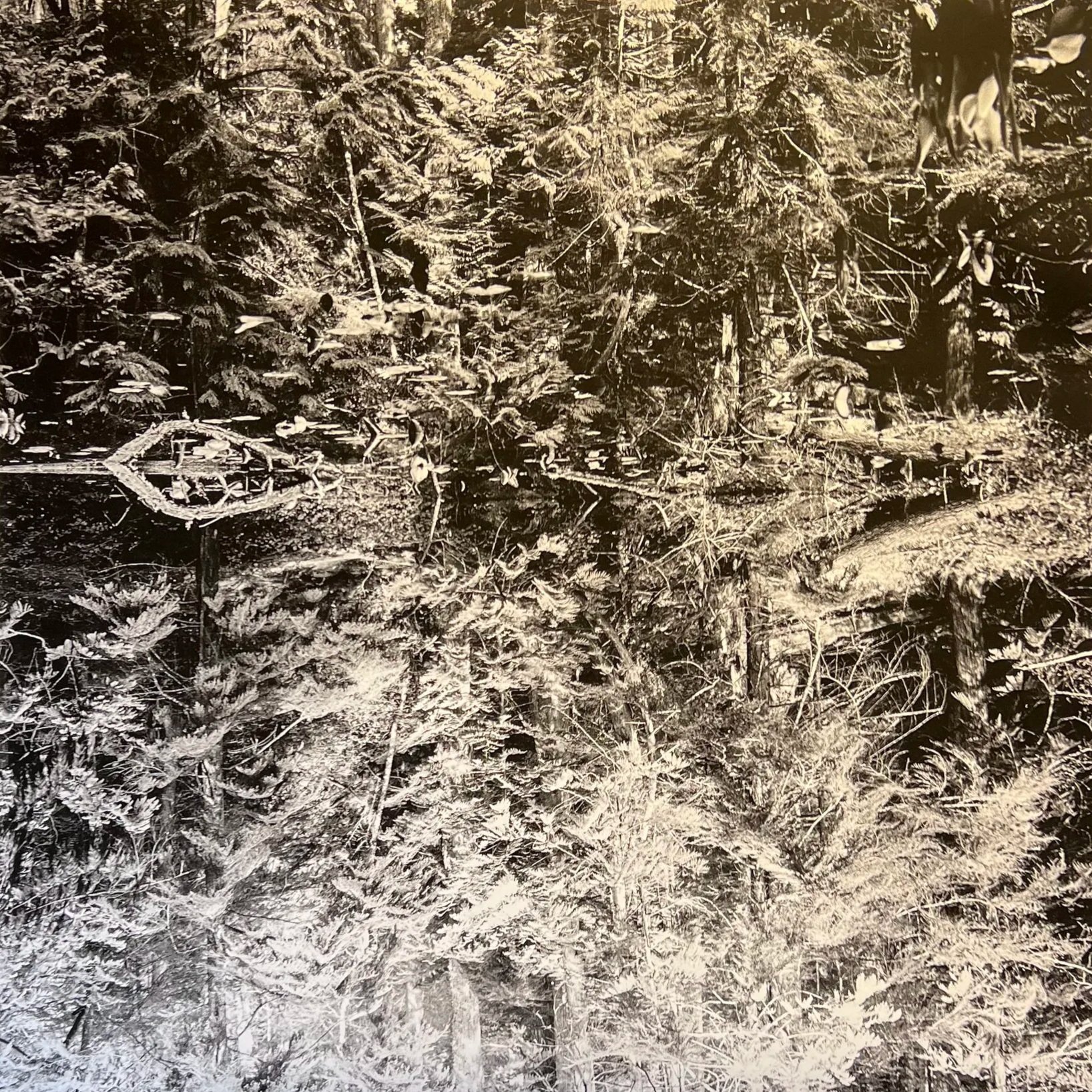
SWAMP PORTAL by Kayla Lim
SWAMP PORTAL (2025) (Giclee print on archival Hahnemule photo cotton rag/ Black and white film/ medium format/ 40x40 image/ 44” x 44” paper)
Filipino folklore is full of mythological and more often than not, mischievous creatures that inhabit the mountains and wooded areas. “Swamp Portal” is a reflection of dense woods over a body of water at first glance but it’s hard to shake the feeling of what could be looking back at you.
PERSIMMONS IN OCTOBER 2023 & 2025 (cyanotypes on watercolor paper, 35mm film, 5” x 7”)
A study on recent loss, “Persimmons in October” present simple images of what was left of my father’s beloved persimmon tree days before moving out of my childhood home, weeks before he passed.
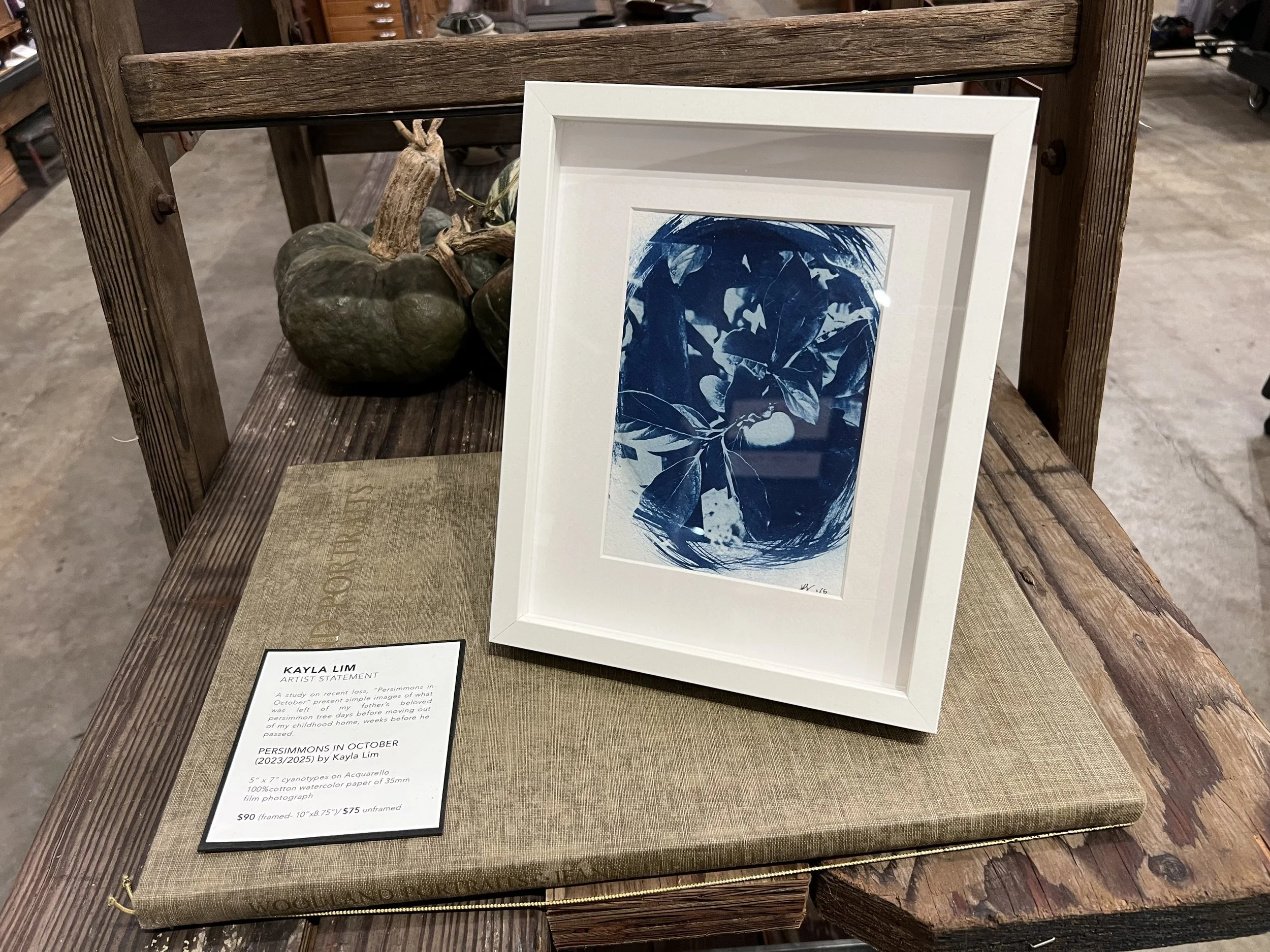
PERSIMMONS IN OCTOBER by Kayla Lim
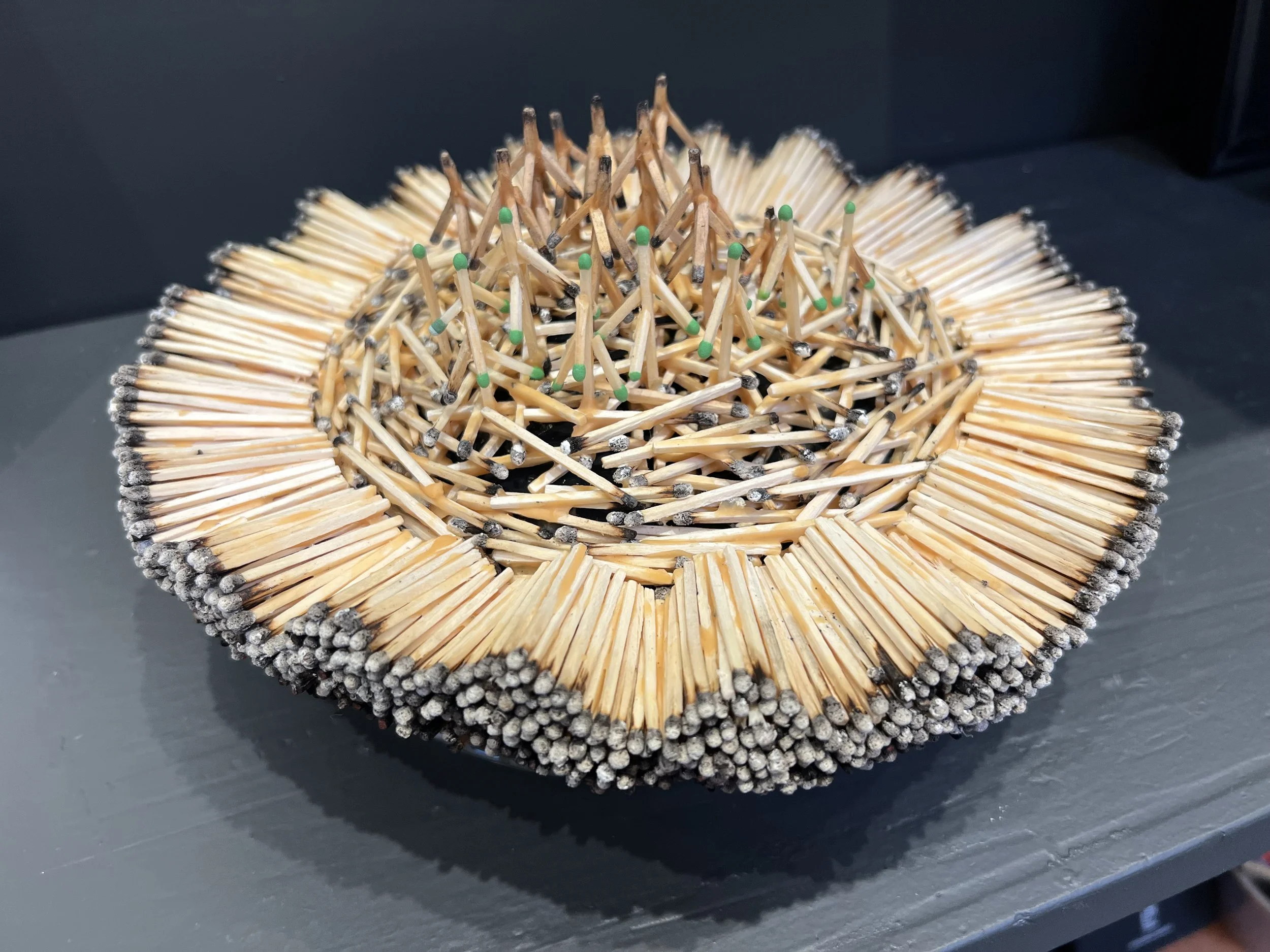
The Unshakeable Habit of Noticing by Karen Hackenberg
Like a raindrop falling on the surface of the ocean, the voice of a single person has the power to effect change, rippling outward to touch and co-mingle with the many voices of our collective consciousness. Looking back over my life, I remember so many individuals, who through their simple words and small actions have nurtured my awareness of the beautiful intricate balance of the natural world. These mentors helped craft my life’s creative path.
My childhood delight in nature was first instilled in me at my father’s side in the coastal New England farm country where I grew up. When we walked through the pastures and woodlands behind our house, trailing two cats and a dog in our wake between the cows, my dad would point out the little things he enjoyed about the plants and animals around us. He would often pluck a twig from a low hanging beach tree branch and show me how to peel and chew the bark to savor its fresh minty taste. Following his example, as children do, I became a close observer of the subtle details of the plants and animals of the forests, farms and beaches around our home.
The first Earth Day was not long past when I first began to study painting at Rhode Island School of Design in the mid 1970s, and attended Artists for Environment, a RISD partner program for painting students located in rural western New Jersey. The A.F.E. program focused on the appreciation and conservation of nature through landscape painting. We worked alongside prominent landscape artists of the New York School, such as Paul Resika and Gretna Campbell. Gretna was force; a self-contained and feisty pleine air painter, she lugged her enormous canvases out into the cold winter forest, crunching her way through the heavy snow in a long woolen overcoat. Her sneakered feet were covered in plastic bags to keep them dry, while in her pockets she carried hot foil wrapped potatoes that doubled as hand warmers while she worked and as sustenance at mealtime. I knew Gretna for only a short time, but she became a strong role model for me through her passionate and idiosyncratic pursuit of the beauty in nature, expressed so well in her stunning gestural landscape paintings as well as in her approach to making them. Amongst many things, she showed me that where there is a will there is a way.
“I intend to find out something of the nature of the world through seeing. Or maybe I only intend to prolong my delight in seeing.” - Gretna Campbell, painter of the New York School
Recently, while attending the memorial service for ecological visionary Doug Tompkins in San Francisco, I had the chance to reflect on his influence on the environmental themes in my current artwork. In the late 1980s, when I worked in design under Doug’s direction at ESPRIT’s headquarters, he challenged us daily to consider the consequences of out-of-control “first world” consumer habits. He hosted prominent environmental activists at ESPRIT’s annual Earth Day celebrations, most notably, David Brower, the founder of the Sierra Club, and Dave Forman, the cofounder of the Earth First! organization. Doug’s passion and resolute conviction helped to more firmly ground my ecological roots that were first nurtured by my father.
“We, collectively, just have to be a lot smarter than we have been up to now. Even if the future looks absolutely hopeless, being a hardcore eco-social activist and going down with the ship of Mother Earth will be a dignified way to go. There is nothing better to do anyway, and with no better class of human beings, at least in my view. Caring for all the other creatures on the planet is righteous work. We can be proud of the work right to the bitter end, if it does, in fact, come to that. If someone has a better answer for these existential questions, let me know. It is good to remember, that one is either an activist or an inactivist. Ask yourself what you are in this regard, and you might be surprised at the answer!” - Douglas Tompkins, conservationist
I am an environmental activist, though not in the strictest sense of the word. I paint and craft artworks rising from a simple primal urge to create beauty by making things, and have learned an unshakable habit of noticing. I seek meaning in the world around me, and notice the ironic absurdities in the ways we humans often regard the natural world as merely the resource for our self-gratifying consumer habits, while we ignore the destruction of life and beauty that results from our oblivious rush to purchase the next big thing. As a visual artist, I communicate best through images, and in my wry, elegiac paintings, I bear dark witness and document loss.
“Have fun saving the world or you are just going to depress yourself.” - David Brower, founder of the Sierra Club
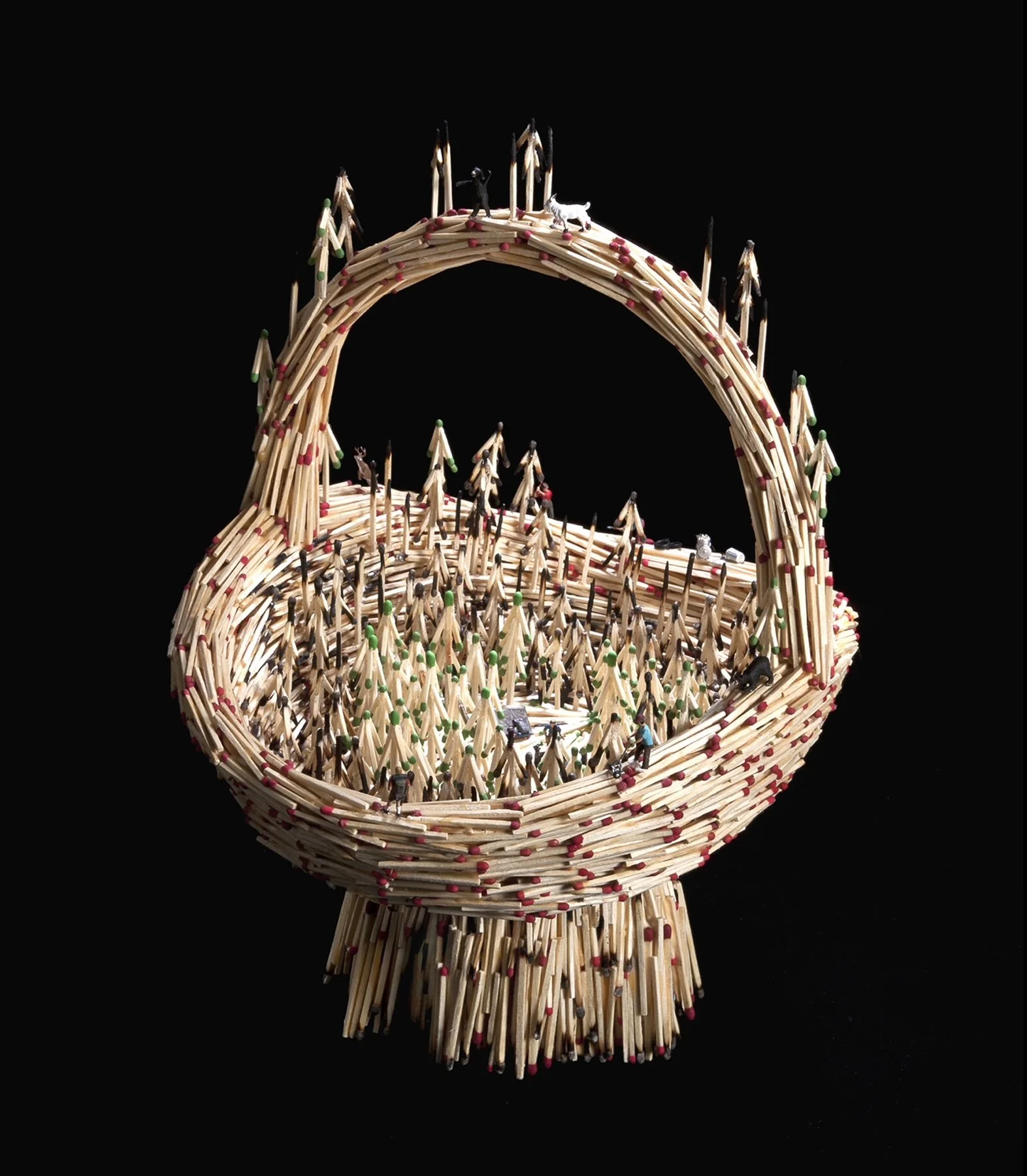
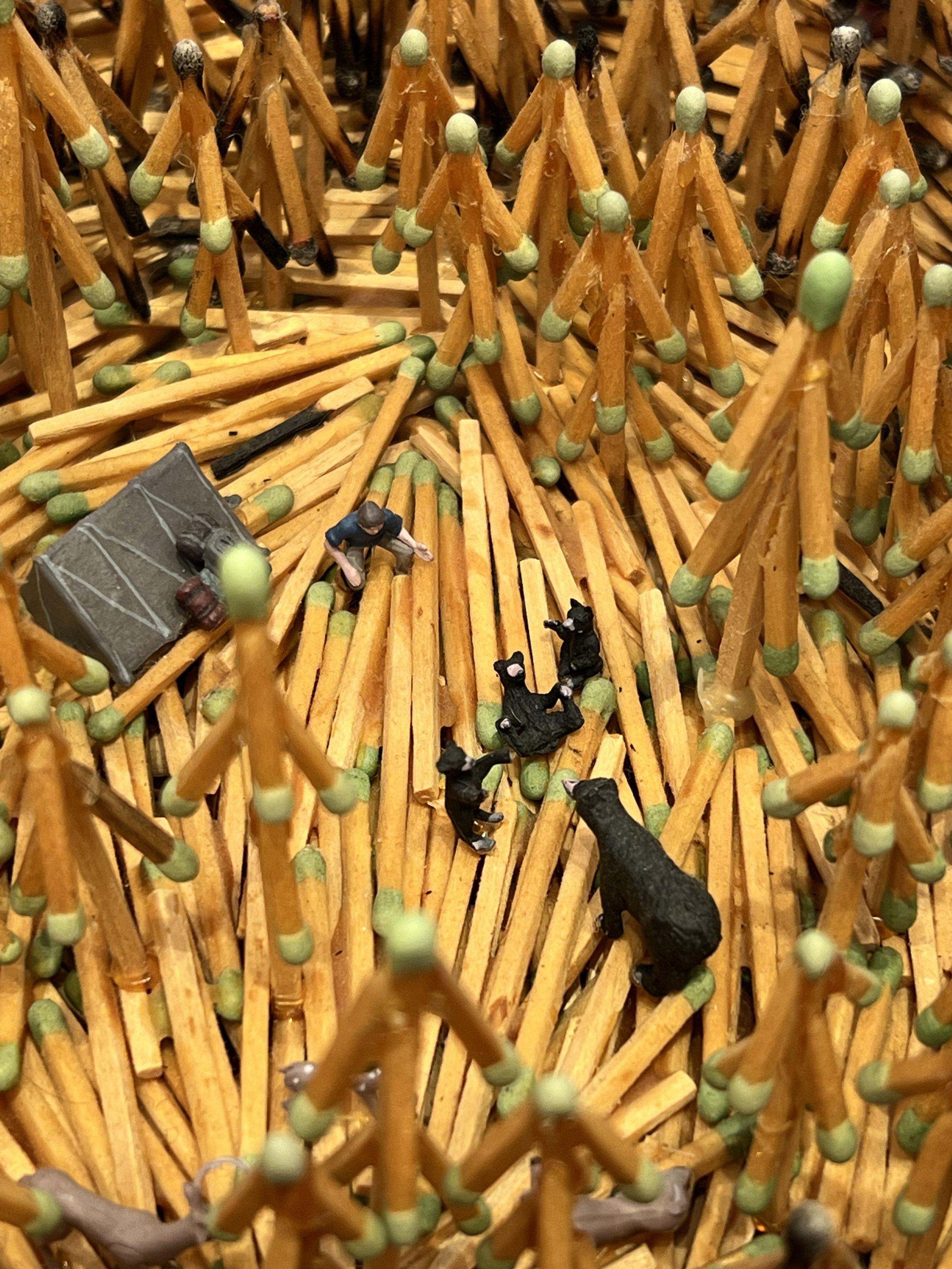
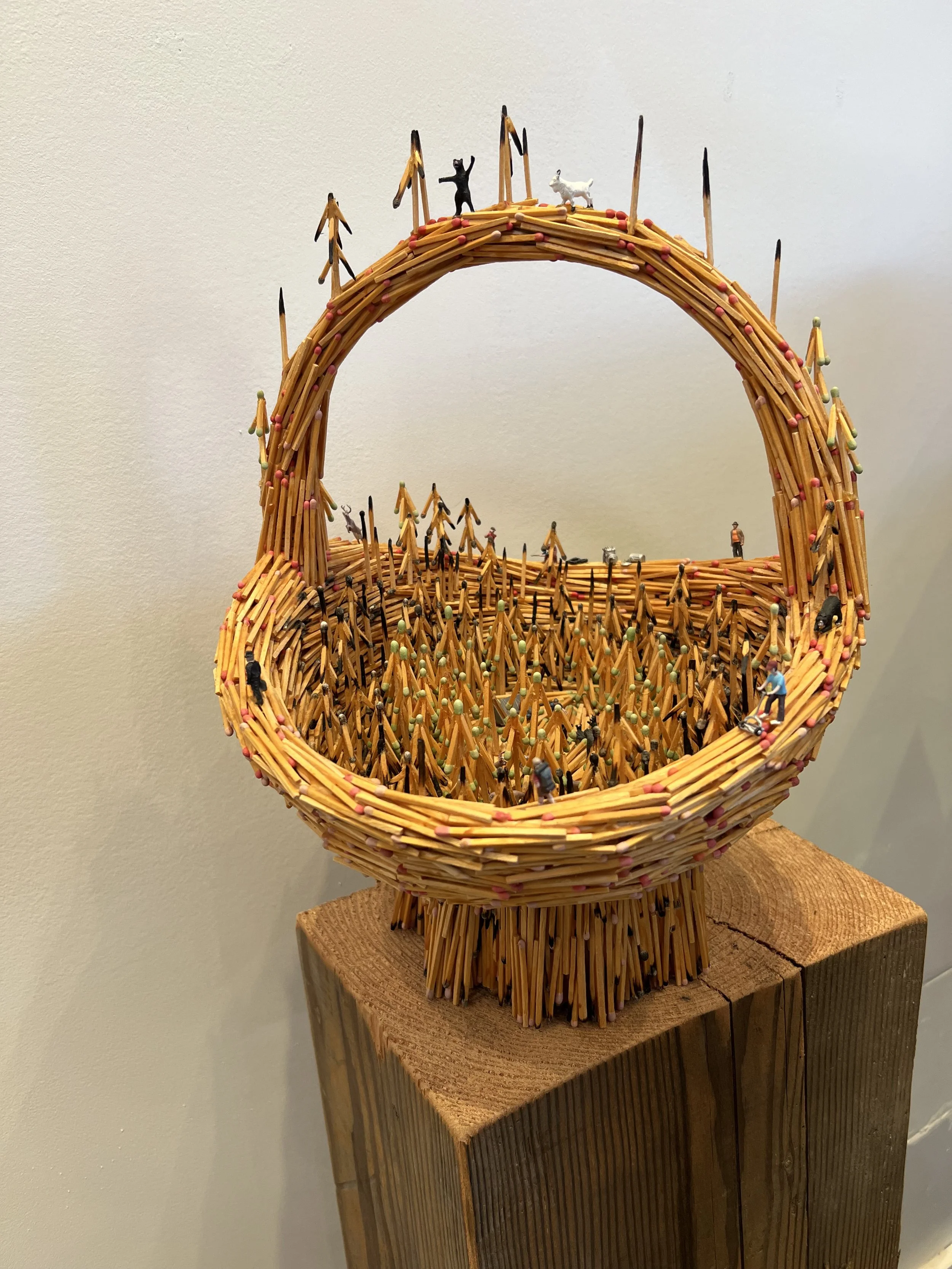
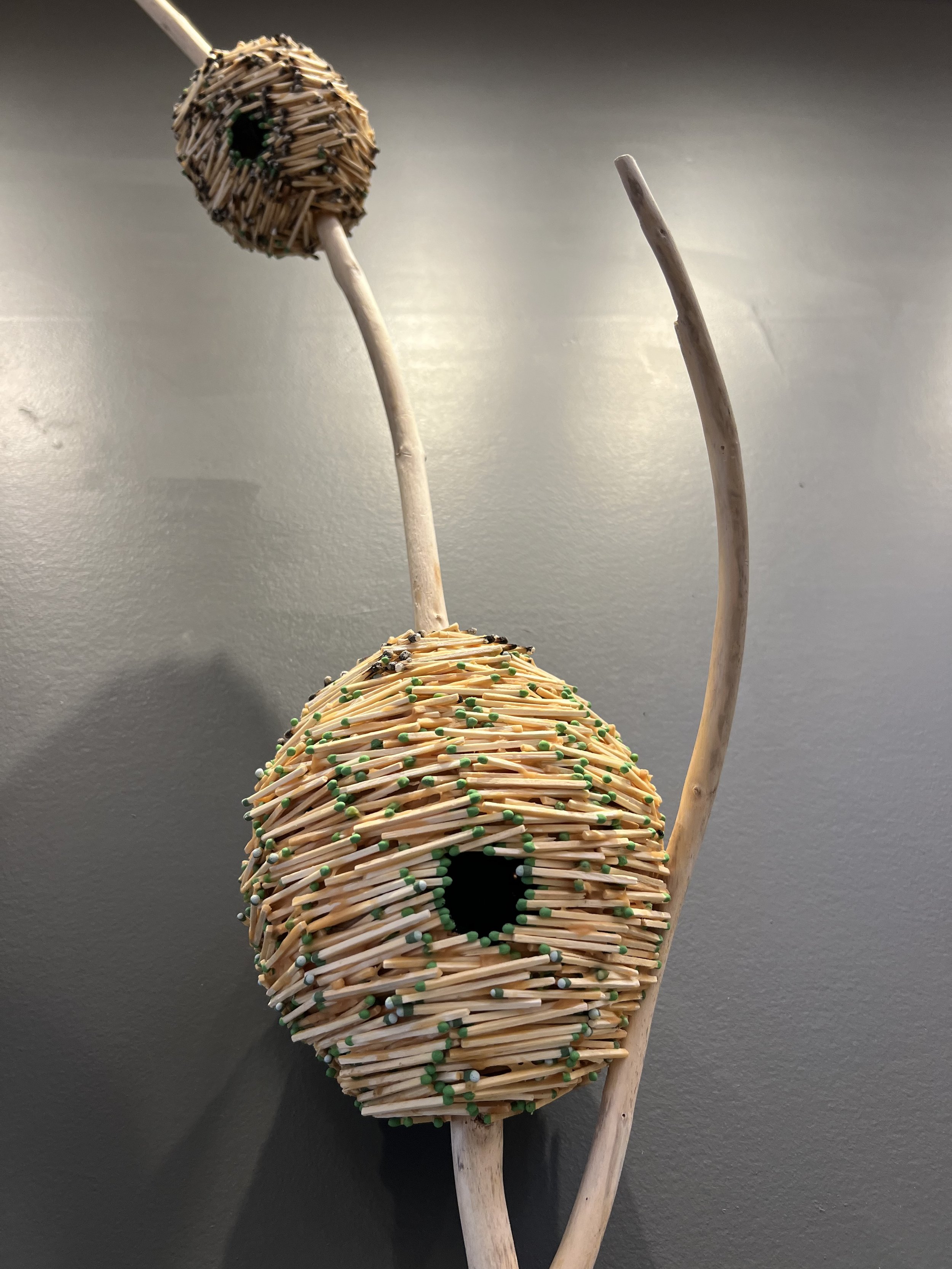
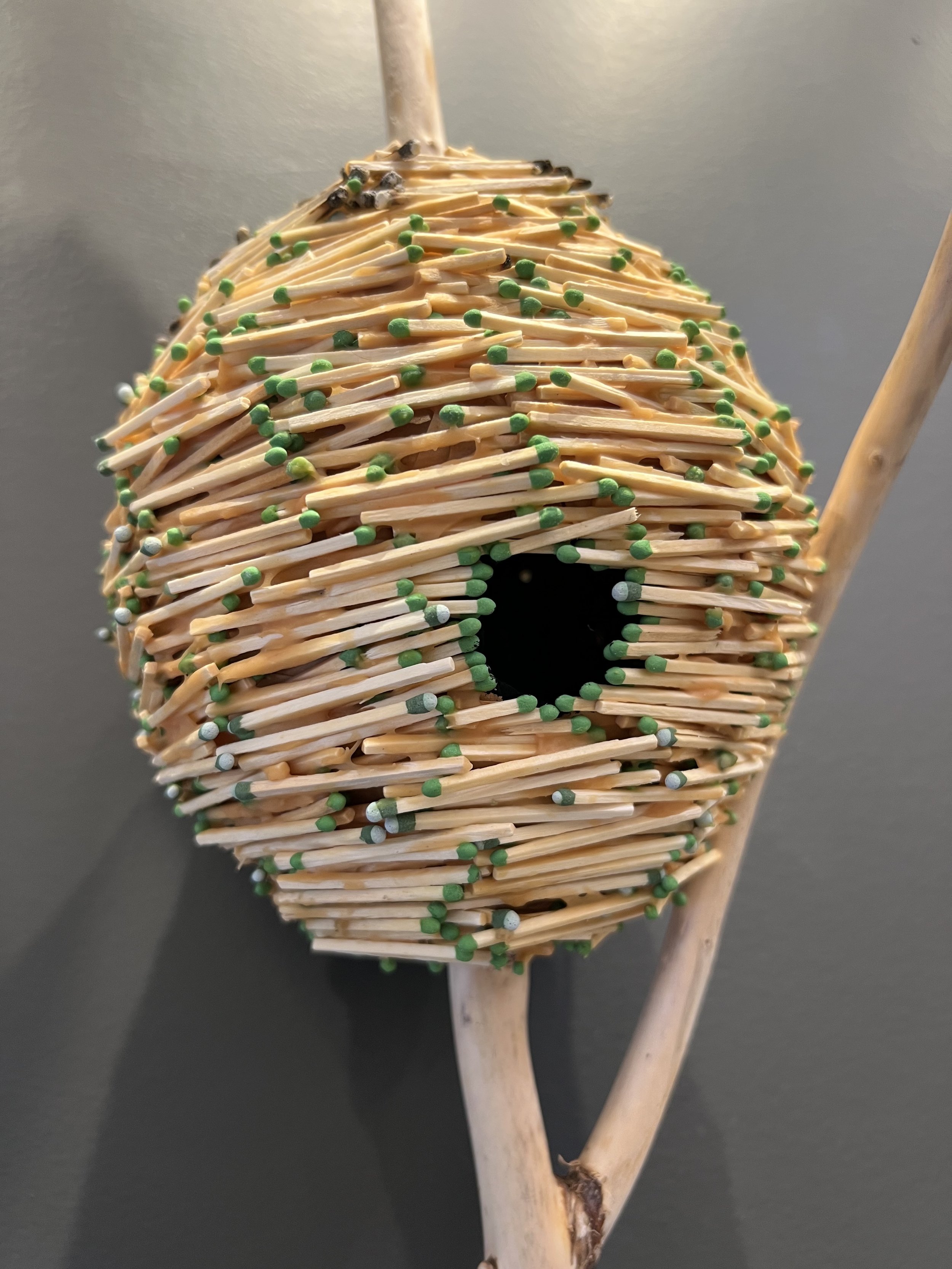
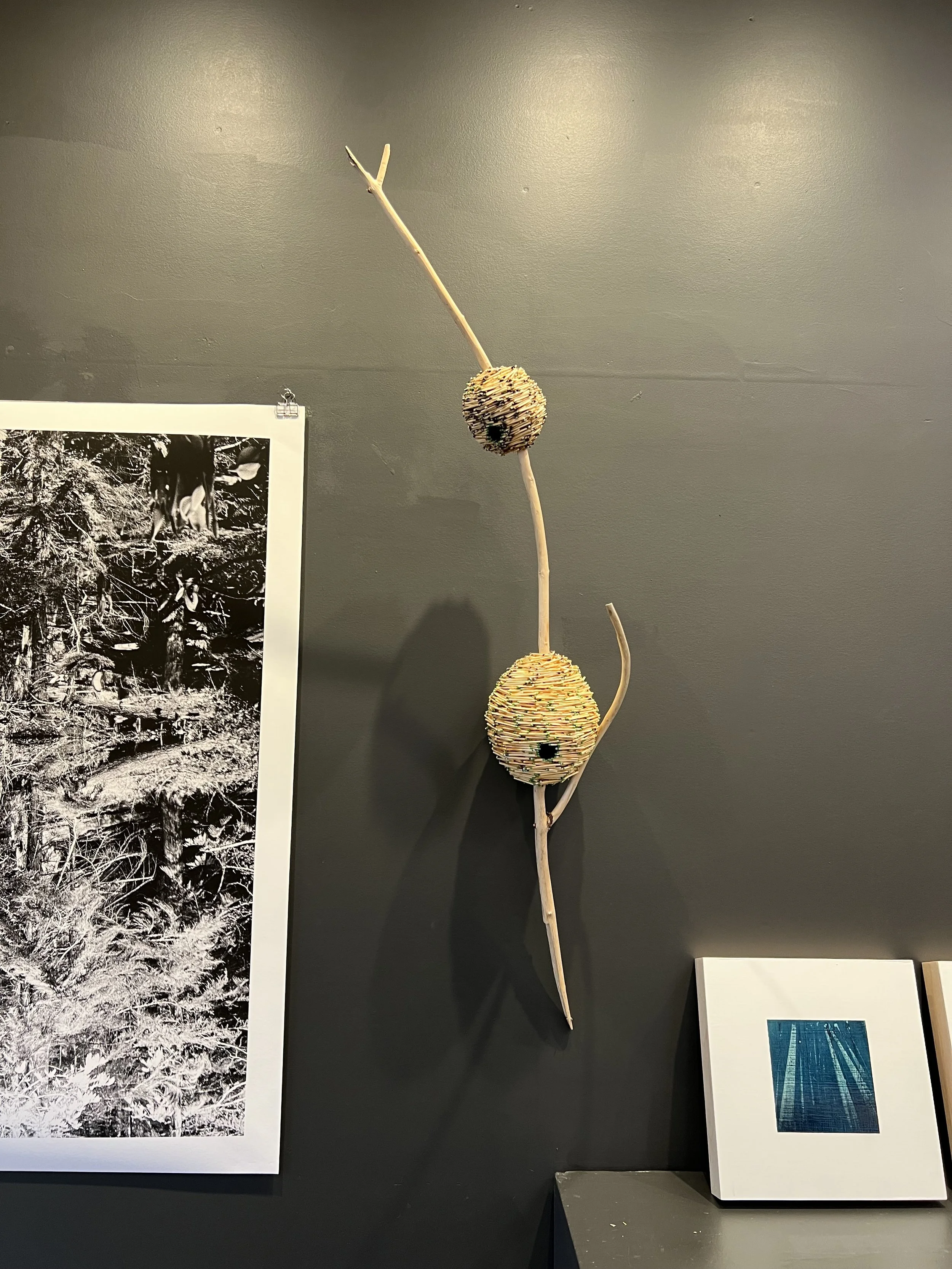
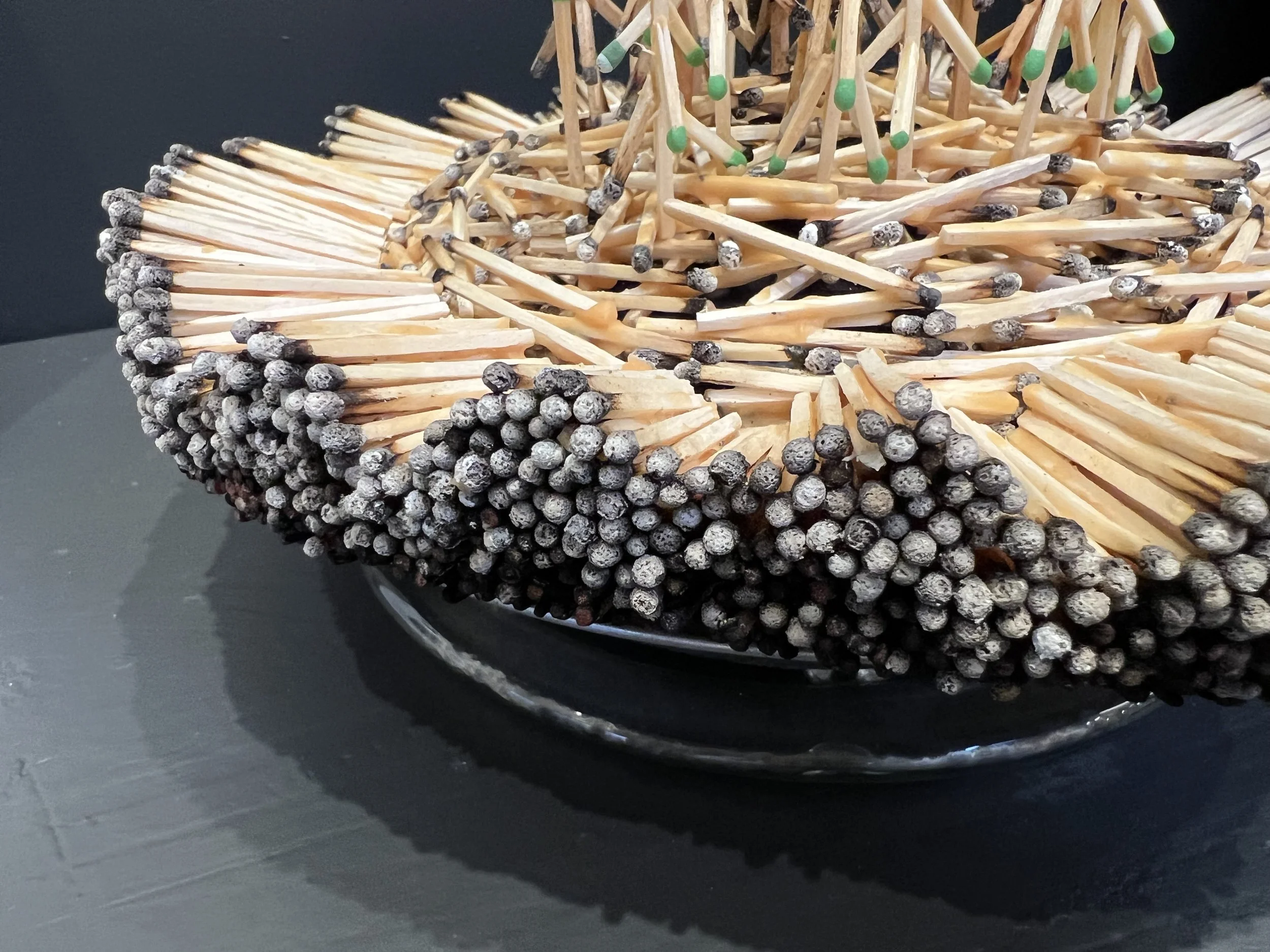
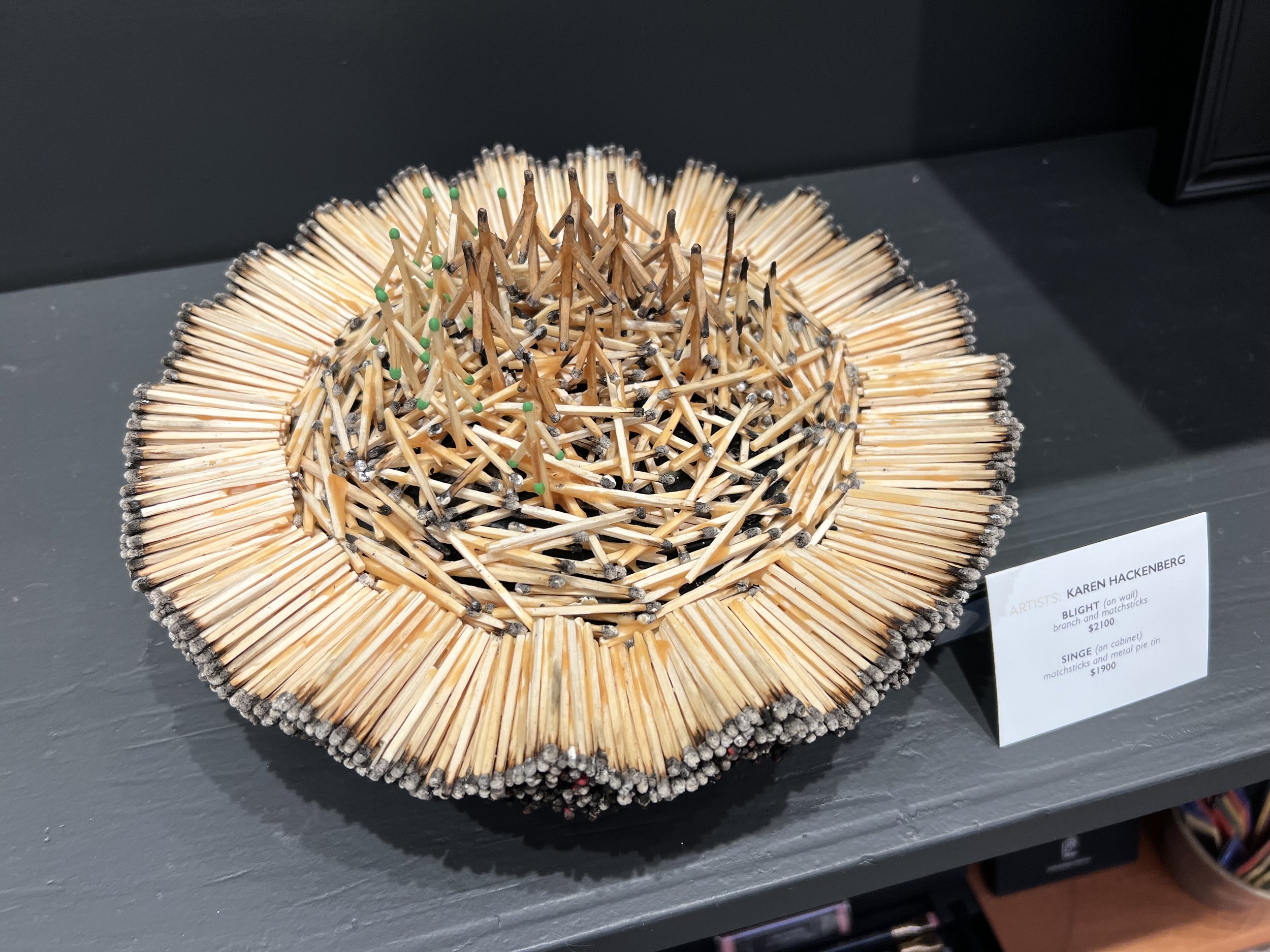
In my found-object Flash Point sculptures, I take a darkly humorous approach to the serious subject of environmental degradation. For each piece she meticulously glues together hundreds of burned and unburned wooden matchsticks, driftwood, wood glue, and miniature scale-model figures to create tongue-in-cheek micro-landscapes that mirror humankind’s devastating relationship to the natural world. Charming yet ominous, these sculptures imply imminent explosion and devastation, while happy swarms of insect-like people busy themselves with work and recreation oblivious to the looming danger.
In my oil painting series of marine debris, I present a tongue-in-cheek taxonomy of imaginary post-consumer creatures of the sea. The Watershed paintings are inspired by the incongruity of the man-made detritus found washed up on the otherwise pristine shores near my Discovery Bay WA studio; the plastic shards and PETE water bottles, plastic bags, the mismatched running shoes, the foggy plastic water bottles, the throw-away lighters, the frayed lengths of nylon rope, the spent shotgun shells, to name but a few. I collect this local flotsam as it bobs in on the waves from far and near, and with my ear to the sand for a close view, I pose and photograph it on the beach where it strands. The resulting seascape compositions depict the beach trash as monolithic, thereby providing a visual metaphor for the overwhelming magnitude of the issue of marine debris. I meticulously paint these seascapes in oil and gouache, lovingly crafting beautiful images of conventionally ugly beach cast-offs, aiming to create a provocative visual juxtaposition of form and idea. My work is influenced by the ideas embodied in Pop Art by artists such as Claes Oldenburg, Ed Ruscha and Andy Warhol, and by the iridescent light found in the paintings of realist still life painter, Janet Fish.
“There is a slow-burn, pre-apocalyptic quality to Karen Hackenberg’s Watershed paintings that calls to mind the fatalistic mood of On the Beach, Nevil Shute’s 1957 doomsday novel about Australians helplessly awaiting the advance of radioactivity spreading from the northern nations who have annihilated one another in nuclear war.” - Jake Seniuk, On the Beach: Karen Hackenberg’s Post-Pop Paintings with Green Heart
By using subtle ironic beauty and humor in my work, I lure viewers in to take a closer look, aiming to counteract defeatism in the face of the world’s overwhelming ecological crisis, and bringing poignant attention to global mass extinctions as they face us today.
Matchstick Sculptures by Karen Hackenberg: Handbasket (basket shape), Blight (nest shape on branch), Singe (pie shape)
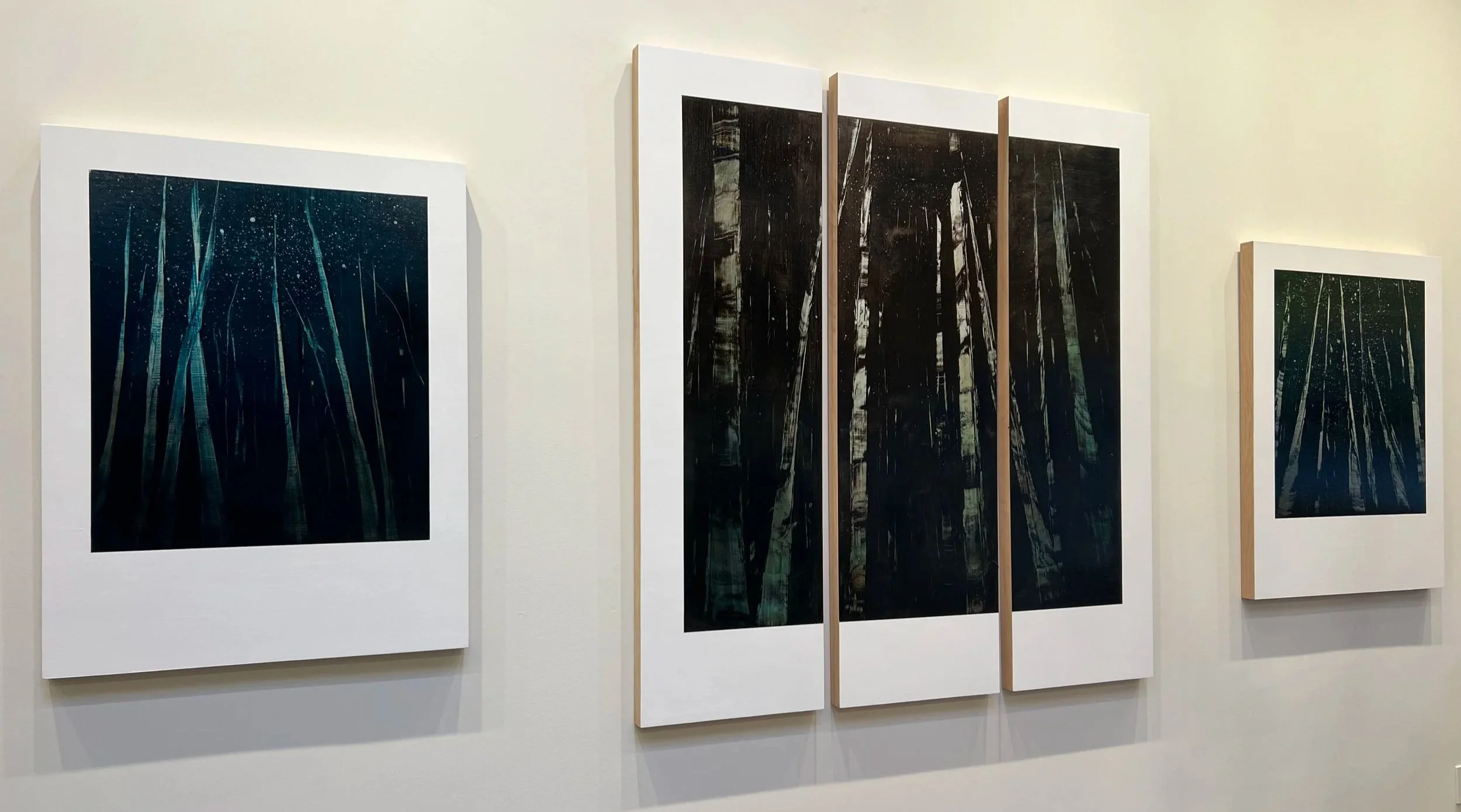
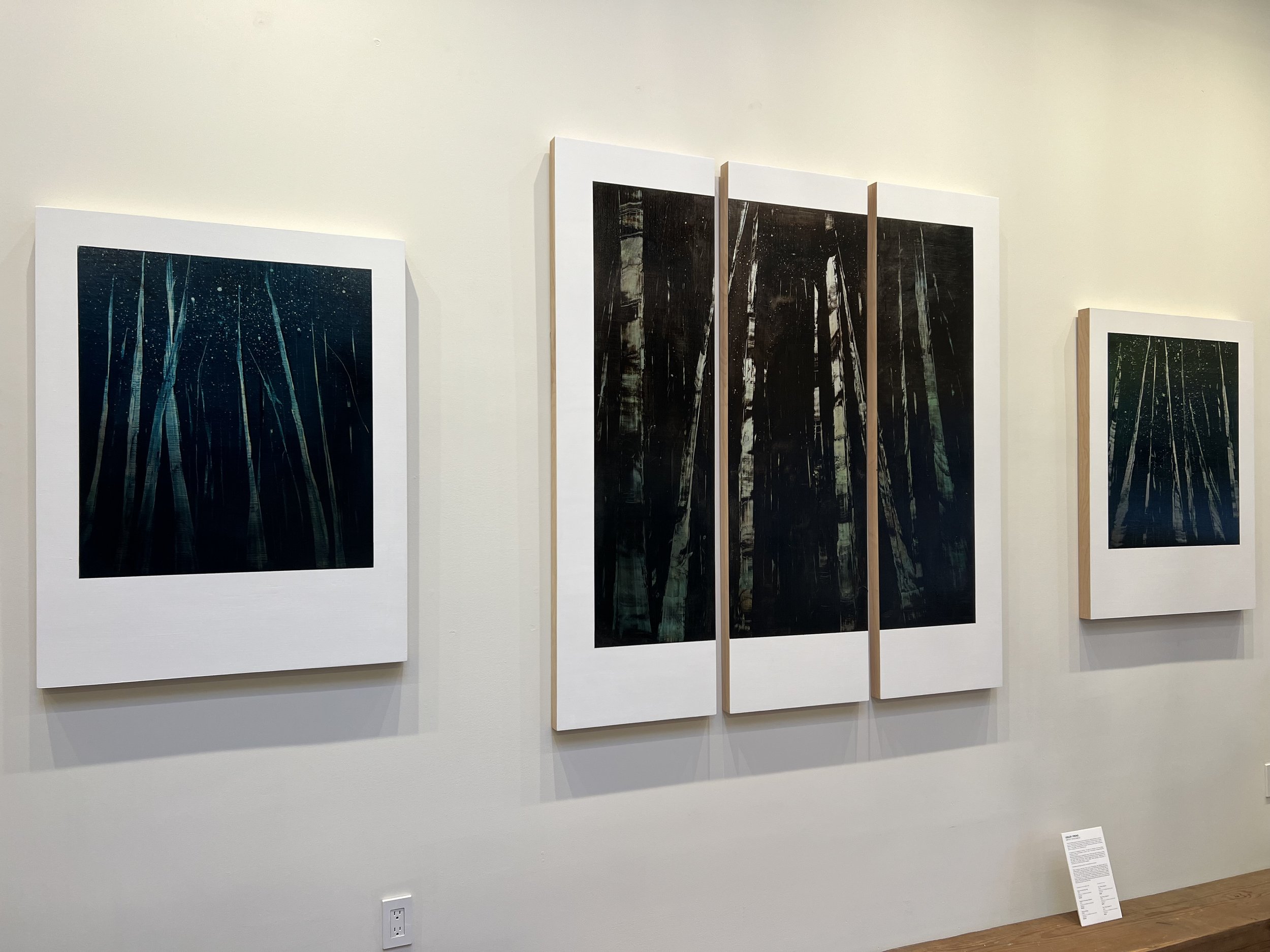
Lesley Frenz Paintings
ARTIST STATEMENT: Lesley Frenz
Untamed places speak to and connect us with the raw, earthly spirit born in each of us, but I also believe they have the power to guide our minds and heal our hearts.
Whether hiking miles of trail deep into the wilderness or a short, solitary walk to a lake or river’s edge, the pulling forth of those memories and the action of putting paint to surface is for me, a restorative act.
In moments of uncertainty or sorrow, I can pour my emotions onto the surface, recalling a place and perhaps a person, and in the process reinvigorating the connection to both.
Mountainscapes being an undeniable muse, I follow their path, building up layer upon layer of texture and color. I build up and scrape back, echoing the process of the earth’s death and renewal. Aqueous glazes pool and drip, dispersing and disrupting as raindrops falling to the surface. Each painting’s composition is unknown to me until it has been revealed.
I see these paintings as prayers, as invitations to a sojourn.
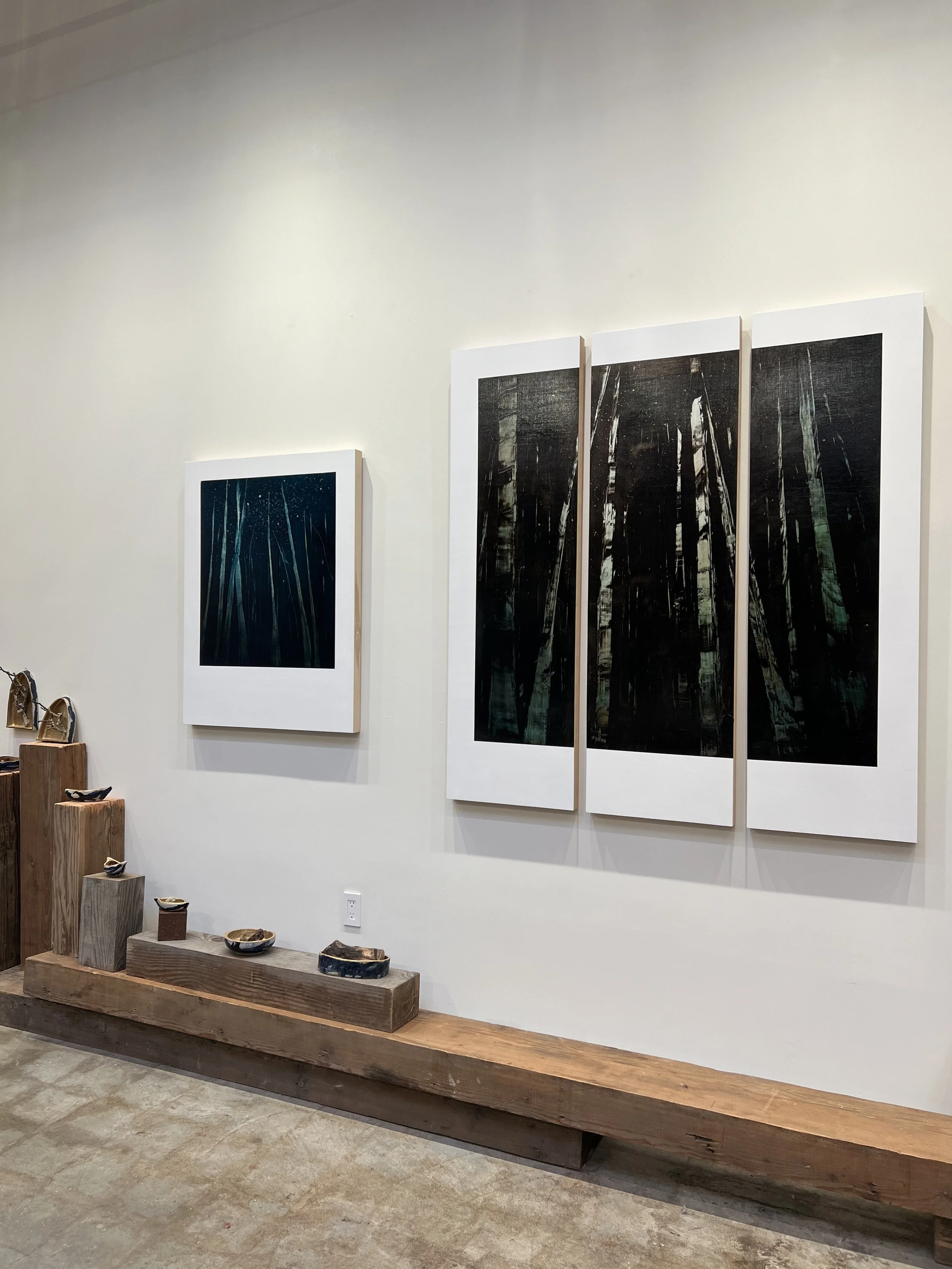


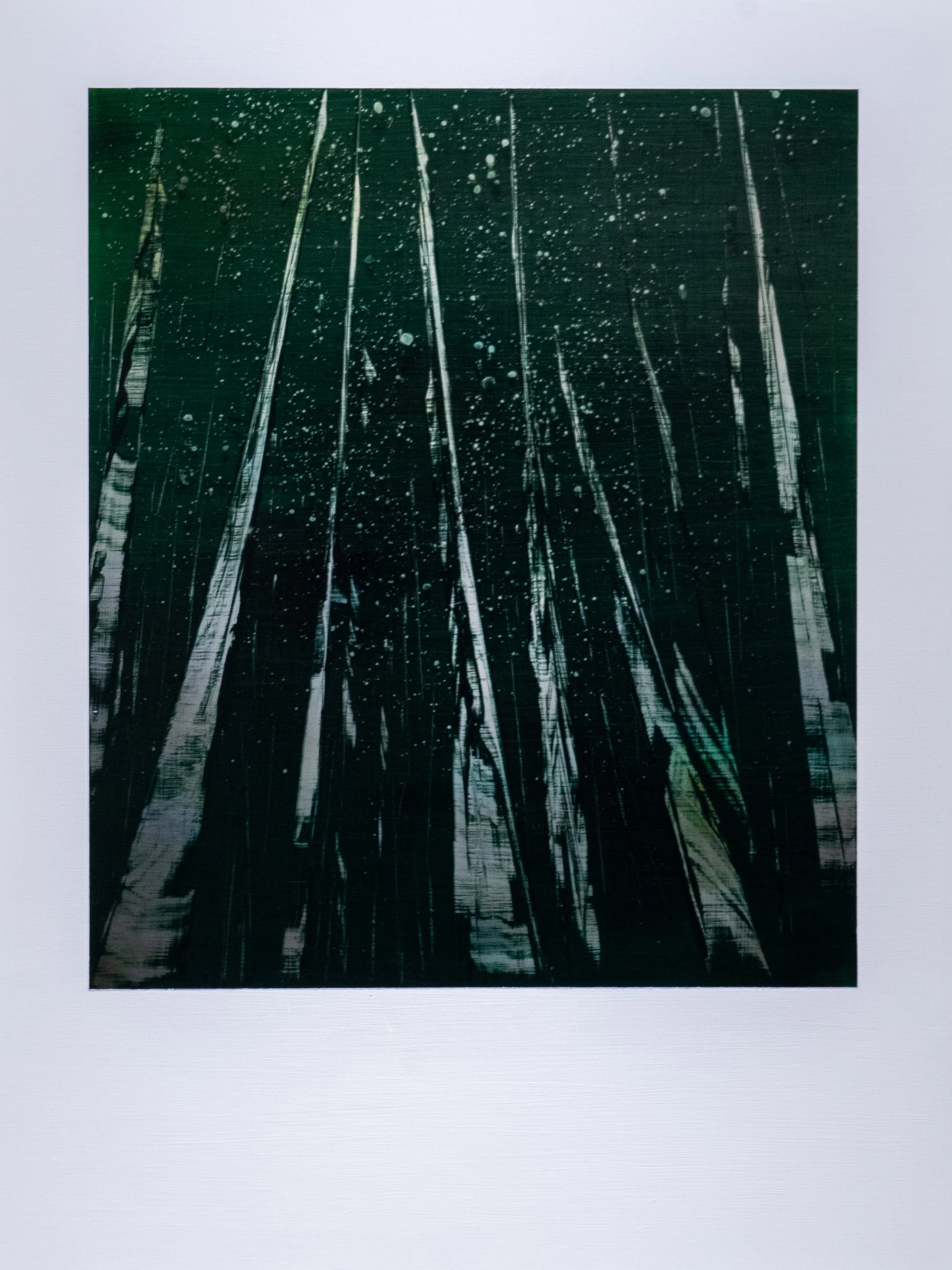


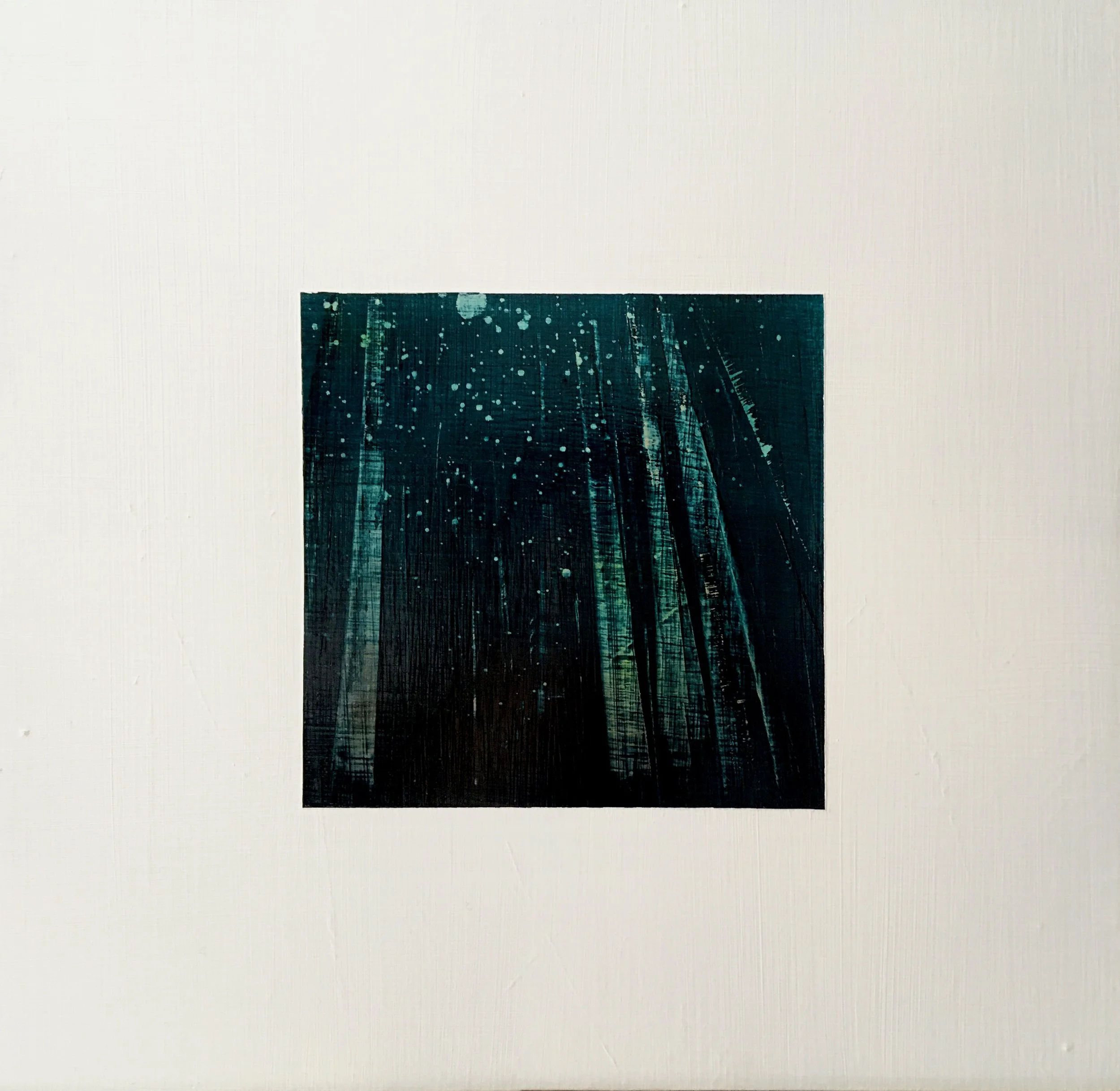
ARTIST STATEMENT: Jennifer Fernandez
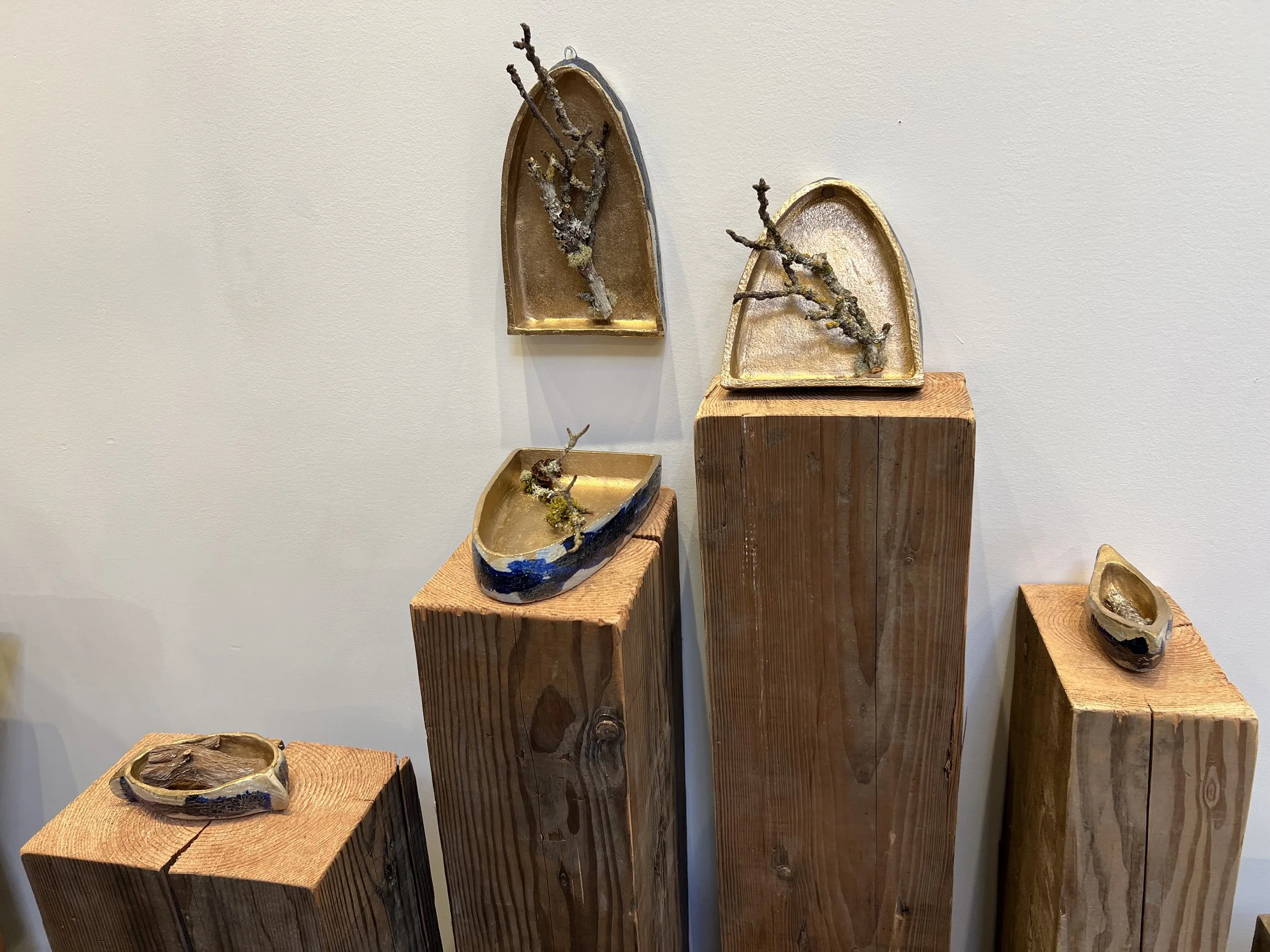
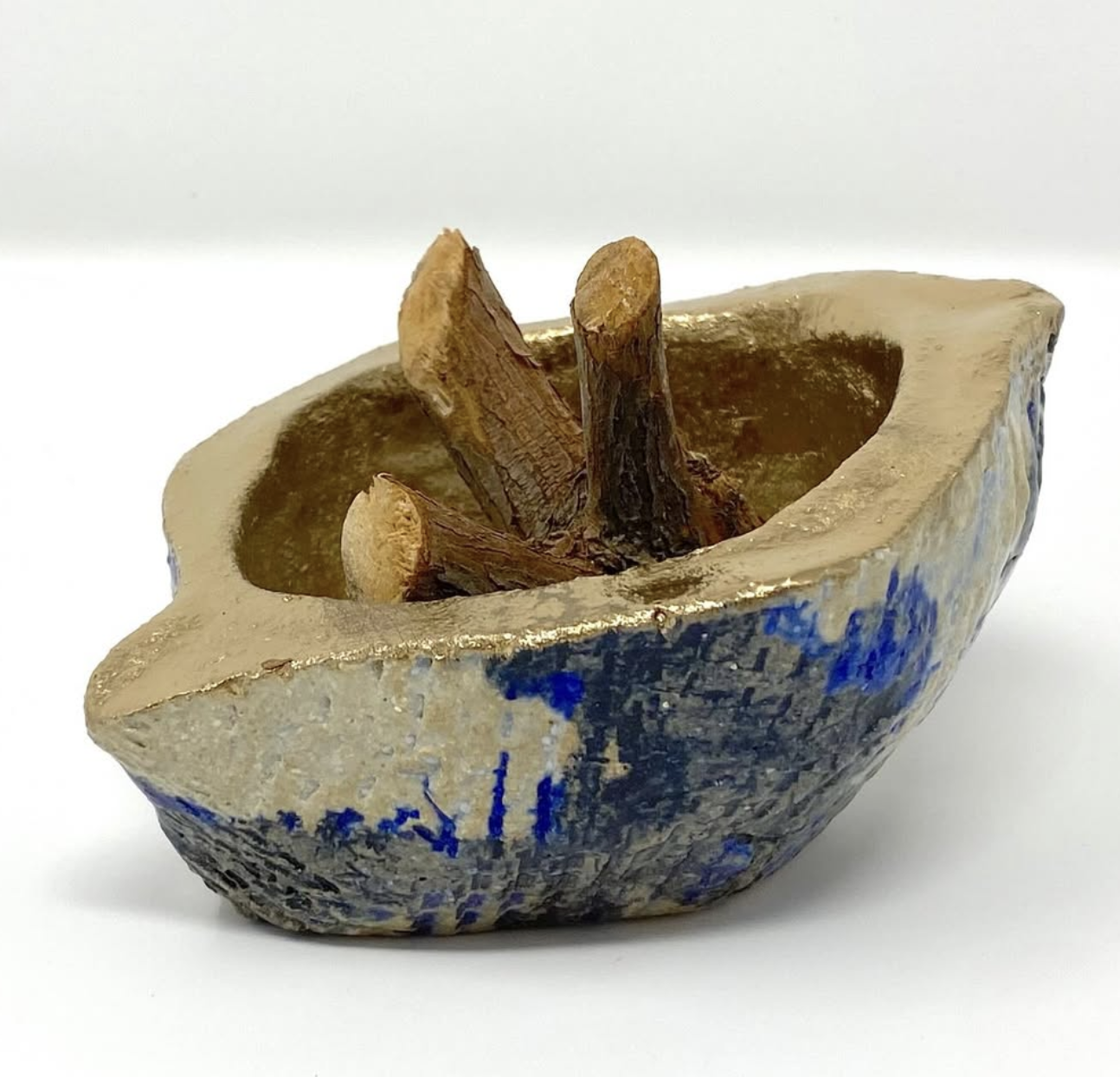
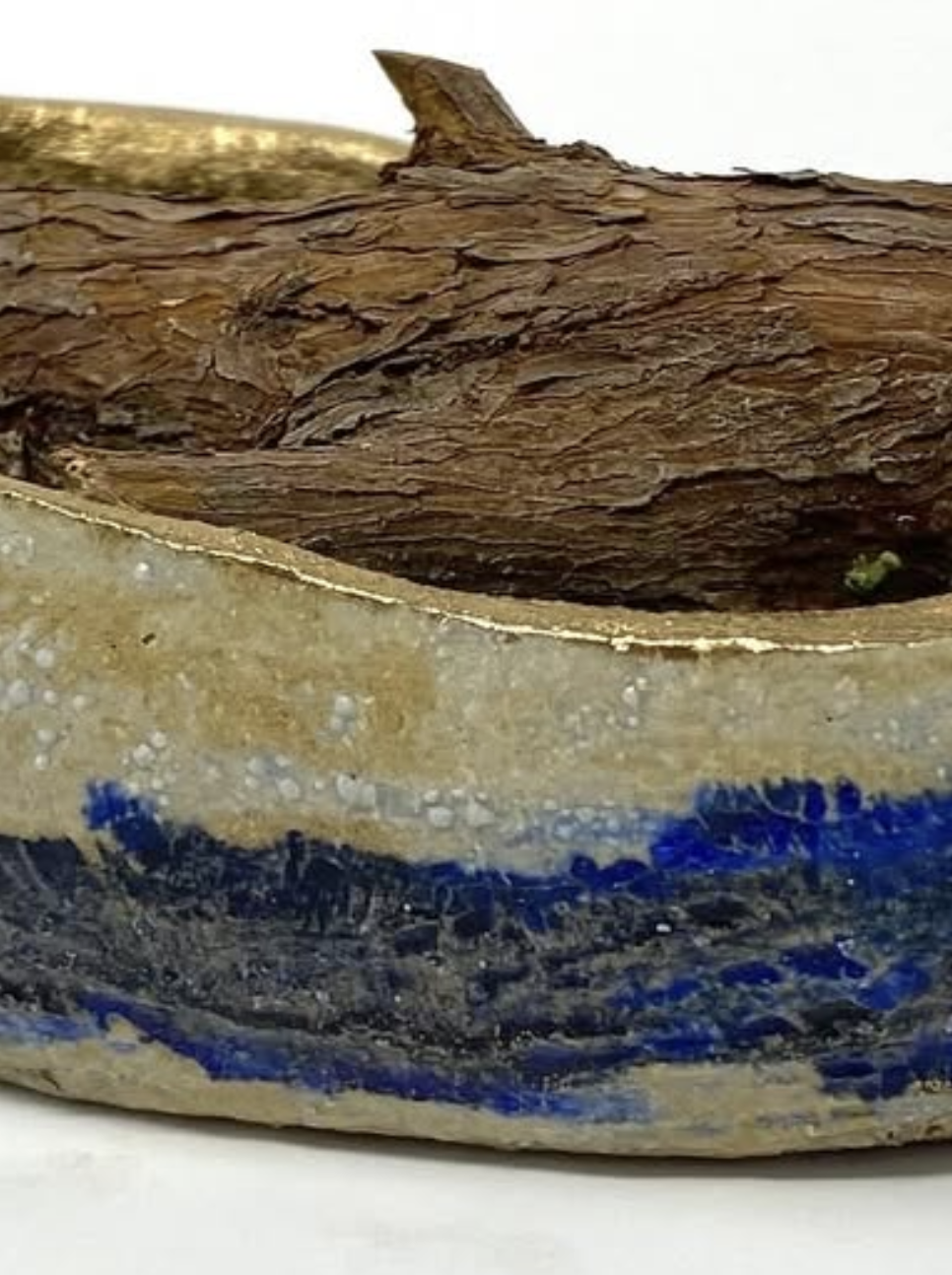
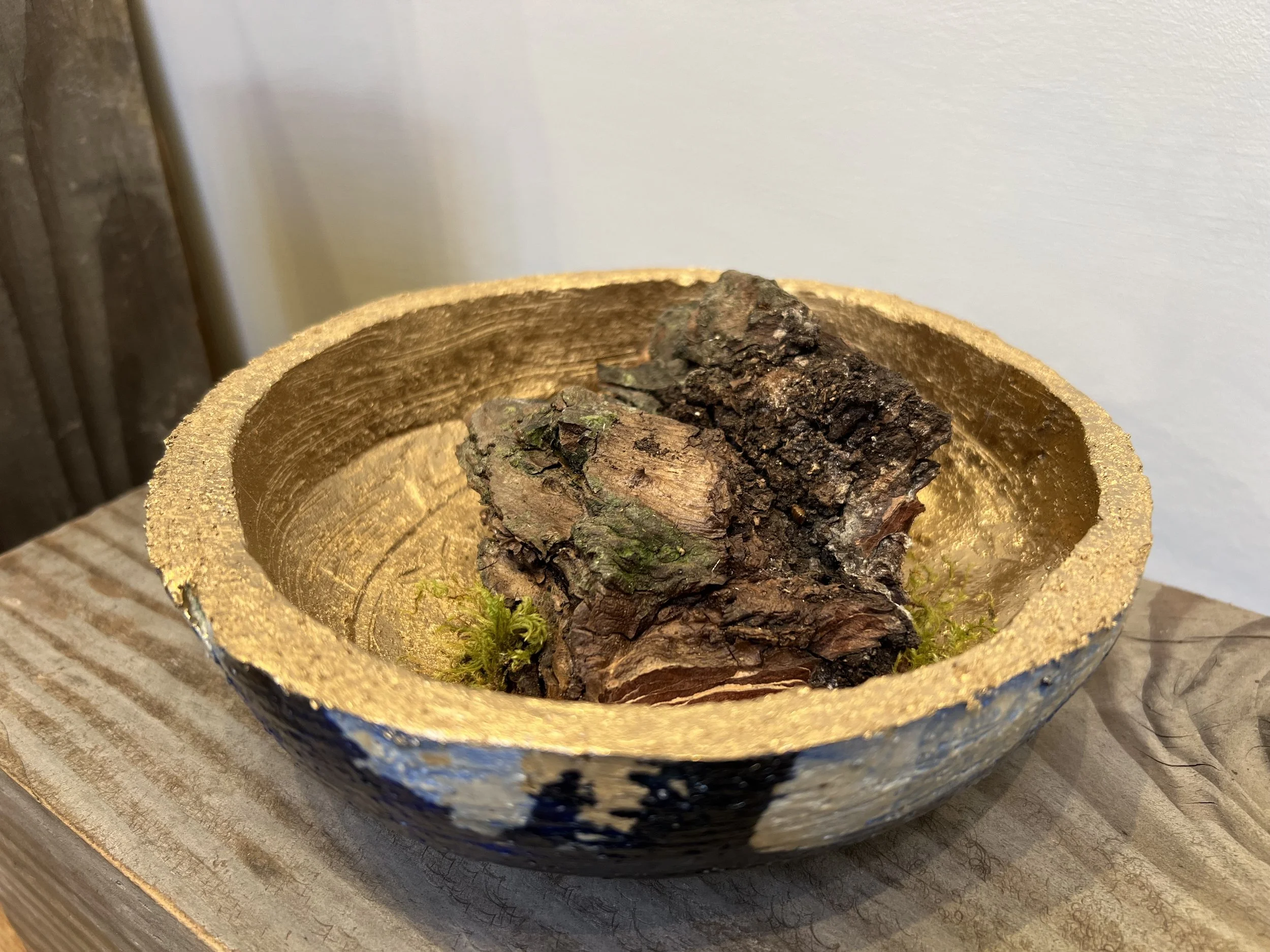
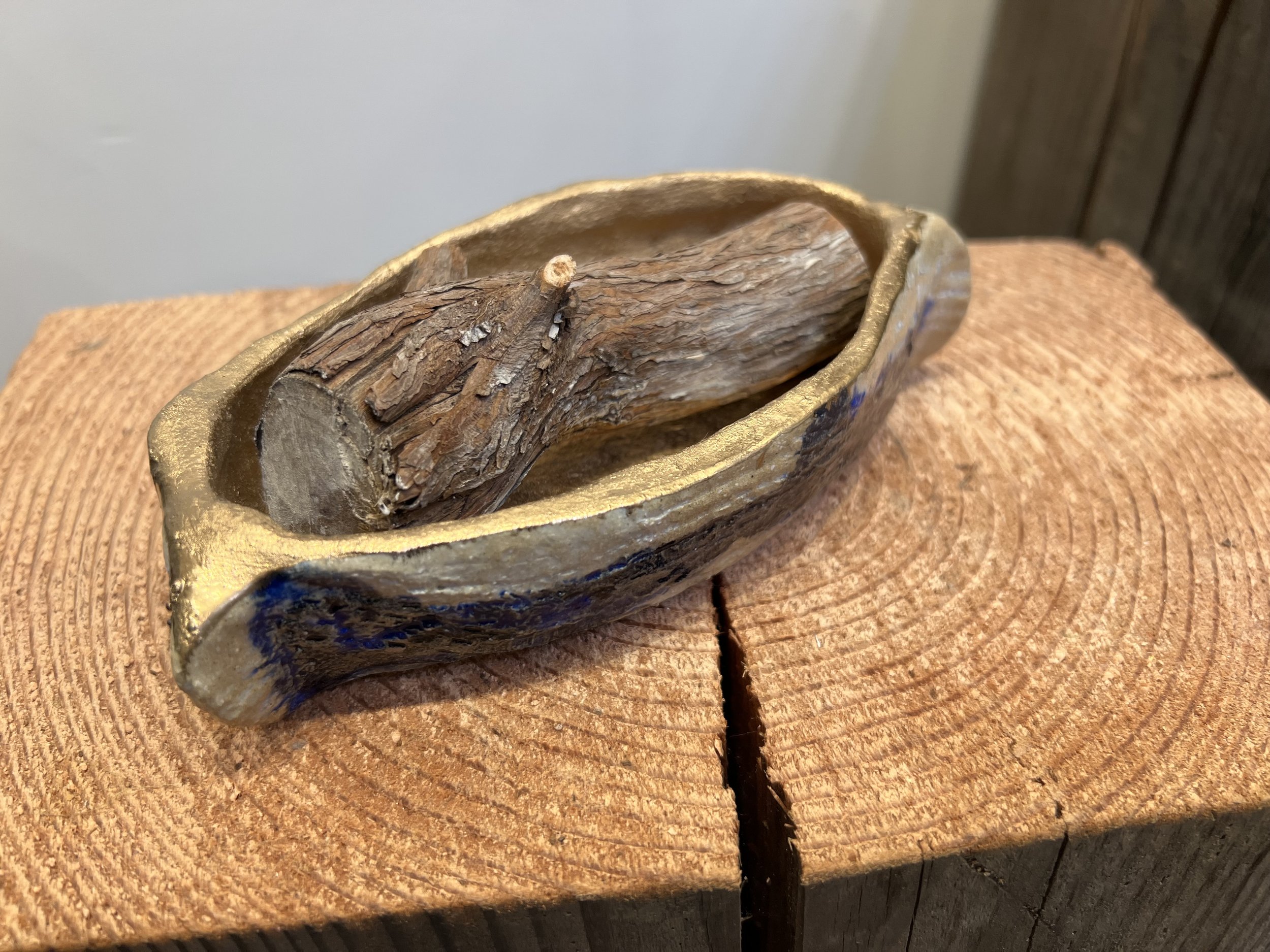
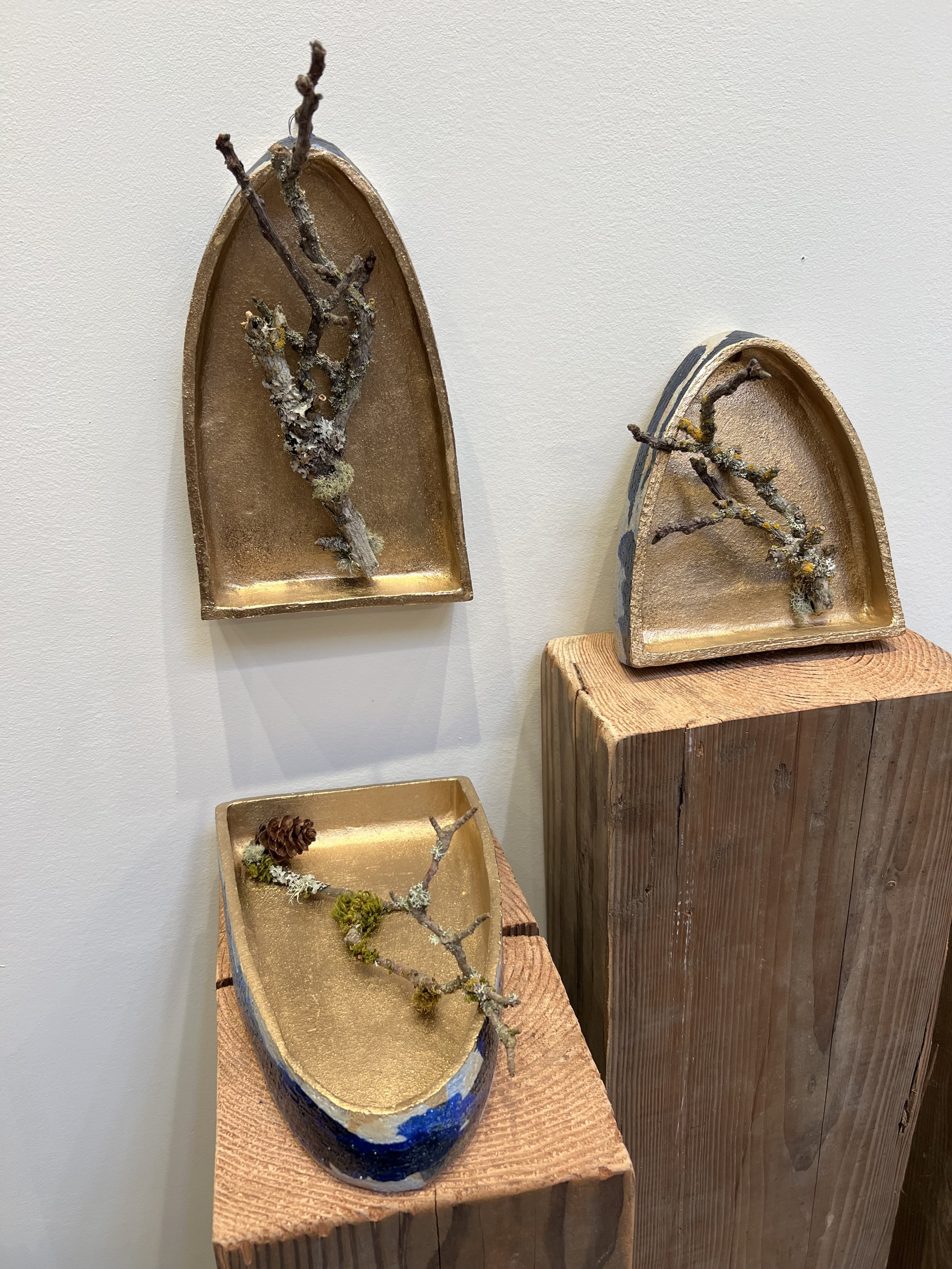
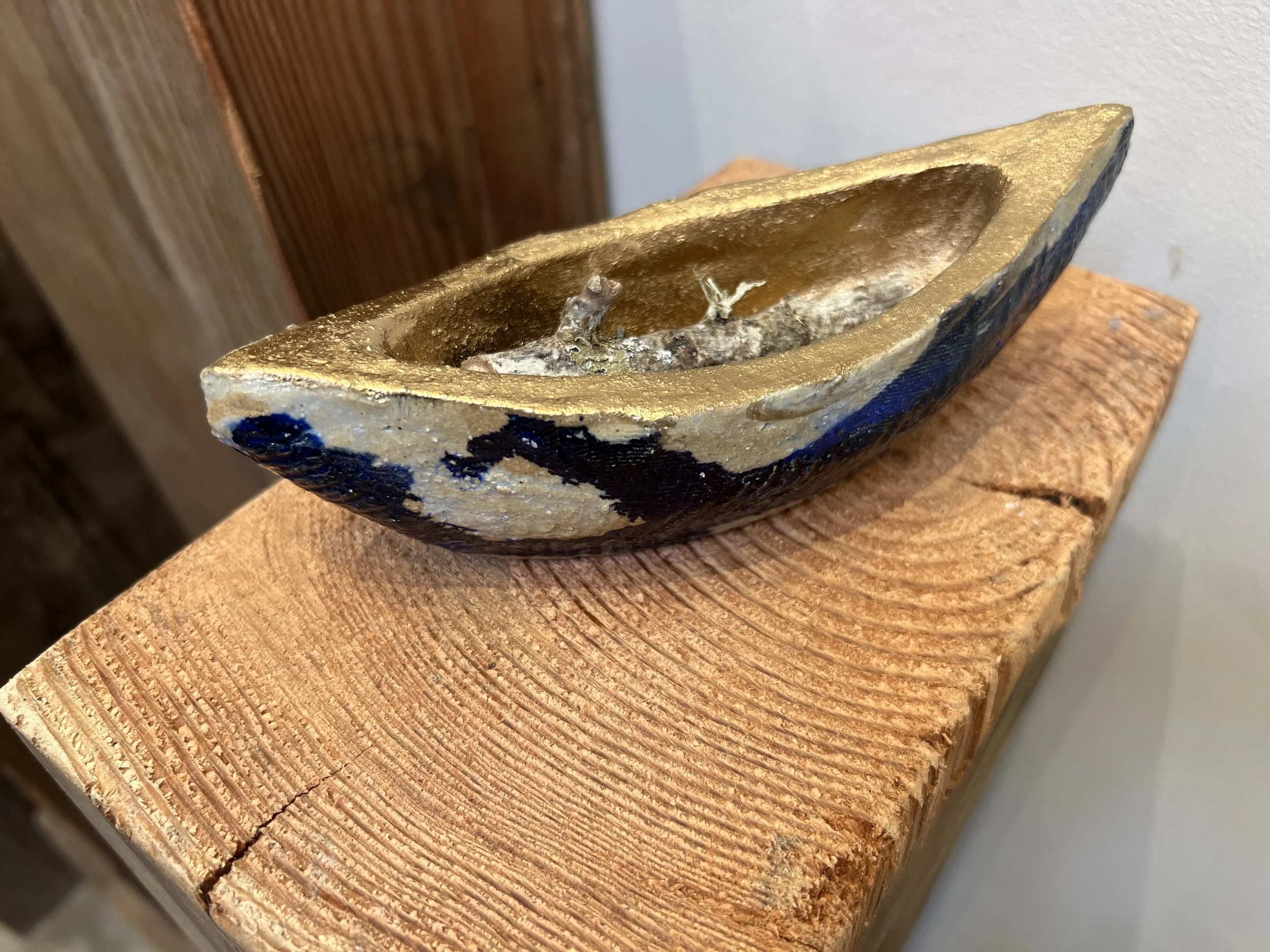
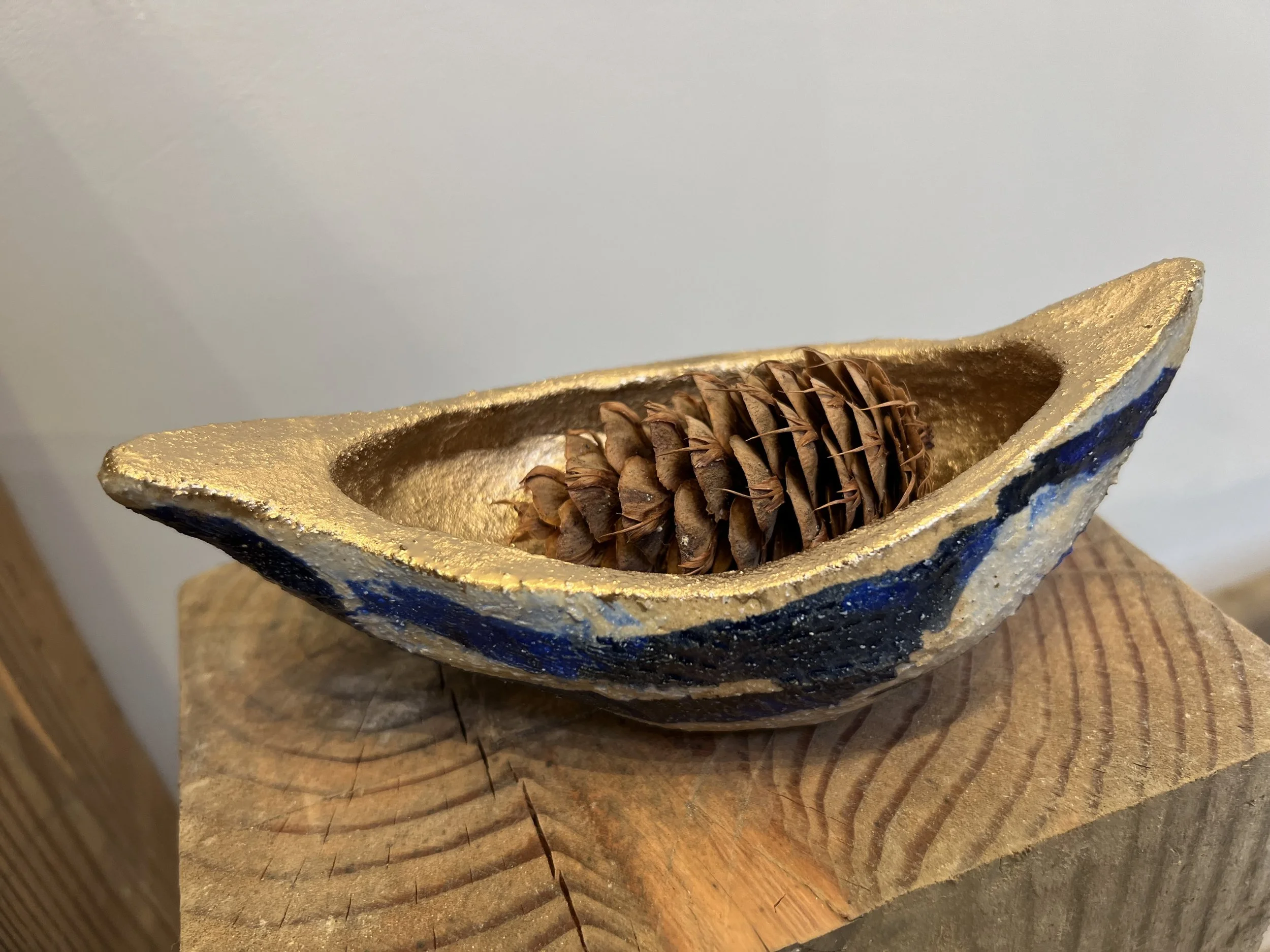
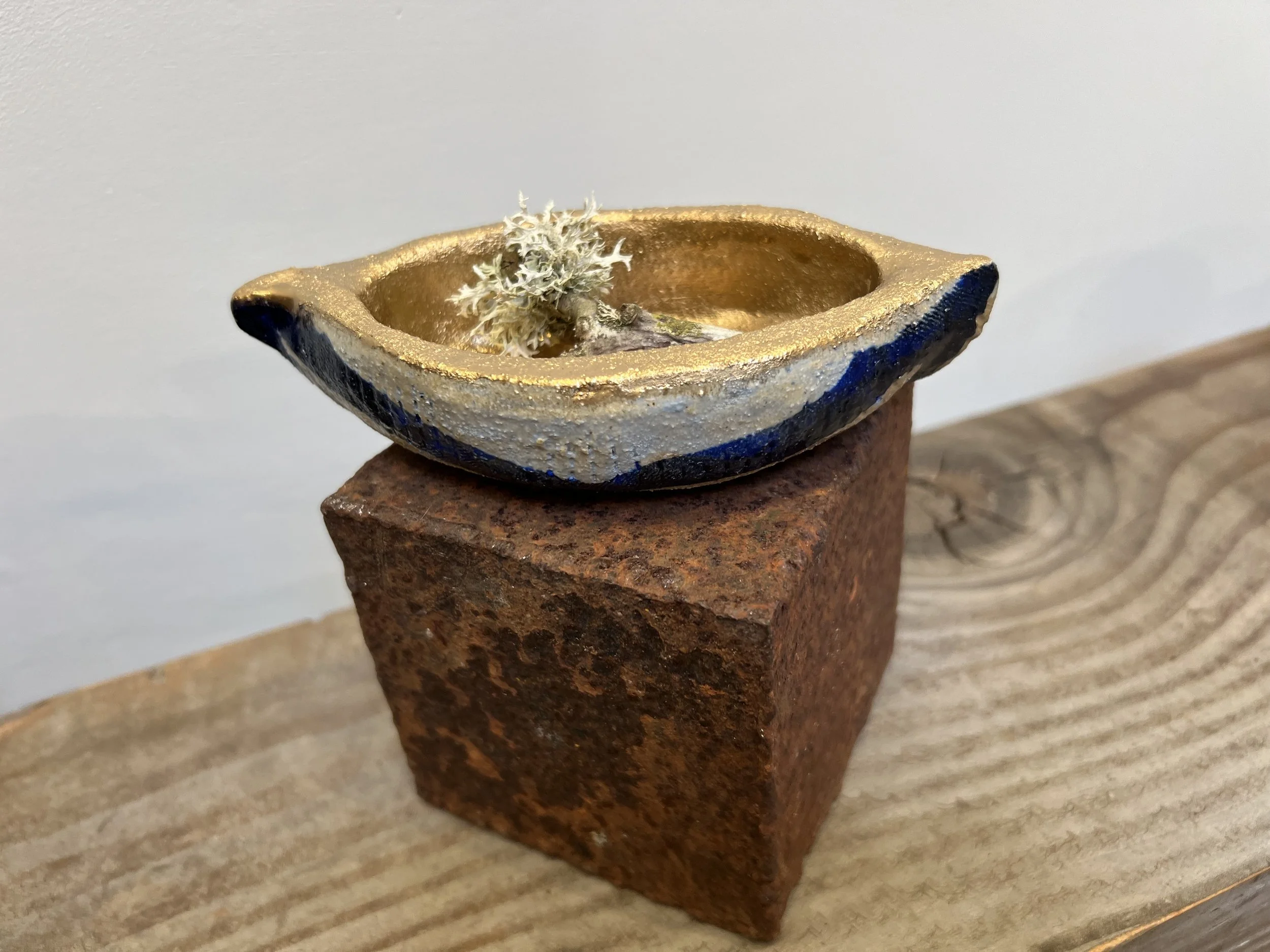
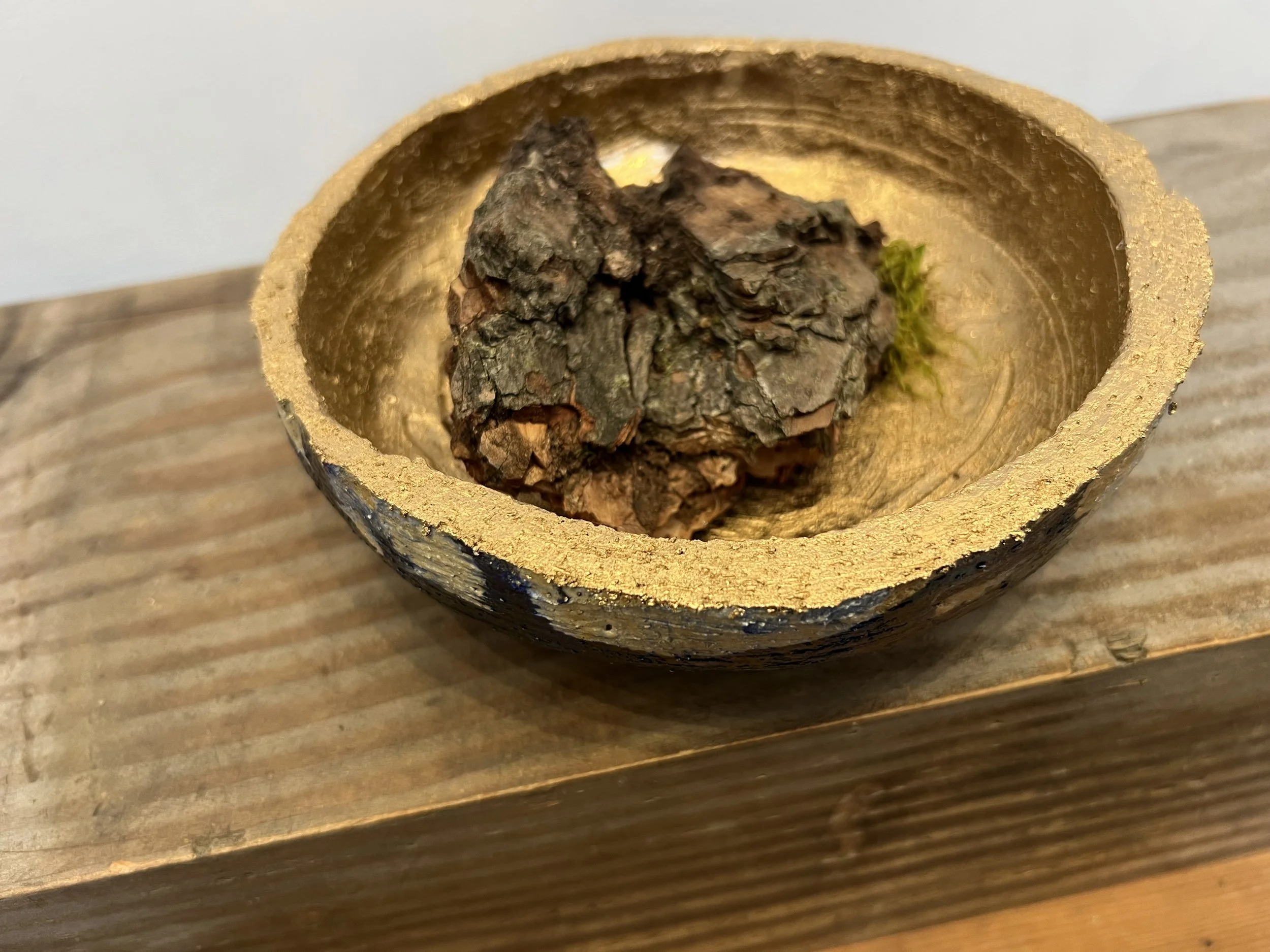
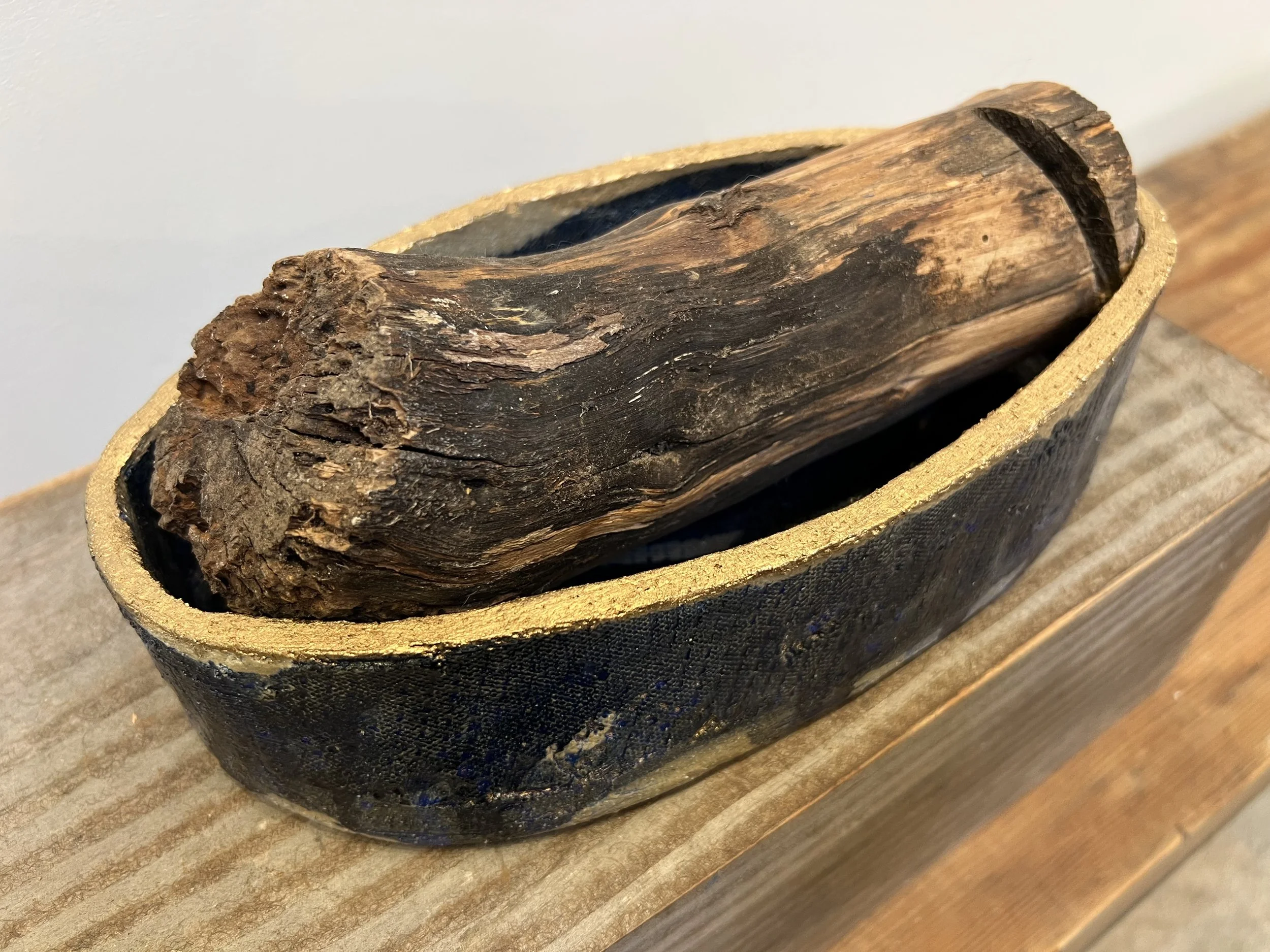
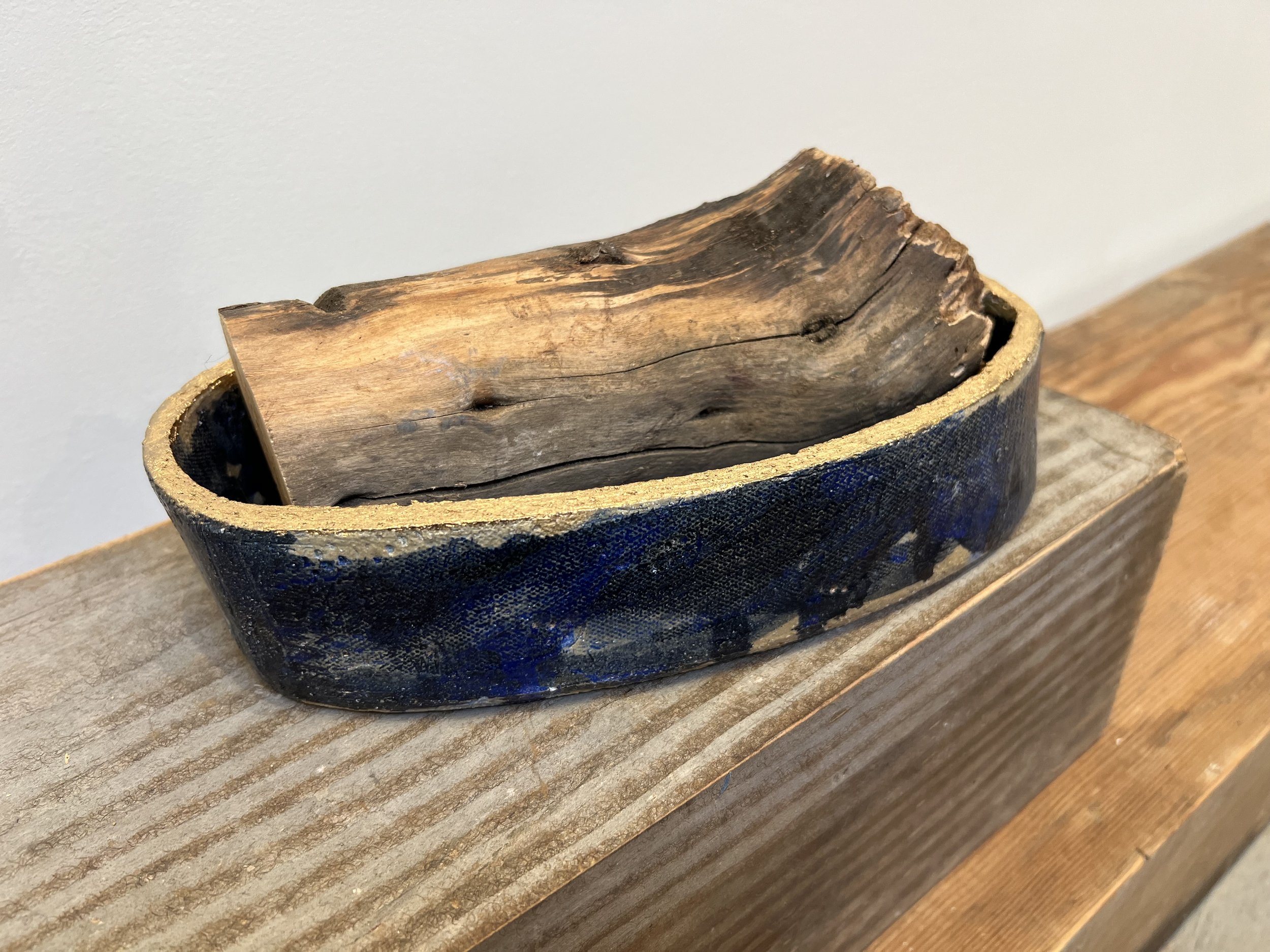
In considering the sacredness of trees I thought about altars and altar building—the intentional creation of a place of devotion. I created these altars as a way for people to commemorate and observe the divinity of trees in their homes. Similarly, the small boats or pods 'hold' a piece of a branch or twig gently, solemnly, recognizing their quiet importance.
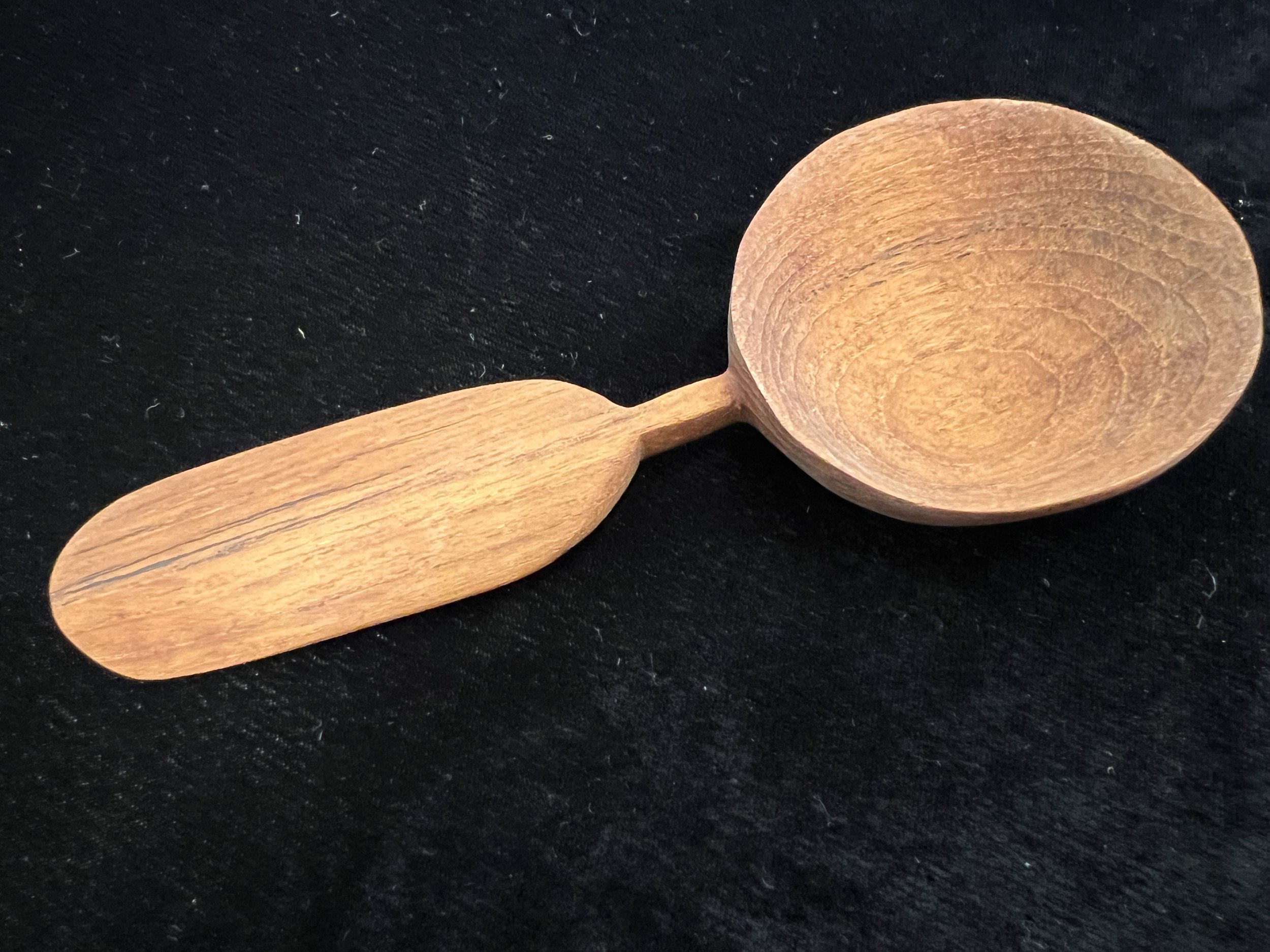
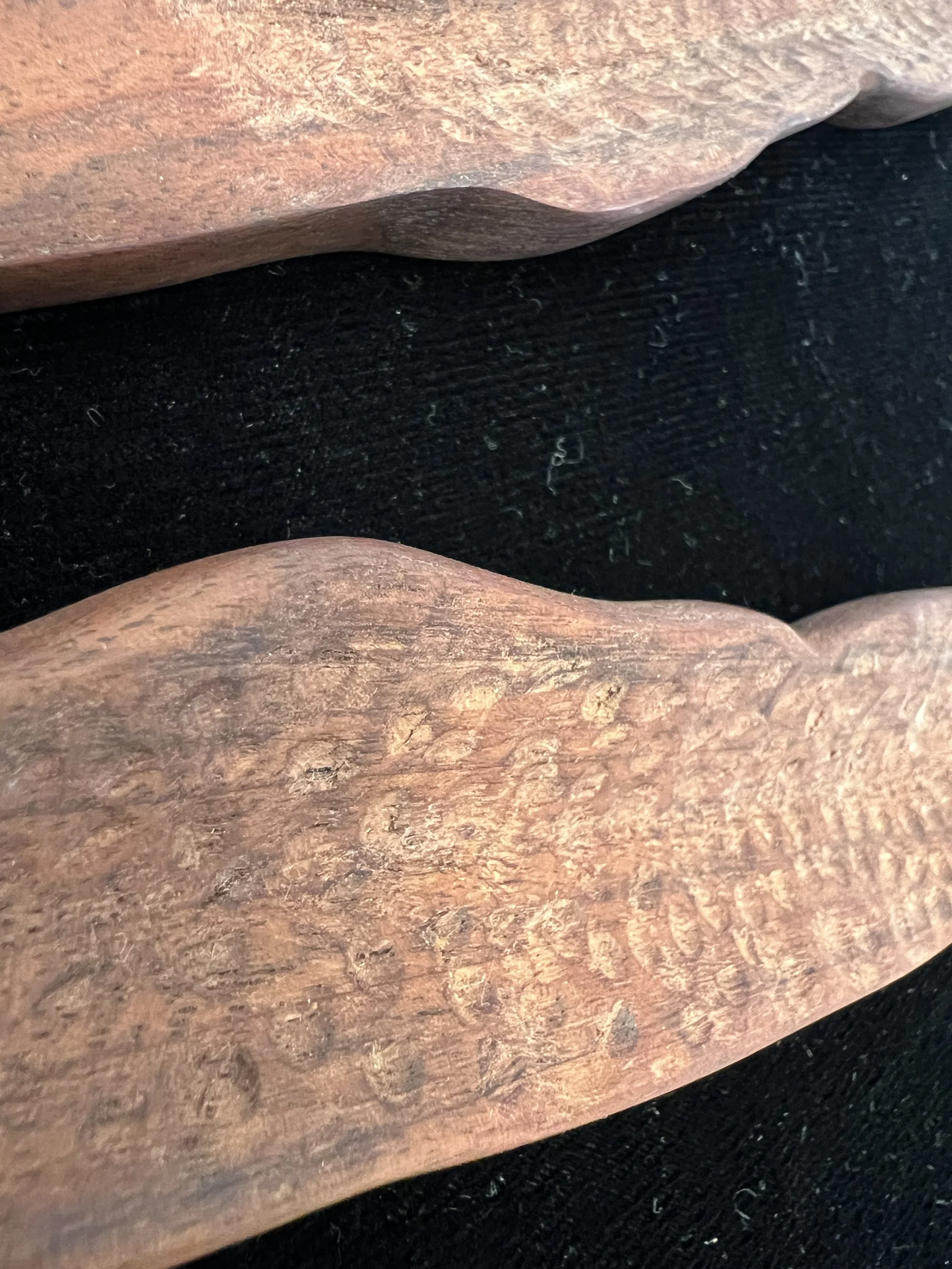
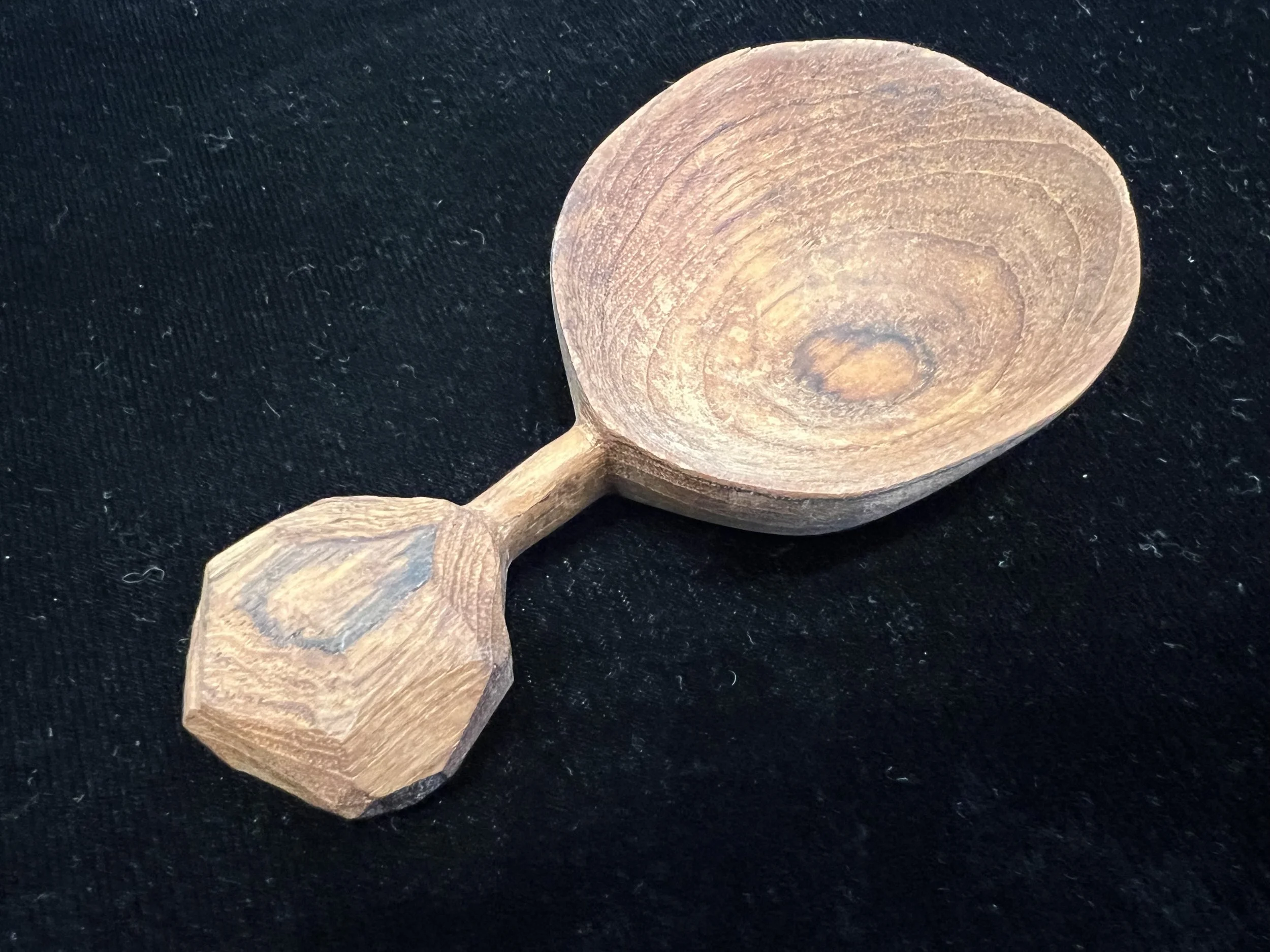
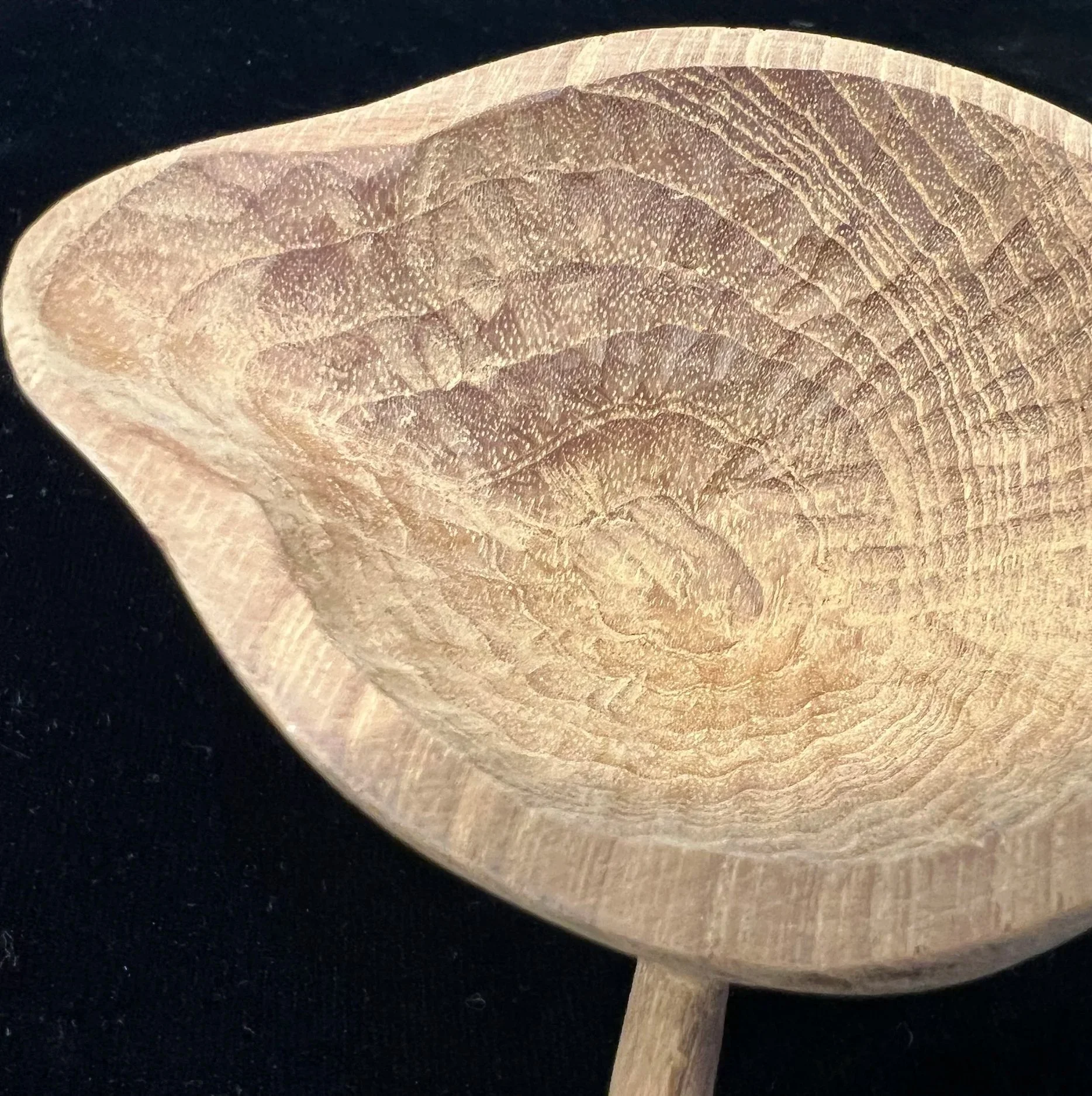
ARTIST STATEMENT: Rob Shepherd
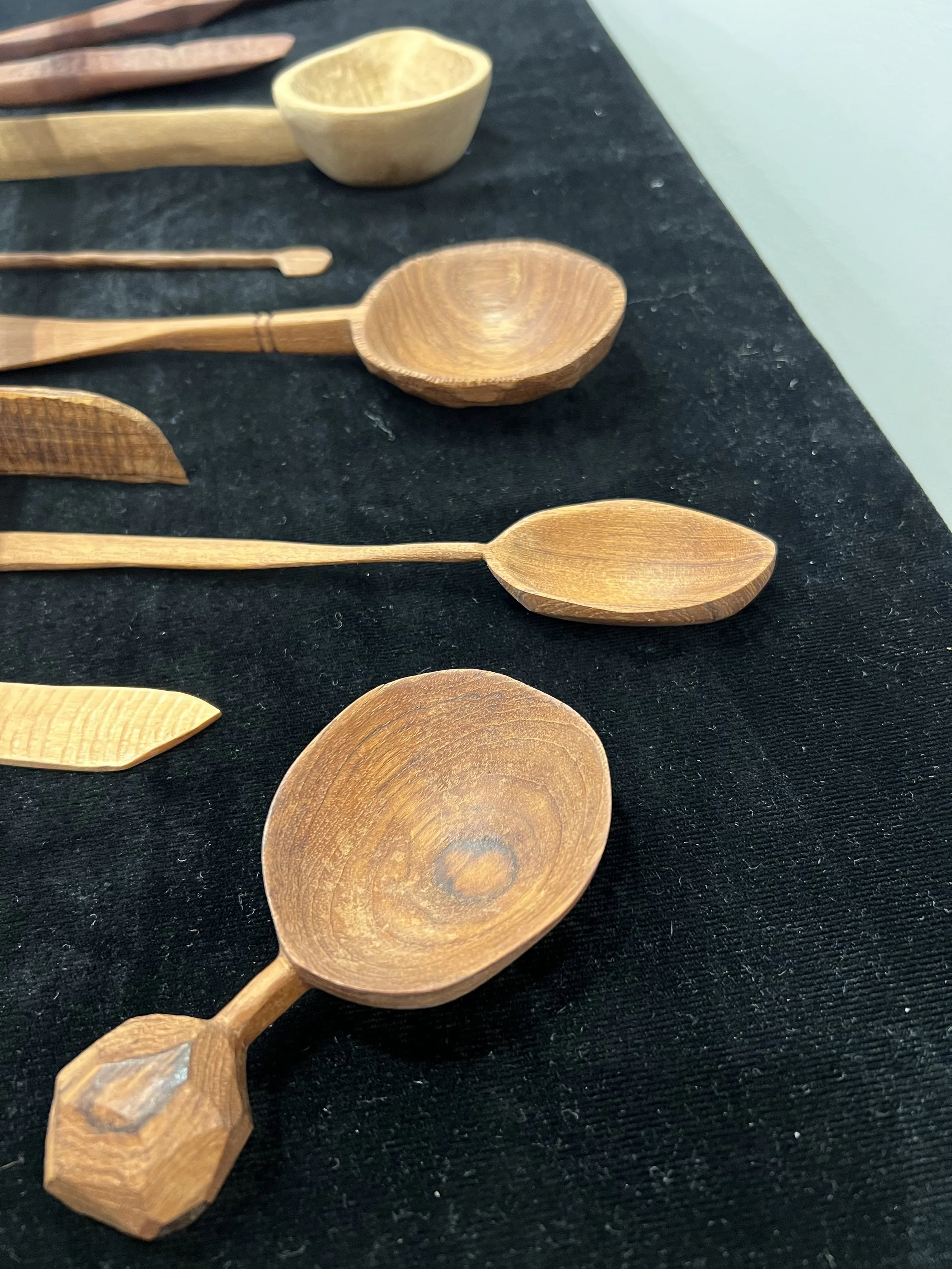
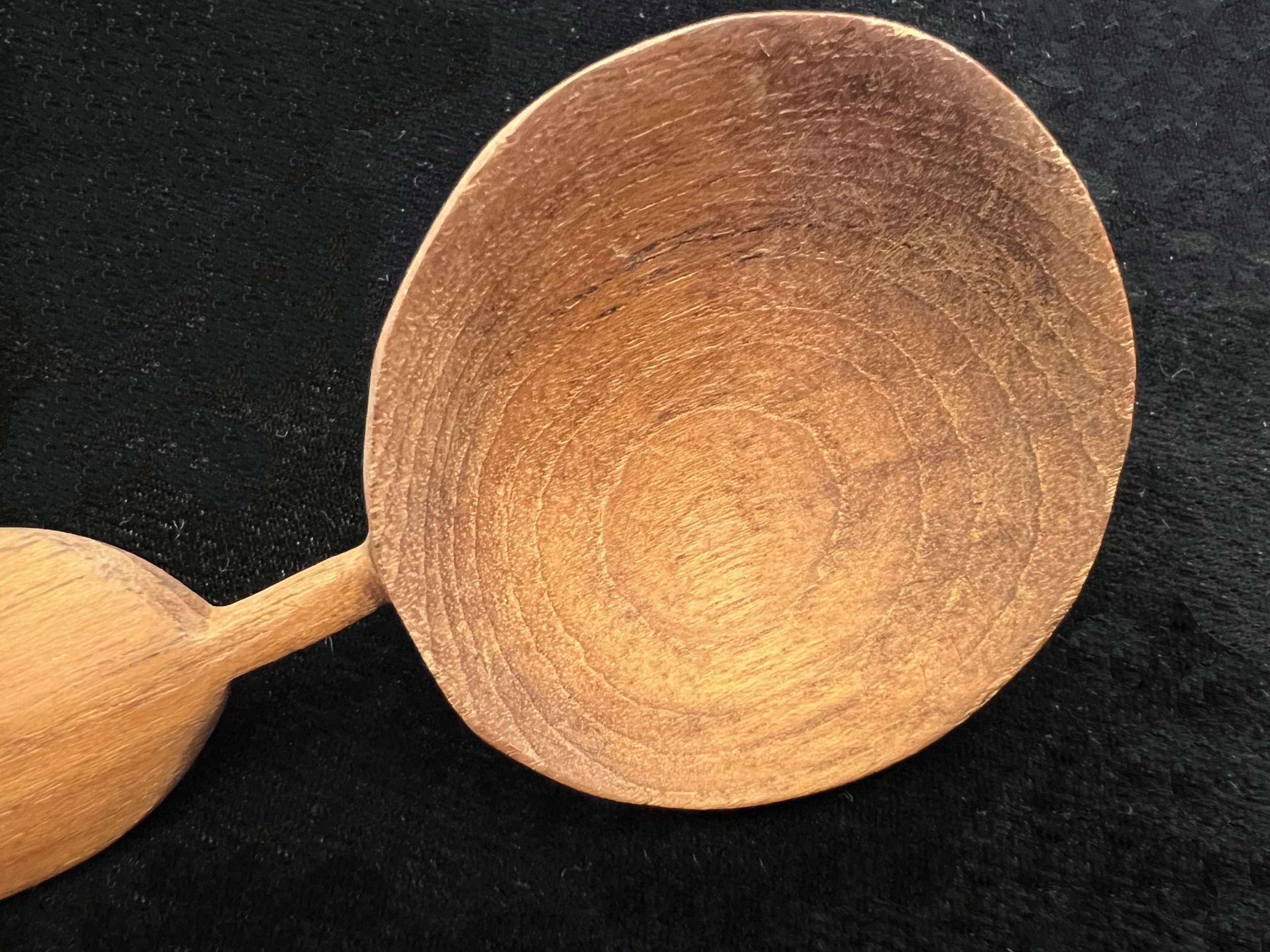
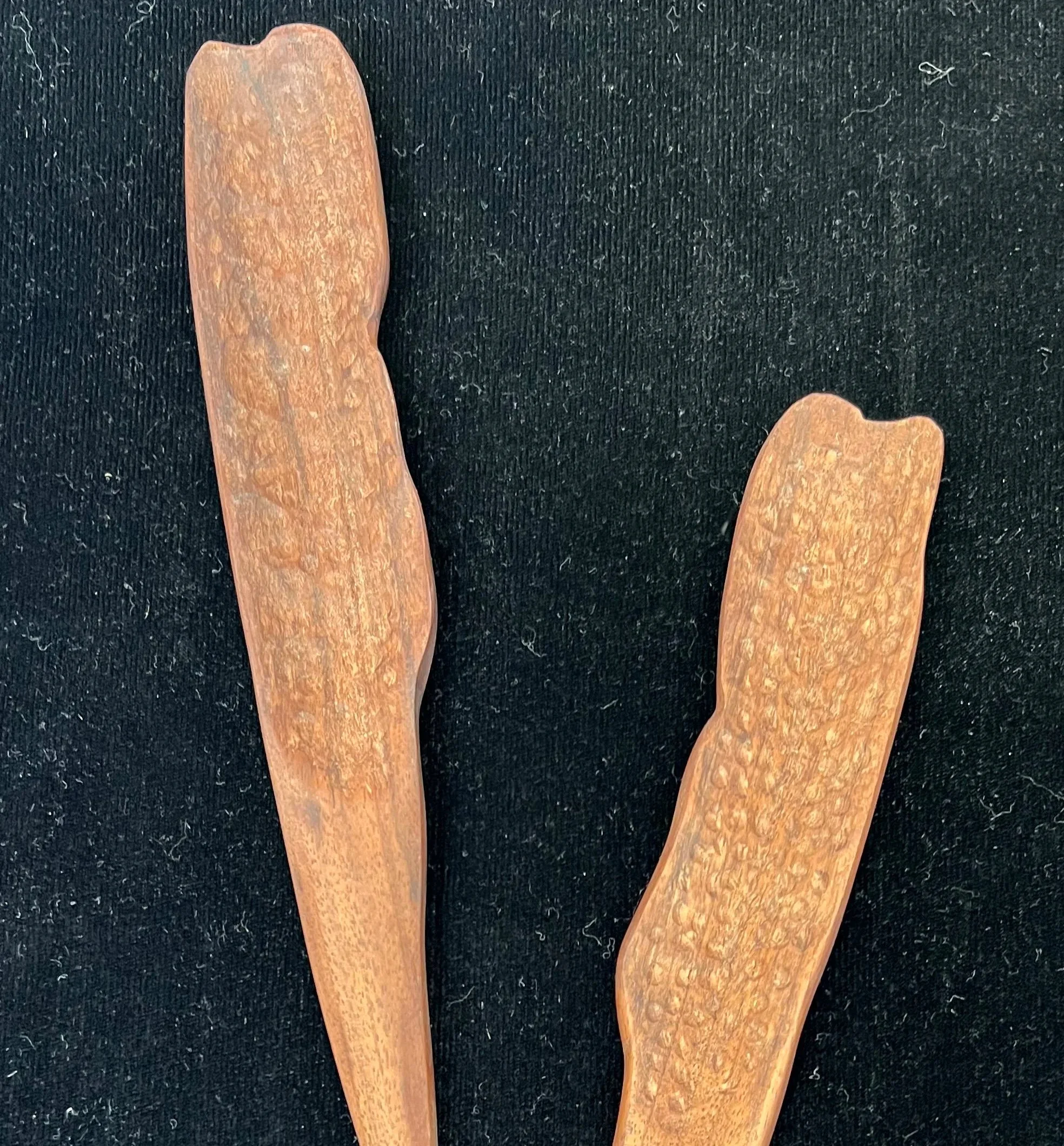
I started carving these spoons early in 2025 after getting inspired by my friend Bill Childs. When I expressed interest he said "you just keep removing wood until it looks like a spoon". I got a good laugh from that. He shared quite a few tips with me and got me off to a good start. The process is quite different from the drawing and printmaking I usually pursue. Bill was carving mostly functional spoons, but I gravitated toward carving objects that had the form of a spoon, but were otherwise impractical. It has been fun to experiment and exaggerate the thick and thin elements. There are more shapes I want to explore, and I will get to them hopefully this winter.
I carve spoons from seasoned, dry wood rather than green wood. Though it takes more effort to work, I appreciate the stability it offers—there’s no second-guessing whether the finished spoon will split or warp as it dries. I use a range of hand tools in my process: a small axe for roughing out the form, a curved Kestrel knife for shaping and hollowing, and a straight knife for refining lines and smoothing surfaces. The curved knife is especially useful—its double edge allows for both push and pull strokes, and the bend in the blade helps me navigate the subtle curves of each piece with precision. I gather wood in a variety of places including boatbuilder shops, washed ashore at Spencer Spit on Lopez Island, and among windfall after winter storms.
I find carving spoons to be a quiet, deliberate act. There’s something grounding about finding a shape within a piece of wood, and following the grain rather than forcing it. Each spoon is a small sculpture rather than an object of daily use. In a world of mass-produced objects, hand-carving feels like a kind of resistance—slow, tactile, and deeply personal. After carving, I hand-sand each spoon and finish it with linseed oil to bring out the grain and protect the wood. The final piece is never perfect, and that’s part of the point.
Film Stills from Brenden Emery’s art video Arboreal